By Staff Reporter
ISLAMABAD: The information minister on Wednesday accused India and Israel of orchestrating a disinformation campaign that falsely linked one of the suspects in the deadly shooting at Sydney’s Bondi Beach to Pakistan, calling the effort a deliberate attempt to tarnish his country’s reputation amid its long struggle against terrorism.
The minister, Attaullah Tarar, condemned the attack itself as “highly condemnable” and expressed solidarity with Australia, noting that Pakistan, as a victim of decades of militant violence, could “feel the pain” of those affected.
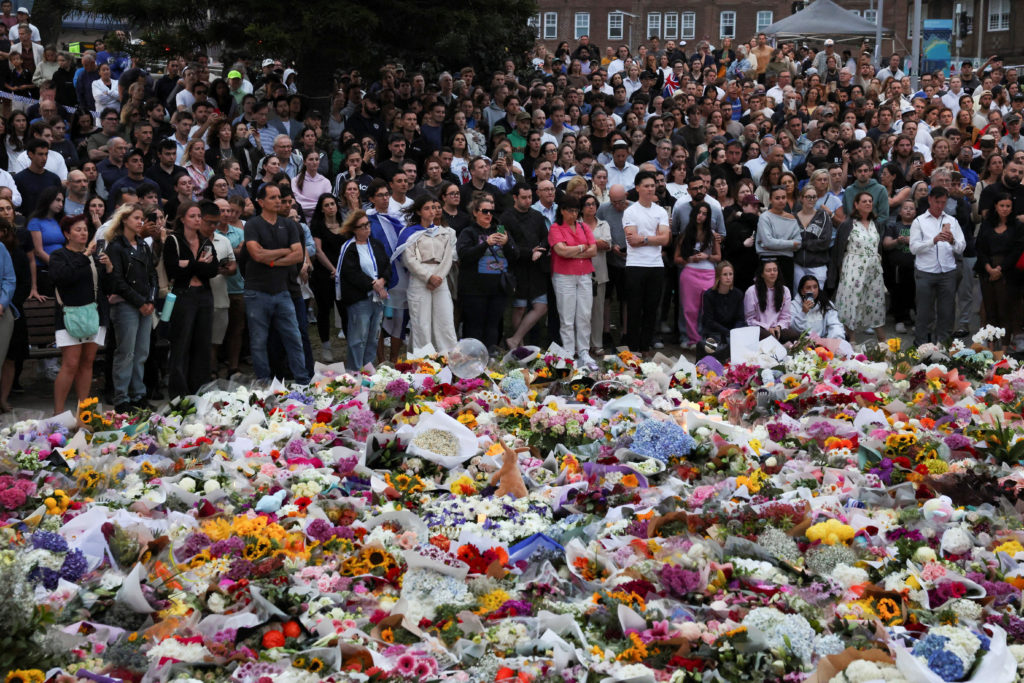
The shooting on Dec. 14, which Australian officials described as a terrorist attack targeting the Jewish community, left 15 people dead and dozens injured, with a total of 16 fatalities, including one of the gunmen.
Tarar, speaking at a briefing for foreign journalists in the capital, said the false claims emerged swiftly after the incident, with media reports identifying the suspects as a father-son pair, Sajid Akram, 50, and Naveed Akram, 24. Initial unverified accounts suggested the elder Akram was from Pakistan, amplifying images of a Sydney resident with the same name who wore a Pakistan cricket team shirt. That man later denied involvement in a video, saying he feared for his life after receiving threats.
“When the incident happened, certain media outlets were very quick to state that one of the attackers was from Pakistan and the other one was born in Australia,” Tarar said. “There was no evidence to prove this claim, there was no documentation, and there was no verification of this claim. But somehow, we know that this campaign was launched by hostile countries trying to malign Pakistan.” He added: “In Israel and India, this campaign was proliferated and posted on social media platforms, as well as electronic media platforms, which is very, very sad.”
The claims were later debunked when Indian police issued a statement confirming that Sajid Akram hailed from Hyderabad in India’s Telangana state. The Indian Embassy in Sydney had issued his passport, Tarar said, and Philippine authorities verified that he had travelled there using it. “In fact, he travelled to the Philippines on that Indian passport as confirmed by the Philippines authorities,” the minister said. “So, I don’t know why this campaign was run. But, it is very, very unfortunate.”
Tarar played a video during the briefing that he described as outlining the campaign’s spread and the media outlets involved. Afterward, he characterised it as an “organised” effort that “spread like wildfire,” with no reporters or editors questioning the sources. One outlet, he said, went so far as to claim the attackers were from Lahore without any supporting documentation. “How is it possible that when you give news with regard to a terrorism incident, and you claim that the attackers are from a certain country or are of a certain origin, you have no evidence whatsoever to substantiate your claim?” he asked. “It really saddens us as victims of terrorism.”
Pakistan, Tarar emphasised, has been a “frontline state in the war against terrorism,” having lost more than 90,000 lives in the fight. He invoked the 2014 massacre at the Army Public School in Peshawar, where 147 people, including 132 students, were killed and 180 injured. “So, we are a country whose children have also given sacrifices, whose children have laid down their lives in this war against terrorism,” he said.
Even reputable global media outlets, equipped with editorial boards and verification processes, “fell prey to this disinformation campaign,” the minister said, lamenting their failure to uphold “basic norms of journalism.”
Pakistan refrained from an immediate response, he noted, because “a responsible state acts like a responsible state by actually verifying information.” He questioned how the Indian government could have been unaware of the suspects’ origins, given modern tools like facial recognition, retinal scans and fingerprints in national databases. “But unfortunately, there was a vicious campaign to instantly say that one of the attackers, the father, was a Pakistani national,” Tarar said, attributing part of the confusion to the suspects’ names being “common in certain parts of the world.”
He praised Australian authorities for their professional handling of the investigation, avoiding unsubstantiated blame despite the media frenzy. Now that the Indian connection was confirmed, Tarar asked: “My question is, and I have the right to question, that who is going to cover the damage that was caused to Pakistan through these fake posts and false information. How do we go back to the position before the Bondi Beach attack? Should we initiate legal proceedings? Should we request an apology? Or will it just become a part of history as a campaign based on absolutely fake and false information to malign Pakistan?”
The minister tied the episode to broader accusations against India, claiming it supports terrorism within Pakistan, particularly in the provinces of Balochistan and Khyber Pakhtunkhwa. He cited “irrefutable evidence” shared by Pakistan’s military public relations wing, including Indian funding and planning of attacks. Whenever Afghan soil is used for strikes on Pakistan, he alleged, “somewhere there is an Indian link.”
Tarar also referenced the 2023 assassination of Sikh separatist leader Hardeep Singh Nijjar in Canada, which Ottawa has linked to Indian agents, an allegation New Delhi has called “absurd.” Such incidents, he said, reveal “the true face of the Indian state.” He further criticised extremism in India, pointing to a recent episode in which the chief minister of Bihar pulled off a Muslim woman doctor’s hijab at a graduation ceremony. “This just shows the mindset that is prevalent in that country with regard to extremism of any kind,” Tarar said. “Their society is absolutely disoriented. They don’t have any narrative to sell to the world, any story to tell to the world. All you can find within India is extremism of every kind being promoted. Because you have a government there which believes in extremism, suppressing the minorities and their rights and promoting terrorism and extremism.”
Pakistan, by contrast, condemns terrorism “in all its forms and manifestations,” the minister said, urging media to verify facts before dissemination and to “pin the blame where it lies.” He lauded the heroism of Ahmed al Ahmed, a 43-year-old Australian who wrestled a gun from one attacker, knocking him down despite sustaining injuries. Ahmed, who hid behind parked cars before charging, has been hailed worldwide for saving lives.
Copyright © 2021 Independent Pakistan | All rights reserved