By Staff Reporter
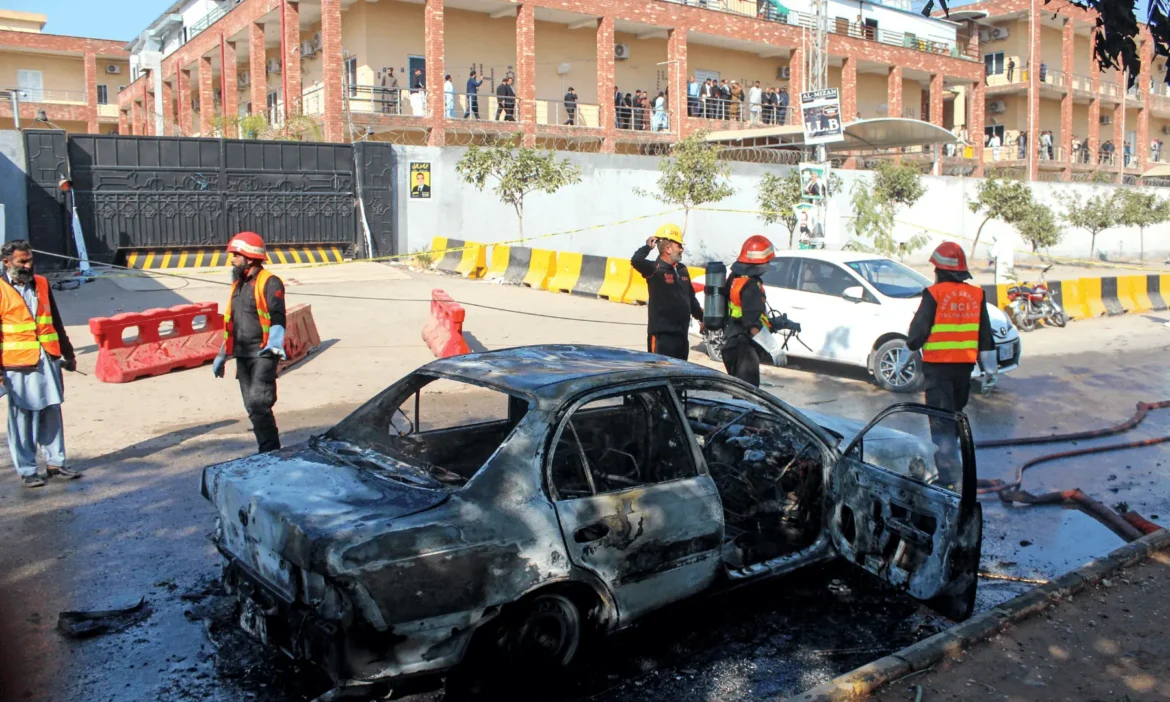
ISLAMABAD The interior minister told the Senate on Thursday that the suicide bomber who killed 12 people and wounded 35 in an attack on the capital’s judicial complex on Tuesday was “related to Afghanistan,” the clearest official accusation yet that the assault originated across the border.
Mohsin Naqvi, speaking on the Senate floor, described the apparent Afghan connection as a “very serious” development and said he had briefed Deputy Prime Minister Ishaq Dar and Defense Minister Khawaja Asif. He linked the Islamabad bombing to a separate suicide attack on Nov. 10 at Cadet College Wana in South Waziristan, saying the bomber in that incident had also come from Afghanistan.
“It is becoming very difficult for us; the way people from Afghanistan are coming here and attacking us,” Naqvi said. He added that the government would do “whatever is possible” to address the problem and was continuing to expel undocumented Afghans from the country.
The Islamabad blast, which tore through the parking area of the district courts complex in the heavily guarded F-8 sector, came at a moment of unusual diplomatic activity in the capital. Parliament was hosting an Inter-Parliamentary Speakers’ Conference, the Islamabad Policy Research Institute was holding its annual Margalla Dialogue, and a Pakistan-Sri Lanka cricket test match was underway in nearby Rawalpindi. The same day, a roadside bomb struck a security forces convoy in Dera Ismail Khan in Khyber Pakhtunkhwa, wounding at least 14 personnel.
One day earlier, militants had stormed the cadet college in Wana; security forces killed all the attackers after a prolonged operation that cost the lives of three Pakistani personnel but ended with every cadet and teacher safely evacuated.
Prime Minister Shehbaz Sharif, responding to the spate of attacks, accused both Afghanistan and India of involvement in terrorism inside Pakistan and promised a “befitting response.” Defense Minister Asif, speaking hours after the capital bombing, called the strike a “wake-up call” for those who believed the military’s counterterrorism fight was confined to the Afghan border and remote corners of Balochistan .“We are in a state of war,” Asif said, expressing little optimism about negotiations with the Taliban authorities in Kabul.
Minister of State for Interior Talal Chaudhry confirmed that the Islamabad suicide bomber was not Pakistani. “The suicide attacker in the Islamabad blast was not a Pakistani,” Chaudhry said in a television interview. “He did not know Pakistan’s language nor did he know of the country’s currency.”
Investigators have made rapid progress. On Wednesday they detained a motorcycle taxi driver from an online ride-hailing service who had dropped the bomber outside the court complex. Police traced the rider through CCTV footage and the digital payment he received for the fare. On Thursday, the Counter-Terrorism Department in Rawalpindi announced the arrest of seven suspected facilitators in raids in the city’s Fauji Colony and Dhoke Kashmirian areas, as well as one operation in Khyber Pakhtunkhwa.
Later Thursday, Naqvi wrote on X that he had received a telephone call from Bahrain’s interior minister, Gen. Shaikh Rashid bin Abdullah Al Khalifa, who “unequivocally condemned the terrorist attack in Islamabad and conveyed heartfelt condolences on the loss of innocent lives.” The Bahraini minister, Naqvi added, reaffirmed his country’s “unwavering support and solidarity with Pakistan at all times.”
No group has claimed responsibility for the Islamabad bombing, but officials have repeatedly blamed the Tehrik-i-Taliban Pakistan (TTP), which operates from sanctuaries inside Afghanistan and has sharply escalated attacks since the Afghan Taliban returned to power in 2021. Kabul has consistently denied sheltering the TTP and accused Islamabad of failing to control its own territory. The blast in the capital—the first major suicide bombing in Islamabad in more than a decade—has deepened the sense of crisis in a country already grappling with political instability, a battered economy and a military leadership transition. Security analysts say the timing and location were clearly intended to maximize embarrassment for the government and signal that no part of Pakistan, not even the most protected districts of the capital, is safe.
Copyright © 2021 Independent Pakistan | All rights reserved