By Staff Reporter
PESHAWAR: Pakistan has delivered its most explicit warning yet to the Taliban regime in Kabul, saying the Afghan authorities are fully aware of Islamabad’s core security demands and must now demonstrate “verifiable steps” if they wish to halt cross-border strikes or reopen any form of dialogue.
The message, conveyed by a senior Pakistani security official in a rare on-the-record briefing, shows the collapse of relations between the two neighbours to their lowest point since the Taliban seized power in Afghanistan four years ago. What began as targeted Pakistani operations against militant sanctuaries has escalated into open border clashes and a formal Pakistani military campaign inside Afghan territory.
On 22 February, Pakistani forces struck alleged terrorist camps and hideouts in Afghanistan’s eastern provinces of Nangarhar and Paktika. The Taliban responded with what Islamabad described as unprovoked attacks on Pakistani border positions. Pakistan retaliated on 26 February by launching Operation Ghazab lil-Haq, a sustained series of strikes that officials say will continue until its objectives are met.
Speaking to journalists from the restive Khyber Pakhtunkhwa province at the Inter-Services Public Relations headquarters in Rawalpindi, the official made clear that the initiative now rests squarely with Kabul. The Taliban regime, he said, was “well aware of Pakistan’s concerns” and the “decision was now theirs”.“If they want dialogue or a ceasefire, they must take verifiable steps,” he stated. “Pakistan does not wish to attack anyone; our priority remains the country’s security.”
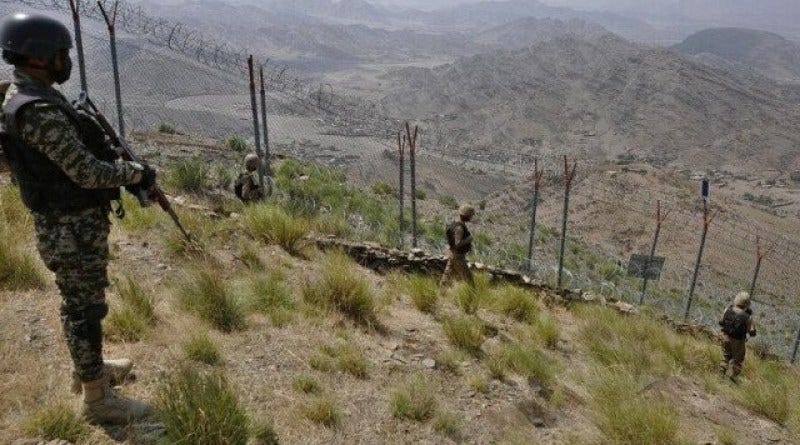
The briefing painted a picture of profound asymmetry along the 2,600km Durand Line, the disputed frontier that Pakistan maintains is effectively policed from only one side. While Islamabad has invested heavily in fencing, surveillance and troop deployments, the Afghan side, the official said, continues to provide shelter and facilitation to terrorist elements in the border regions.
Even amid active operations, Pakistan had exercised “utmost responsibility” to limit civilian harm, he insisted. No civilian populations had been targeted; actions were confined to terrorist camps and military infrastructure in areas where militants were receiving “weapons, resources and technical equipment”.
The official revisited failed diplomatic efforts that followed earlier clashes in October. Three third countries had engaged in mediation, accepting Pakistan’s evidence of militant activity and attempting to persuade the Taliban leadership that Islamabad’s grievances were legitimate. “No change had been observed on the part of the Afghan Taliban,” he noted. At the root of the crisis, he argued, lay “a clear nexus between terrorism and crime in Afghanistan”. The Taliban, the official said, were not merely tolerating but actively harbouring multiple terrorist organisations, functioning as their “master proxy”.
Pakistan’s initial strikes had focused on camps belonging to Tehreek-i-Taliban Pakistan (TTP), the group responsible for a surge in attacks inside Pakistan. In response, Taliban forces had turned their guns on Pakistani border posts specifically established to prevent infiltration. While Pakistani security forces continue parallel operations inside the country to dismantle militant networks, the official acknowledged that military action alone would never suffice. “Until the entire nation develops a clear and unified narrative against terrorism, total eradication may not be possible,” he warned.
The National Action Plan, drawn up after previous waves of militancy, was designed precisely to address not only terrorism but the accompanying currents of extremism and organised crime. “Vacuums in internal security systems and governance further strengthen terrorism,” the official added. Pakistan, the official repeatedly emphasised, harbours no “interventionist agenda” in Afghanistan. The political future of its neighbour was for Afghans to determine. “We have only one clear and single stance: that Afghan soil must not be used for terrorism against Pakistan.”
The operation inside Afghanistan would persist, he said, until its goals were achieved. The Taliban “know what our demands are to stop the war”. Since Pakistan began its strikes, the Afghan authorities had moved to shield the banned TTP and other groups. All 36 forward posts inside Afghanistan used to stage attacks on Pakistan had been destroyed. Among the targets was the former US airbase at Bagram, struck to eliminate stockpiles of weapons and ammunition intended for use against Pakistani targets. No large-scale ground operation had been required in the Tirah valley of Khyber Pakhtunkhwa, officials said; precision strikes had neutralised the launch pads for cross-border attacks. The provincial government in Peshawar was described as fully seized of the threat and committed to supporting counter-terrorism efforts.
The briefing came just 24 hours after Pakistan’s most senior military figure, Field Marshal Asim Munir, chief of army staff and chief of defence forces, issued a similar public assessment. Peace between the two countries, Munir said, could only be restored if the Taliban regime “renounced their support for terrorism and terrorist organisations”.
Analyst said with winter snows melting and the traditional fighting season approaching, both sides now appear locked in a dangerous standoff. Islamabad’s message is unambiguous: without tangible movement from Kabul, the military pressure will not ease.
Copyright © 2021 Independent Pakistan | All rights reserved