By Staff Reporter
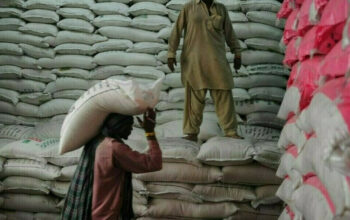
KARACHI: A Chinese-run abattoir on the edge of Gwadar has begun shipping donkey meat, bones and hides to China, the first commercial flows in a trade that Pakistani officials estimate could earn as much as $400 million a year in foreign exchange.
Hangeng Group, which started exports in July after a build-out lasting several years, intends to raise its daily slaughter capacity to 800 animals within months and process as many as 216,000 a year, according to Chief Executive Officer Andy Liao. The company has put about $50 million into Pakistan over the past six years and employs nine Chinese managers alongside roughly 500 local workers in slaughtering, processing, packaging and transport.
“The business could generate about $5 million a month in foreign-exchange earnings within six months, rising to $7 million within two years,” Liao said in an interview to Bloomberg.
The venture places Pakistan inside one of the more unusual supply chains in global agricultural trade. Donkey hides are the raw material for ejiao, a collagen-rich gelatin produced by boiling down the skins and consumed in China as a blood tonic and an ingredient in tonics, snacks and cosmetics. China’s ejiao market was worth about $7.8 billion in 2021, according to a 2023 US Congressional Research Service report, which estimated that between 2.3 million and 4.8 million donkeys are killed worldwide each year for their skins.
China cannot supply that demand from its own herd. Decades of farm mechanisation stripped rural China of working donkeys, and the national population has fallen steeply from its peak, leaving processors dependent on imports. Buyers have scoured Africa, Latin America and South Asia for skins, with Brazil and Australia among the larger suppliers. That search narrowed in February 2024, when the African Union endorsed a continent-wide moratorium on slaughtering donkeys for their skins, closing off a region that had been the trade’s most prolific source and pushing procurement toward countries such as Pakistan.
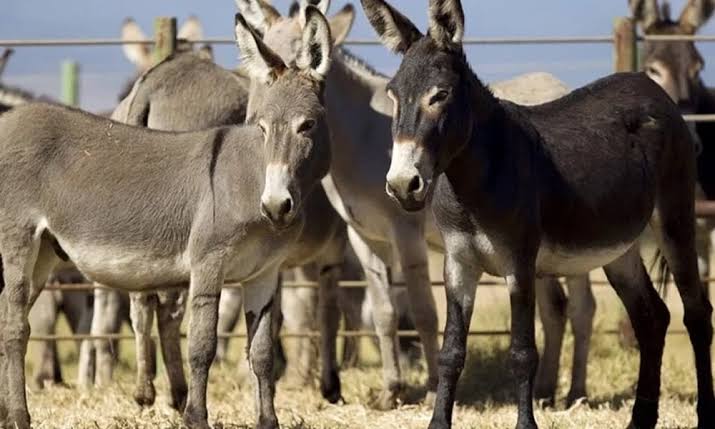
Pakistan has what China lacks. The country’s donkey population exceeds six million and expands every year, according to official livestock counts, the legacy of an economy in which carts, brick kilns and smallholder farms still run on animal power. The animals are effectively a byproduct of rural poverty. Until now they had no export value at all.
Years in the making
Turning that stock into a trade has taken the better part of three years of negotiation, rulemaking and construction.
The framework was set in October 2024, when Islamabad and Beijing signed a protocol during Chinese Premier Li Qiang’s visit to Pakistan laying out the quarantine and veterinary conditions under which donkey meat and hides could move. In April 2025 the government said commercial exports would proceed, and cleared Chinese firms to build farms, slaughterhouses and export facilities inside Gwadar’s export processing zone, a structure designed to draw foreign direct investment under the China-Pakistan Economic Corridor.
The final clearance came in May 2026, when the Economic Coordination Committee approved exports of donkey meat from the Gwadar North Free Zone on condition they comply strictly with the import rules of the destination market. Hangeng’s plant near Gwadar in Balochistan began operating and shipping two months later.
In July, the Chinese and Pakistani prime ministers agreed an annual export target of 200,000 donkeys covering meat, bones and hides. Pakistani projections for the 2026-27 fiscal year put potential volumes at about 15,000 tons of meat, 20,000 tons of bones and 216,000 tons of hides, worth an estimated $375 million to $400 million a year in foreign exchange.
For a country that has spent much of the past decade moving between balance-of-payments strains and International Monetary Fund programs, and whose export base remains narrowly concentrated in textiles and rice, even a few hundred million dollars of new inflows carries weight in the current account.
Traceability and risk
Liao has spent RMB 5 million, about $740,000, on a digital traceability system that tracks each animal from the farmer who sells it through to the Chinese customer, a response to the food-safety and provenance scrutiny that has dogged the global hide trade. The company plans to move upstream into donkey breeding and to add laboratory facilities, and eventually to diversify into seafood exports, Liao said.
The obstacles are considerable. Balochistan is Pakistan’s least developed and most violent province, and militants have repeatedly targeted Chinese nationals and CPEC infrastructure, forcing Chinese-linked projects to operate under heavy security. Gwadar itself, promoted for a decade as the corridor’s showpiece deep-water port, has struggled with power and water shortages and thin commercial traffic.
Supply is a second question. Donkeys breed slowly, with long gestation periods and low reproduction rates, and a sustained offtake of 200,000 head a year draws down a working asset owned largely by poor households. The same arithmetic drove African governments to shut the trade down. Animal-welfare organizations including the UK-based Donkey Sanctuary have campaigned for years against the skin trade, documenting transport and slaughter conditions along the supply chain and pressing for national bans.
Domestic politics adds another layer. Donkey meat is not eaten in Pakistan, where it is regarded as religiously impermissible, and periodic scandals over adulterated meat entering the local food chain have made the subject politically sensitive. Officials have stressed that the product is destined solely for export under the terms of the bilateral protocol.
Copyright © 2021 Independent Pakistan | All rights reserved