By Staff Reporter
ISLAMABAD: Pakistan has issued a furious condemnation of comments made by India’s defence minister ruling out talks over Kashmir, warning New Delhi against underestimating its neighbour’s resolve to counter “Indian adventurism”.
The Foreign Office in Islamabad said it condemned “in the strongest possible terms” remarks made by Rajnath Singh, in which the Indian defence minister declared that any future dialogue between the two nuclear-armed neighbours would be restricted to the status of Azad Kashmir, which India claims in its entirety.
Singh made the comments on Sunday while addressing military officers, veterans and the families of soldiers killed in the 1999 Kargil war in Dras, in India-occupied Ladakh. He told the gathering there would be “no talks with Pakistan”, and that any discussions that did take place would concern only Azad Jammu and Kashmir, which he described as “illegally occupied” by Islamabad.
The Indian minister went further, telling the assembled crowd that Pakistan had made terrorism “part of its state policy” and that the country’s military and militant groups could no longer be viewed as separate. He pointed to Operation Sindoor, India’s military response to a deadly attack on tourists in Indian-occupied Kashmir last year, as proof that New Delhi would meet any future provocation with a response of a severity “far beyond imagination”.
Islamabad’s rebuke came in a statement issued early on Monday by the Foreign Office, which accused Singh of distorting an internationally recognised dispute that remains, it noted, on the formal agenda of the United Nations Security Council.
“His statement not only distorts facts regarding the UN and internationally recognised Jammu and Kashmir dispute that remains on the agenda of the UN Security Council but also shows Indian government’s deliberate policy to threaten regional and international peace and security,” the statement said.
The Foreign Office went on to accuse New Delhi of using inflammatory language to obscure more uncomfortable realities closer to home, alleging the remarks were designed to “divert attention from India’s continued occupation” of the region, its alleged sponsorship of terrorism, and domestic instability within India itself.
In pointed language, the statement warned that Pakistan’s determination to resist any Indian incursion should not be doubted. It invoked Pakistan’s own military response to last year’s brief but intense conflict with India, describing the “unwavering resolve and determination” shown by the Pakistani public and its armed forces during what it called Operation Bunyanum Marsoos.
That four-day confrontation, in May 2025, was triggered by an attack on tourists in Indian-occupied Kashmir, which New Delhi linked to Pakistan without producing public evidence. Islamabad rejected the accusation and called for an independent inquiry. Both sides launched strikes against the other before Washington helped broker a ceasefire on 10 May, pulling the two nuclear powers back from the brink of a wider war.
The Foreign Office statement called on the international community, and the UN in particular, to hold India to account over what it described as a persistent failure to implement Security Council resolutions guaranteeing Kashmiris the right to self-determination.
Pakistan’s defence minister, Khawaja Asif, added his own rebuke, writing on X that India’s attempts to “rewrite internationally recognised legal realities through coercive rhetoric” could not change the facts on the ground. He argued that Singh’s remarks amounted to political posturing that would do nothing to alter the disputed status of the region or advance the prospect of dialogue.
Asif was scathing about India’s broader record, describing the country as the “biggest sponsor of terrorism and perpetrator of instability” in South Asia, and accused it of holding the region hostage to what he called its “aggressively revisionist designs”. He said India’s rhetoric risked lowering the threshold for conflict between the two states, even as he insisted Pakistan remained committed to peace.
“Pakistan remains committed to peace and dialogue, but its resolve to safeguard its sovereignty, territorial integrity and national security is absolute and must never be tested,” he said.
The Pakistani minister also suggested that Singh’s comments were intended to distract from unrest at home, accusing the Indian government of trying to “deflect attention from internal turmoil and increasing unrest and discontent” against what he described as prime minister Narendra Modi’s “autocratic and divisive style of governance”.
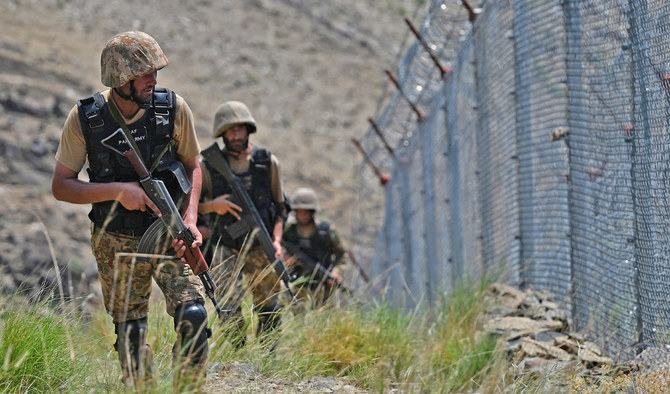
Kashmir has been a flashpoint between India and Pakistan since both countries won independence from Britain in 1947, when the subcontinent’s bloody partition left the two nations to emerge as rivals still contesting the mountainous territory. Both claim the region in full, and have fought several wars over it since. It remains one of the most heavily militarised areas in the world, with the two sides’ forces facing each other across the Line of Control that divides the Himalayan valley.
Copyright © 2021 Independent Pakistan | All rights reserved