By Staff Reporter
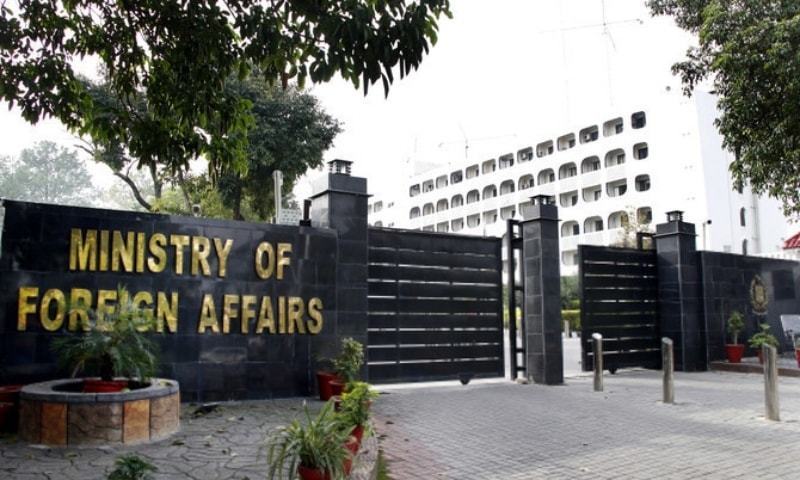
ISLAMABAD: The Foreign Office issued a stern warning on Sunday that any further aggression from Afghanistan would prompt an “unwavering and befitting response,” escalating tensions after a night of fierce border clashes that left 23 Pakistani troops dead and, according to military accounts, resulted in the deaths of 200 Taliban fighters and affiliated militants.
The skirmishes erupted late Saturday along the volatile border between the two nations and spilled into Sunday morning, marking one of the most intense confrontations in recent months. Pakistan’s military described the fighting as a response to unprovoked attacks by Afghan forces, with the Inter-Services Public Relations reporting heavy casualties on the Afghan side.
In a detailed statement, the Foreign Office emphasised Pakistan’s commitment to peaceful relations while underscoring its resolve to defend its sovereignty. “Pakistan greatly values dialogue and diplomacy and a mutually beneficial relationship with Afghanistan,” the statement said. “At the same time, the Government of Pakistan continues to closely monitor the situation and would take all possible measures to safeguard its territory and the lives of its people. Any further provocations would be met with an unwavering and befitting response.”
The clashes come amid longstanding accusations from Islamabad that terrorist groups are operating from Afghan soil, a charge that Afghan officials have repeatedly denied. The Foreign Office expressed deep concern over what it called “unwarranted aggression by the Afghan Taliban, Fitna al Khawarij and Fitna al Hindustan,” warning that such actions could destabilize relations between the neighbors.
“Pakistan, exercising its right of self-defence, not only effectively repulsed the assaults all along the border, but also inflicted heavy losses on Taliban forces and affiliated kharjis, in terms of men, material and infrastructure,” the statement added, noting that the targeted infrastructure had been used to “plan and facilitate” acts of terror.
The Pakistani response also directly addressed recent comments by Afghanistan’s acting foreign minister, Amir Khan Muttaqi, who is currently visiting India. In a speech there, Muttaqi asserted that no terrorist organizations or groups remain in Afghanistan and that a country’s problems must be resolved internally.
The Foreign Office rejected these “assertions and insinuations” as an attempt to deflect attention from the presence of militants in Afghanistan. “By making these baseless assertions, the Taliban regime cannot absolve itself of its responsibilities towards regional peace and stability,” the statement said. It pointed to “[the] continued presence of terrorist elements on Afghan soil and the freedom of activities enjoyed by them in Afghanistan” as “well documented in UN Monitoring Team reports.”
Pakistan has long urged the Taliban government in Kabul to crack down on cross-border terrorism, framing the issue as a shared regional challenge. “Noting that the fight against terrorism is a ‘common cause,’” the Foreign Office called on Afghanistan to honor its commitments not to allow its territory to be used for attacks on other countries and to contribute to peace and stability rather than shifting blame.
“Pakistan has repeatedly shared its concerns related to the presence of Fitna al Khawarij and Fitna al Hindustan operating from Afghan soil,” the statement continued. “Pakistan expects concrete and verifiable actions against these terrorist elements by the Taliban regime.”
In a nod to the humanitarian dimension of the relationship, the Foreign Office highlighted Pakistan’s role in hosting four million Afghan refugees as a demonstration of “good neighbourliness, Islamic brotherhood and humanity.” It added that Islamabad would “take all actions to regulate the presence of Afghan nationals on its territory, in accordance with international norms and laws.”
The statement concluded with an appeal for cooperation, expressing Pakistan’s desire for “a peaceful, stable, friendly, inclusive, regionally connected, and prosperous Afghanistan.” It urged the Taliban regime to “act responsibly, honour its commitments, and play a constructive role in achieving the shared objective of rooting out terrorism from its soil.”
Recent years have seen a surge in violence since the Taliban regained control of Afghanistan in 2021, with Pakistan accusing the group of harboring militants linked to attacks inside its borders. Afghan officials, in turn, have blamed Pakistan for airstrikes and other operations on their territory.
Copyright © 2021 Independent Pakistan | All rights reserved