By Staff Reporter
ISLAMABAD: The government is weighing a package of emergency measures to curb fuel consumption, including shortened market hours and a possible four-day work week, as an escalating conflict in the Middle East pushes energy costs higher and strains the South Asian nation’s finances.
A final decision on the so-called petroleum smart lockdown could come as soon as Tuesday evening, according to people familiar with the deliberations, who asked not to be identified discussing internal government matters. Prime Minister Shehbaz Sharif chaired a meeting to review the proposals, the people said.
Among the options under consideration: closing markets for three days a week, cutting government office hours, and rotating public-sector staff to reduce the number of commuters on the roads, according to the people. Officials are also weighing whether to designate Friday, Saturday and Sunday as holidays across public and private offices, a move that would extend the current two-day weekend by a full day. A separate proposal would ground roughly half of the government’s vehicle fleet.
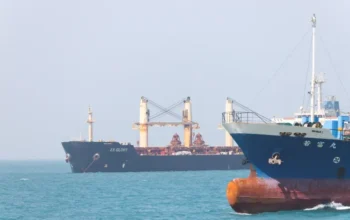
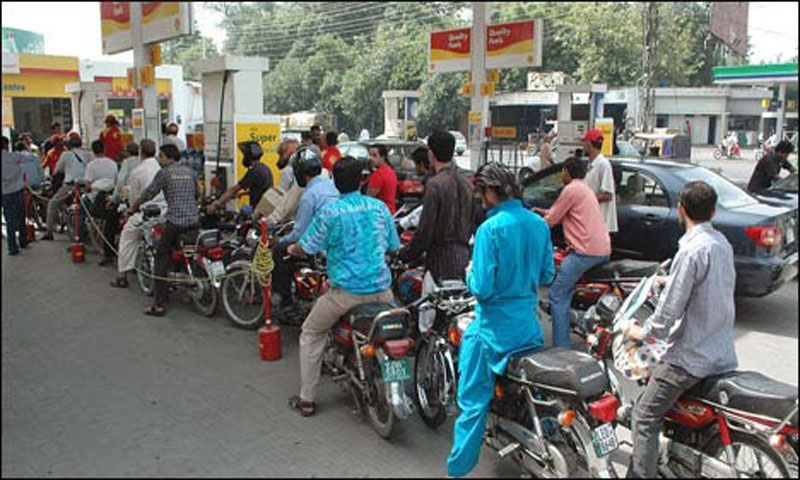
The measures underscore the pressure facing Islamabad as renewed hostilities between the U.S. and Iran, along with attacks by Houthi militants near the Bab al-Mandab strait, threaten to choke off oil-shipping routes that Pakistan and other import-dependent economies rely on. The disruptions have pushed local pump prices to among their highest levels this year, with petrol now retailing at 380.24 rupees a liter and high-speed diesel at 409.42 rupees, according to the latest government price notification.
Pakistan, still recovering from a balance-of-payments crisis that pushed it to the brink of default in recent years, has limited room to absorb an extended run-up in import costs. The country relies on imports for the bulk of its petroleum needs, leaving its currency and foreign reserves vulnerable to swings in global crude prices.
Rana Ehsan Afzal, coordinator to the prime minister, sought to reassure the public that supply remains stable even as prices climb. “There’s no supply issue in the near future when it comes to petrol and diesel,” Afzal said in an appearance on a local television channel. “We don’t foresee supply shocks. We’re also not experiencing loadshedding due to oil shortage. We’re not in such a crisis compared to other regional nations because of the government’s management.”
Relief Scheme for Low-Income Drivers
The government is pairing the conservation push with a subsidy aimed at cushioning the impact on lower-income Pakistanis. Sharif on Sunday unveiled a program offering a 100-rupee-per-liter discount on petrol for owners of motorcycles, rickshaws and other two- and three-wheeled vehicles, as well as for cars with engines up to 800cc.
Under the plan, motorcycle and rickshaw owners can claim the discount on up to 20 liters a month, while owners of small cars qualify for up to 30 liters. Sharif said the government was aware of the strain that rising fuel costs had placed on households and that people “would not be left alone in these difficult times.”
The subsidy is scheduled to launch nationwide at midnight between Wednesday and Thursday, according to a statement from the office of Deputy Prime Minister Ishaq Dar, who also serves as foreign minister. It is already operational in Islamabad. Dar chaired a meeting Tuesday — the ninth session of a National Steering Committee formed to oversee the subsidy’s rollout — to review implementation progress, the statement said.
Registration for the program opened nationwide through a dedicated SMS short code, 9771, with redemption of fuel tokens also set to begin at midnight Wednesday, according to the statement. Pakistan’s Ministry of Information Technology said an automated digital verification system has been built in coordination with the National Database and Registration Authority, telecom operators and provincial departments to process applications.
Dar directed officials to keep the registration process simple to maximize participation and instructed that payments owed to fuel retailers be settled within 24 hours through the State Bank of Pakistan, the statement said. He also called for provincial governments to complete outreach efforts at the district level and asked elected representatives and volunteers from the Prime Minister’s Youth Programme to help publicize the scheme and assist with registration.
Political Pushback
The rising cost of fuel has also become a flashpoint in provincial politics. In the Sindh Assembly, a resolution calling for lower petroleum prices — introduced by Muhammad Owais, a lawmaker from the opposition Pakistan Tehreek-e-Insaf — won the backing of the Pakistan Peoples Party, a coalition partner of Sharif’s Pakistan Muslim League-Nawaz at the federal level.
Sindh Information Minister Sharjeel Memon used the debate to call for the elimination of the federal petroleum levy, arguing that salaried workers have borne the brunt of successive price increases. “The federal government should come to its senses and abolish the petroleum levy,” Memon said, adding that the levy alone now exceeds 100 rupees a liter. “The federal government should not shift the burden of its failures onto the people.”
Memon separately criticized the Muttahida Qaumi Movement-Pakistan, a federal coalition partner, for not pressing the issue within government. He noted that MQM had exited a PPP-led coalition in 2008 over a one-rupee increase in petrol prices, suggesting the party had since softened its stance on fuel costs.
The government currently collects 114 rupees per liter in taxes and duties on petrol and 100 rupees per liter on diesel, according to the latest pricing data — a levy that has drawn criticism from opposition and coalition lawmakers alike even as it remains a key source of revenue for the state.
The proposals reviewed Tuesday have not been finalized, and it remains unclear which elements of the smart-lockdown plan the government will ultimately adopt. A formal announcement is expected following further deliberation, according to the people familiar with the matter.
Copyright © 2021 Independent Pakistan | All rights reserved