By Staff Reporter
ISLAMABAD: A government inquiry into the fire that killed 14 newborn babies at a hospital in Islamabad has concluded that the disaster was the product of “systemic and institutional failure”, with a localised electrical fault the most probable trigger for a blaze that overwhelmed a nursery in a matter of minutes.
The committee’s 43-page report found that while an electrical spark most likely started the fire, it was the accumulation of missed warnings, absent safety systems and weak oversight at the Pakistan Institute of Medical Sciences (PIMS) that turned it into a catastrophe.
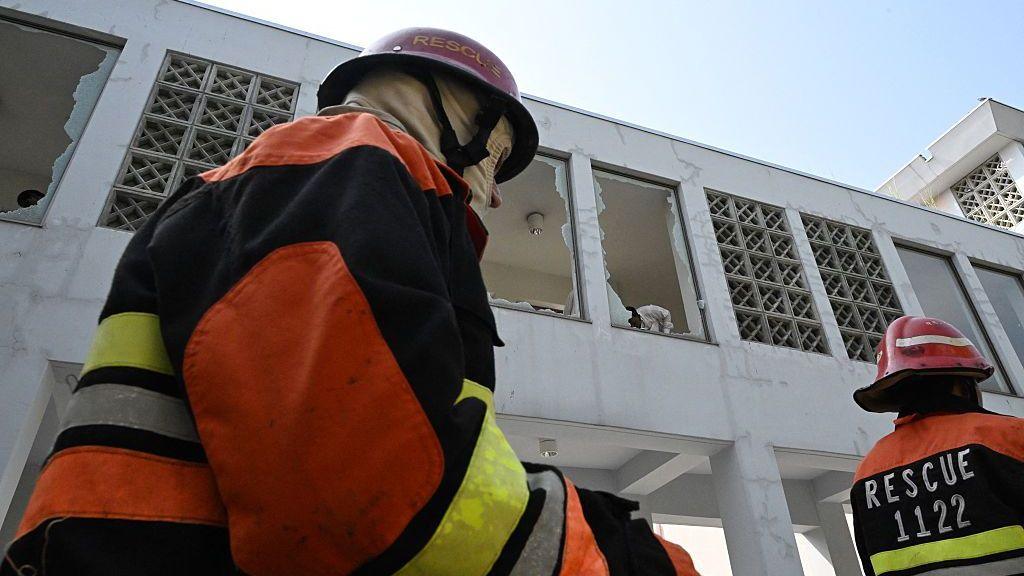
Fourteen infants died on 26 August when fire tore through a nursery in the Mother and Child Hospital, part of the PIMS complex in Pakistan’s capital. Fifteen babies were being cared for in the unit at the time; only one was rescued. The disaster prompted national outrage, the suspension of senior hospital staff and an order from Prime Minister Shehbaz Sharif for criminal proceedings against eight officials.
The inquiry committee was established on the day of the fire on Mr Sharif’s instructions and was chaired by Shahid Khan, a former interior secretary. Its other members were Major General (retired) Dr Khurshid Uttra, Establishment Division Secretary Dr Barrister Nabeel Awan, Islamabad Deputy Commissioner Irfan Nawaz Memon, and co-opted member Dr Rashid A. Chotani.
oo many safeguards were absent’
In blunt language rarely seen in official Pakistani inquiry reports, the committee wrote that the deaths were not the result of a single point of failure. “Fourteen newborns were lost not because one safeguard failed, but because too many safeguards were absent, weak, delayed or never verified to be working,” it found.
The report set out what it called a “coherent” chain of causation: a localised electrical fault most probably ignited the fire; combustible material and an oxygen-rich environment allowed it to spread rapidly; inadequate detection and fire protection failed to contain it; overcrowding and the lack of a rehearsed evacuation plan hampered rescue efforts; and a delay in activating the wider institutional emergency response compounded the crisis. All of this, the committee said, sat on top of long-standing failures in governance, maintenance and regulation that had allowed the risks to persist unaddressed.
“The electrical spark explains how the fire began; the institutional system explains why it became a catastrophe,” the report stated.
Warnings that went unheeded
Investigators found that concerns over fire safety at PIMS had been raised repeatedly in the years before the tragedy, but never fully resolved. The report cited earlier correspondence from the Capital Development Authority, findings by the Federal Ombudsman dating back to 2015, and an acknowledgment by PIMS itself in 2025 that its fire safety infrastructure was ageing.
Most strikingly, the committee pointed to a fire at the hospital’s Nursing Hostel on 6 July 2026 — just weeks before the nursery blaze — which had already exposed weaknesses in detection systems, alarms, electrical inspection, evacuation planning, firefighting equipment and staff drills.
“Yet those warnings had not been converted into a comprehensive, time-bound and independently verified corrective programme before the Nursery fire,” the report said, adding pointedly: “The specific AC 2 defect may not have been foreseeable; the need for stronger fire preparedness plainly was.”
Forensic findings point to air conditioning unit
On the immediate cause of the fire, the committee said the strongest technical evidence available, provided by the National Forensics Agency, identified the electrical supply cable for an air conditioning unit — referred to in the report as AC Unit No. 2 — positioned near or over a second unit, AC Unit No. 1, as the most probable point of ignition.
Investigators believe abnormal, localised electrical heating, potentially caused by excessive current or a high-resistance connection, most likely led to insulation failure and ignited nearby combustible material.
Crucially, the committee said it found no evidence to support several of the theories that had circulated in the aftermath of the fire. It ruled out arson, multiple points of ignition, an external fault originating with the Islamabad Electric Supply Company, a pre-fire oxygen leak, or an incubator or warmer as the source of the blaze.
“The fire was therefore most probably electrical in origin, although the precise defect and the person or entity responsible for preventing it require separate determination,” the report concluded.
The committee was equally direct in dismissing some of the more serious allegations that had emerged in public debate, finding no evidence of neonates being deliberately locked in, of conspiracy, sabotage, political protection, manipulation or concealment of casualties, or of wholesale abandonment of the nursery by frontline staff. Nor, it said, was there evidence of a prolonged delay by Capital Emergency Services once they had been formally notified.
Maintenance records inadequate despite functioning equipment
Investigators examined maintenance logs for the nursery’s air conditioning units and found that while the equipment had been serviced, the paperwork fell well short of demonstrating a properly managed electrical safety regime.
The report said the records did not “demonstrate a sufficiently systematic and traceable electrical safety regime covering cables, terminations, insulation, earthing, breaker protection and thermal hotspots”.
“The critical distinction is that equipment being operational is not the same as its electrical installation being demonstrably fire safe,” the committee wrote. “The evidence reveals a wider institutional gap between keeping equipment running and ensuring that it was safe.”
Staff praised for ‘prompt and courageous’ response
The report drew a clear distinction between the conduct of individual hospital staff and the failures of the institution as a whole. Reviewing CCTV footage, the committee found that the emergency unfolded with extraordinary speed and rejected any suggestion that frontline personnel had abandoned the newborns in their care.
It named Charge Nurse Nasreen Akhtar, Security Guard Maria Saleem and Staff Nurse Razia Noreen as having responded within moments of the fire breaking out, concluding that “several acted promptly and courageously in circumstances that became untenable within minutes”.
But the report also laid bare how precarious conditions in the nursery were even before the fire started. Fifteen medically fragile newborns, several dependent on oxygen or respiratory support and unable to evacuate themselves, were being cared for in a unit designed for ten beds. Only two doctors and two nurses were on hand at the time, and resources for a protected evacuation were limited.
“No adequately documented, approved, trained and rehearsed nursery-specific fire and neonatal evacuation SOP was demonstrated, nor was a functional automatic smoke detection, alarm or sprinkler system shown to be serving the affected area,” the report found.
The committee said frontline staff should not be blamed for a catastrophic outcome given their rescue efforts had been “objectively established”, and urged that judgment be reserved for the institutional failures that left them so exposed in the first place.
Minutes that mattered
The inquiry timed the response closely. Frontline staff were shown reacting within seconds of the fire becoming visible at 6.38am. External emergency services were not notified until 6.54am, and the first responders arrived on the scene at 7.01am.
The committee said its principal concern lay not with the performance of Capital Emergency Services once alerted, but with the gap between the fire becoming apparent and the alert being raised. It found that PIMS had not demonstrated a tested incident command system capable of swiftly converting the detection of a fire into an alarm, external notification, evacuation, hazard isolation, access control and coordinated rescue.
While the specific adjoining door visible in the CCTV footage was not established as a direct cause of any deaths, the report noted that Capital Emergency Services had separately reported locked or obstructed routes elsewhere, which it said raised a “serious institutional egress concern”. Investigators found that PIMS’ own security procedures had clearly assigned responsibility for fire exits, firefighting equipment, staff training, access control, key management and emergency reporting — providing, in the committee’s words, “one of the clearest documentary duty chains in the inquiry”.
Summarising its findings, the report stated: “The principal institutional failure was the absence of an integrated patient safety system, leaving known risks fragmented across clinical, engineering, security, administrative, contractor and regulatory functions and resulting in incomplete correction, weak preparedness, improvised response and catastrophic consequences.”
Questions over decision to keep nursery in old building
The committee also raised concerns about the decision to continue operating the nursery in the older Mother and Child Hospital building, despite a new facility funded by the Japan International Cooperation Agency (Jica) being progressively brought into use. It found this decision was not backed by a sufficiently documented risk assessment, justification or time-bound plan for transition, describing it as a “prima facie management issue”.
The report acknowledged that PIMS faced genuine constraints on staffing and resources, but found no evidence that any specific fire safety proposal for the nursery, or for the electrical safety of the air conditioning unit in question, had been turned down purely for lack of funding. “Resource constraint, therefore, does not by itself excuse the identified deficiencies,” it said.
Criminal investigation recommended on four fronts
While the committee concluded that the evidence gathered so far does not establish criminal guilt against any named individual, it recommended that a focused criminal investigation proceed on four specific fronts: a possible failure in the installation or maintenance of the electrical supply to the air conditioning unit; possible obstruction of a mandatory emergency evacuation route; possible failure to act despite specific prior warnings; and any proven delay in summoning external emergency assistance.
“Criminal responsibility must rest on the duty owed, knowledge or foreseeability of risk, authority to act, the act or omission, degree of negligence, failed safeguard, causal contribution and applicable offence,” the report stated.
The committee said the evidence implicating individual officials was “not equally mature” across the board. Responsibility within the hospital’s security structure was the most clearly documented, it found, while establishing the responsibility of senior management would require further confirmation of the specific duties, knowledge and authority each officer held. Clinical staff responsibility, it said, depended on proving a mandatory physical or supervisory duty had been breached.
Responsibility within the engineering, electrical and HVAC maintenance chain was described as “technically central” to the investigation but still requiring individual attribution. The report singled out the installation and maintenance history of the implicated air conditioning unit as the “most important unresolved technical accountability line”, stating that responsibility must be traced to those who designed, installed, altered, inspected, maintained, supervised or certified the circuit involved.
On the role of external regulators, including the health ministry, the Islamabad Healthcare Regulatory Authority and the Capital Development Authority and Capital Emergency Services, the committee found their responsibility was “stronger at the institutional, supervisory and regulatory level than as person-specific culpability”, pointing to fragmented oversight and a failure to verify that critical risks had been properly closed off.
On the broader question of governance, the report said PIMS needed clearer allocation of responsibilities and professionally qualified management of its administrative, engineering, safety and emergency functions, adding pointedly that “clinical seniority alone is not a substitute for specialised hospital management competence”.
Sweeping recommendations for reform
The committee’s recommendations ranged from immediate technical fixes to long-term structural reform. It called for urgent fire, life-safety and electrical audits across the hospital, and for functioning detection, alarm, suppression and evacuation systems to be put in place. It also recommended a dedicated evacuation procedure for neonatal units, backed by realistic drills, along with systems for direct emergency notification and clear incident command.
The report pressed for preventive electrical safety and asset management systems, professional and merit-based hospital governance, and stronger regulatory oversight generally. Central to its recommendations was what it called a “closed-loop compliance system”, in which every identified deficiency has a named owner, a deadline, allocated resources, an interim safeguard, independent verification and formal sign-off once resolved.
“A measure is not implemented because it is approved or under process; it is implemented only when the risk has been physically removed and independently verified,” the report said.
On the human toll of the disaster, the committee called for the establishment of a Family Support and Liaison Cell to provide psychological and bereavement support to affected families, continued long-term clinical follow-up for the surviving newborn, and transparent, timely processing of any compensation owed to the families.
It further recommended that PIMS create a senior fire and life-safety function alongside a permanent, multidisciplinary Hospital Safety and Vigilance Committee empowered to track safety deficiencies through to verified closure, and suggested consideration of a time-bound, independent Safety and Governance Oversight Board to monitor progress, conduct independent or unannounced audits, and report directly to federal authorities.
The report also urged that high-risk services, including the nursery, neonatal and paediatric intensive care units, general intensive care, high-dependency units and operating theatres, should continue operating only where minimum life-safety measures are physically functioning and independently verified, and said that all critical services still housed in older buildings should be moved to purpose-built facilities wherever feasible.
In its broadest recommendation, the committee said PIMS should be restructured around professional hospital administration, with its administrative, engineering, biomedical, safety, finance, human resources, procurement and emergency management functions handed to suitably qualified and experienced professionals.
Upon accepting the report, the health ministry has been asked to draw up a consolidated corrective action plan assigning each recommendation to a specific responsible institution and named officer, complete with deadlines, resources, interim safeguards, verification authority and a formal process for confirming each measure has been closed out.
Copyright © 2021 Independent Pakistan | All rights reserved