By Staff Reporter
ISLAMABAD: The government is examining the tokenization of sovereign bonds and Naya Pakistan Certificates on blockchain infrastructure, the finance ministry said on Monday, marking one of the first senior-level official discussions on integrating the technology into the country’s debt markets.
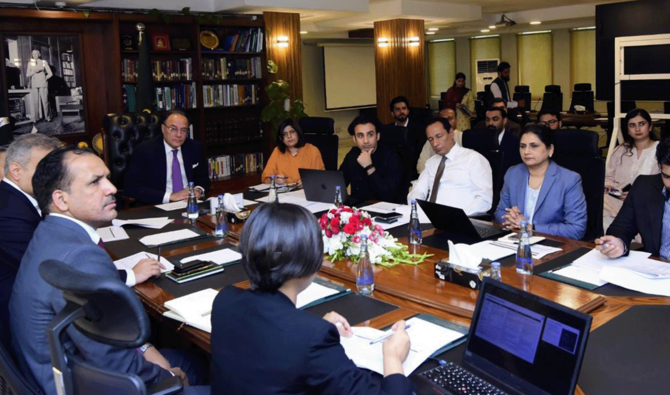
Finance Minister Muhammad Aurangzeb, Minister of State and Pakistan Virtual Assets Regulatory Authority Chairman Bilal Bin Saqib, and Adviser on Debt Management Omer Khan met to review potential structures, implementation pathways, regulatory considerations and next steps for tokenized sovereign instruments, according to a statement from the Finance Division.
The talks focused on converting traditional government debt into digital tokens recorded on a blockchain, enabling issuance, trading and holding in fractional or whole units. The initiative aims to broaden investor participation, improve access for overseas Pakistanis and link the country’s debt markets more closely to emerging digital financial systems.
“Discussions around tokenized sovereign instruments represent an important exploratory step toward understanding how emerging infrastructure can support the future evolution of Pakistan’s capital markets,” Aurangzeb was quoted as saying in the ministry statement. “Pakistan remains committed to exploring forward-looking financial technologies that can support economic modernization, deepen investor participation, and strengthen financial accessibility.”
The officials examined international precedents for tokenizing both sovereign and quasi-sovereign debt — the latter issued by government-linked entities such as state-owned enterprises or development banks — and how Pakistan could align any framework with global market standards.
A central element under consideration is a “Digital Native Note” model. Under that approach, sovereign bonds would be issued directly on a regulated blockchain platform from the outset, with same-day settlement capabilities. The notes would remain interoperable with conventional international clearing and settlement systems tied to Pakistan’s existing Eurobond program. Coupon payments, secondary-market trading and final principal repayments would continue to flow through established global financial infrastructure, preserving compatibility for institutional investors already active in Pakistan’s sovereign debt market.
Naya Pakistan Certificates, foreign-currency denominated instruments issued by the State Bank of Pakistan on behalf of the government and aimed primarily at overseas Pakistanis and foreign-currency savers, were also discussed. Tokenizing the certificates could open more seamless digital investment channels and expand retail participation among the diaspora, the ministry said.
“Tokenization of these products can make them more accessible to overseas Pakistanis and global retail investors, while enabling more efficient, transparent, and globally connected financial infrastructure for Pakistan,” Saqib was quoted as saying. He added that programmable infrastructure, real-time settlement and digital financial networks represent the future of global finance, and that Pakistan has an opportunity to position itself among countries building next-generation financial systems.
The discussions come as Pakistan has stepped up its focus on digital assets and financial innovation. In January, the finance ministry signaled plans to tokenize as much as $2 billion of domestic government debt in an initial phase as part of a broader push to modernize public debt management and widen the investor base. Monday’s meeting also referenced the success of the Roshan Digital Account initiative, which has drawn nearly $13 billion in cumulative inflows since its 2020 launch, with the bulk of the funds deployed inside Pakistan’s economy. Officials see tokenized instruments as a way to build on that momentum by creating more direct, blockchain-enabled pathways for diaspora capital.
The Finance Ministry, State Bank of Pakistan and PVARA will continue coordinating on the design, governance and phased rollout of any initiative, the statement said. Technical work on regulatory frameworks and potential pilot structures is expected to proceed in the coming months.
Copyright © 2021 Independent Pakistan | All rights reserved