By Staff Reporter
ISLAMABAD: Pakistan has wound up an emergency fuel subsidy programme for motorcyclists, farmers and transport operators, the government said on Monday, as a sharp retreat in global oil prices following a US-Iran ceasefire rendered the relief scheme redundant.
Deputy Prime Minister Ishaq Dar chaired a meeting of the National Steering Committee on Fuel Subsidy that reviewed the programme’s implementation across all four provinces, as well as in Gilgit-Baltistan and Azad Jammu and Kashmir. The committee agreed to discontinue the scheme with Prime Minister Shehbaz Sharif’s approval.
“The committee noted that global fuel prices have declined sharply, the benefit of which has already been passed on to the consumers,” Dar wrote on X after the meeting.
The subsidies had been introduced in early April after fighting between the United States and Iran shut the Strait of Hormuz, the narrow waterway through which roughly a fifth of the world’s seaborne oil passes. The closure sent energy costs soaring across import-dependent economies, and Pakistan’s fuel prices reached historic highs: petrol touched Rs458.40 per litre and diesel surged as high as Rs520.35 per litre.
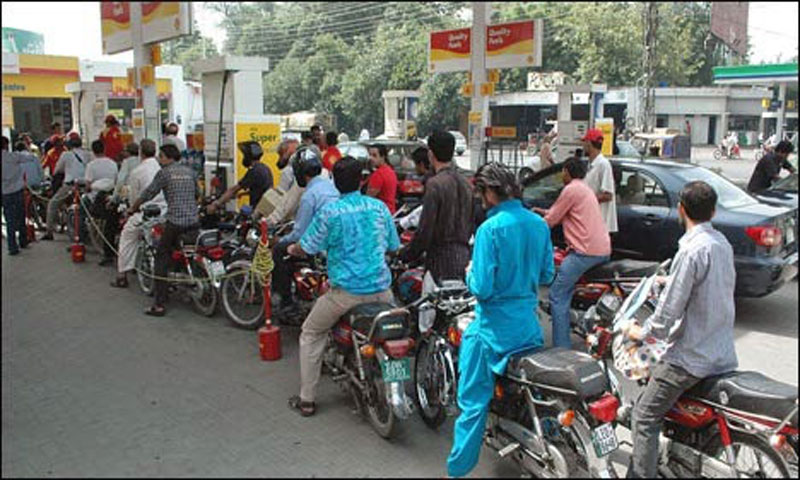
To cushion the blow, Islamabad rolled out a suite of targeted measures. Motorcycle, rickshaw and small vehicle owners of up to 800cc received fuel subsidies of between Rs50 and Rs100 per litre. Passenger buses were paid Rs100,000 a month to prevent fare increases; minibuses and vans received Rs40,000. Truck owners were allocated Rs70,000 monthly, heavy freight operators Rs80,000 ($286), and delivery vans Rs35,000. Small farmers were granted a diesel subsidy of Rs100 per litre.
The programme’s abrupt reversal follows a rapid normalisation of oil markets after Washington and Tehran reached an interim peace agreement that led to the reopening of the Strait of Hormuz in recent weeks. Crude prices fell sharply in response, enabling Islamabad last week to cut petrol prices by Rs74.28 per litre and diesel by Rs67.31 per litre — bringing them to Rs299.50 and Rs311.47 per litre, respectively.
Pakistan had separately announced last week an end to broader emergency fuel conservation and austerity measures imposed during the conflict.
At Monday’s committee meeting, Dar praised what he called sustained coordination among the federal government, provinces, Gilgit-Baltistan and Azad Jammu and Kashmir during the subsidy’s implementation. He directed officials to document lessons learned and use them to plug gaps in data collection and delivery mechanisms for future social protection initiatives.
The meeting was attended by Tariq Bajwa, special assistant to the prime minister, the federal secretaries for petroleum and information technology, the governor of the State Bank of Pakistan, and senior provincial representatives.
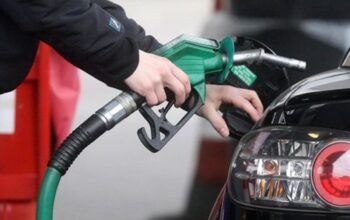
Petrol is the primary fuel for millions of motorcyclists and rickshaw drivers — the backbone of urban mobility for lower- and middle-income households. Diesel, meanwhile, underpins freight haulage and agricultural machinery, meaning prolonged price spikes carry inflationary ripple effects well beyond the pump.
Copyright © 2021 Independent Pakistan | All rights reserved