By Staff Reporter
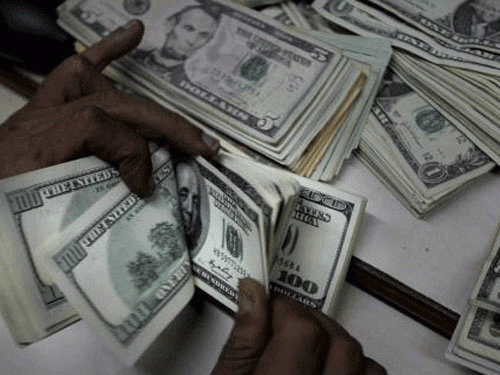
KARACHI: Pakistan’s efforts to curb black market dollar trading have bolstered the rupee, but the trade has swiftly shifted to informal channels like smartphones and home deliveries, Reuters reported on Tuesday.
The government launched its crackdown on unlicensed exchange shops on July 22, when the military spy agency summoned sector representatives to explain the rising cost of the US dollar in the open market. Raids by the Federal Investigation Agency, which targets financial crime and smuggling, soon followed, shuttering many outlets. The rupee, which had slumped earlier in July, has since firmed, climbing from 288.6 per dollar on July 19 to about 286 in recent sessions.
Yet the black market endures. Operating beyond official oversight, it encompasses unlicensed dealers, personal networks, and digital peer-to-peer exchanges. Customers turn to these channels to dodge tax declarations, sidestep cumbersome paperwork, and circumvent restrictions on formal currency purchases.
In Peshawar, a longtime hub for black market currency deals, the Chowk Yadgar district bears the scars of the crackdown, with many shops still closed. Some traders, however, continue discreetly from back-alley booths. “The trade didn’t stop. It just moved,” said Ahmad, a dealer whose family has been in the business for generations, speaking on condition his full name be withheld. “Now it’s on WhatsApp. If you know someone, the dollars come to your house.”
Another trader, Gul, who also requested anonymity, echoed the sentiment: “The big players have shifted to safer locations and kept going.” The adaptability of these networks suggests the crackdown’s impact may prove fleeting.
Retail buyers are also pivoting to informal avenues. Hassan, a manager at a multinational firm in Karachi, said tighter documentation requirements pushed him to an online forex chat group. “Everyone there is a buyer or seller. No middleman, no commission. Sometimes it’s physical cash, sometimes bank transfers, sometimes crypto,” he said.
The resilience of the black market has spurred further action from authorities. On Monday, the State Bank of Pakistan summoned bank treasury heads to tackle mounting pressure on the rupee. Two bankers, speaking on condition of anonymity, said they were instructed to stop purchasing dollars from exchange companies at rates exceeding official levels, a practice blamed for distorting the market.
Banks were directed to lean on their own inflows from exports and remittances instead. But both streams are faltering: exporters are holding off on repatriating funds, anticipating a weaker rupee, while remittances are dwindling as banks scale back incentives once used to lure overseas cash.
The central bank also urged lenders to narrow the spread between the interbank and open market rates, a key stipulation of Pakistan’s $7 billion International Monetary Fund deal aimed at curbing speculation. “These meetings have been happening for years, but this one was more pointed,” one banker noted.
Looking ahead, the central bank is expected to lower interest rates on Wednesday, a move that could temper inflation but risks renewed strain on the rupee. Traders and bankers warn that without choking off the black market entirely, the currency’s recent gains could unravel.
Copyright © 2021 Independent Pakistan | All rights reserved