By Staff Reporter
KARACHI: A Pakistani data centre venture backed by the Gul Ahmed Energy Group said it had signed a partnership agreement with Huawei’s local unit to build the country’s largest Tier III data centre, with an initial investment of $230 million that could climb to $600 million within four years.
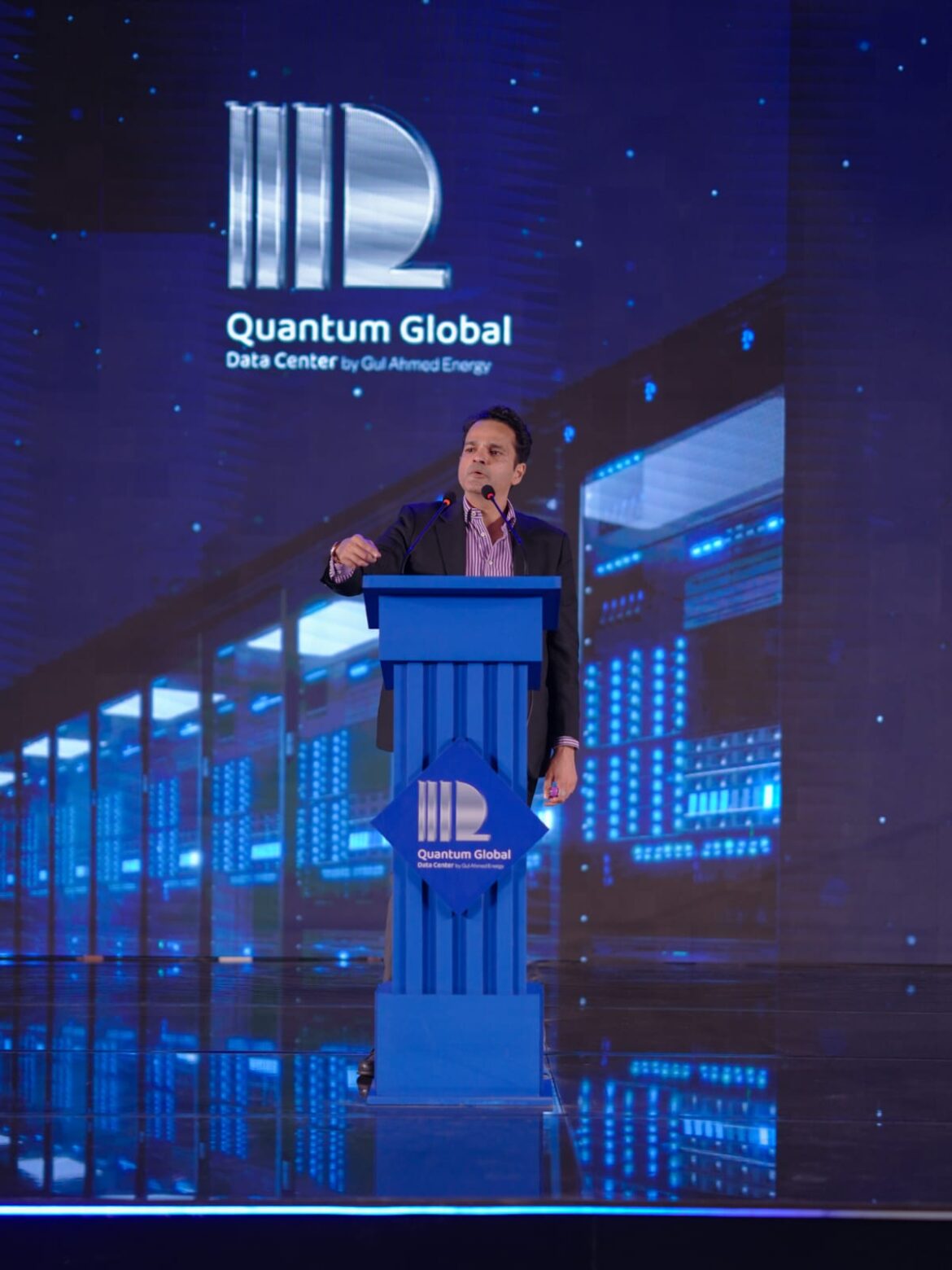
Quantum Global Data Centre (QGDC) and Huawei Pakistan inked the deal at the Q Summit in Karachi, an industry gathering hosted by both companies that drew senior government officials, banking and telecommunications executives, and technology investors to debate Pakistan’s digital infrastructure ambitions.
The facility, expected to become operational in 2027, is designed to handle cloud computing, artificial intelligence workloads, high-performance computing, digital finance, and e-government services. Alongside the data centre, the partners plan to develop a science and technology park as part of a broader push to anchor a digital ecosystem in the city.
“This collaboration with Huawei represents a transformative step for Pakistan’s digital future,” Danish Iqbal, chairman of QGDC, said at the signing ceremony. “We are creating the foundation for innovation, economic growth, and technological advancement.”
The partnership agreement was signed by Ubaid Amanullah, chief operating officer of QGDC, and Ahmed Bilal Masud, chief executive of Huawei Pakistan’s AI and cloud business.
Sovereignty and scale
Iqbal struck a note of urgency in his address to the summit, warning that Pakistan was already spending between $700 million and $800 million annually on AI-related computing despite what he described as minimal domestic adoption — a figure he said would surge as businesses, hospitals, educational institutions and public services shift to cloud-based systems.
“Right now, with this minimal AI, we haven’t even started,” he said. “For our economies to grow, we need to go to very high AI compute. And that compute, without data centres, we will not be able to do.”
Without domestic infrastructure, he cautioned, Pakistan risked becoming dependent on foreign computing capacity at a steep and rising cost. “We are at that stage that if we don’t take this chance right now, we will miss this boat,” Iqbal said. “And this will be a very costly boat, which we will not be able to build.”
Masud echoed that framing, saying robust digital foundations were a prerequisite for meaningful AI adoption. “When modern data centres, high-performance computing, secure cloud platforms, and trusted digital infrastructure come together, they unlock new opportunities for businesses, governments, and society,” he said.
A key feature of the partnership is the planned deployment of Huawei Cloud Stack, the Chinese technology giant’s sovereign cloud solution, which is marketed to governments and financial institutions seeking to retain full control over data, security, and compliance. Huawei said its cloud platform currently serves customers across more than 170 countries.
Government backing
The Sindh provincial government signalled its support at the summit, with Ali Rashid, the province’s minister for science and information technology, reaffirming its commitment to the project and to a separate Karachi Technopolis initiative being developed in conjunction with QGDC and Huawei.
Rashid said the two projects would establish a core digital ecosystem in Karachi, positioning the city as a hub for data centres and advanced technology. “The future is built on data and IT,” he said, pledging the government’s full support.
The project aims to strengthen what officials described as Pakistan’s data sovereignty — the ability to store and process sensitive national data domestically rather than relying on foreign-hosted services — while attracting investment and supporting what QGDC billed as the country’s emergence as a competitive digital economy.
Pakistan has lagged regional peers in digital infrastructure investment, and the project represents one of the largest single technology commitments announced in the country in recent years. Whether the investment timeline and scale will be met will depend in part on Pakistan’s ability to attract the foreign capital and technical expertise required, as the country continues to navigate a fragile macroeconomic recovery.
Copyright © 2021 Independent Pakistan | All rights reserved