By Staff reporter
ISLAMABAD: Pakistan’s second nationwide anti-polio campaign of the year reached more than 44.7 million children under age 5 but missed its goal by roughly 300,000, health officials said Monday, even as workers fanned out across the country in a high-stakes effort to stamp out the paralyzing disease in one of its last remaining strongholds.
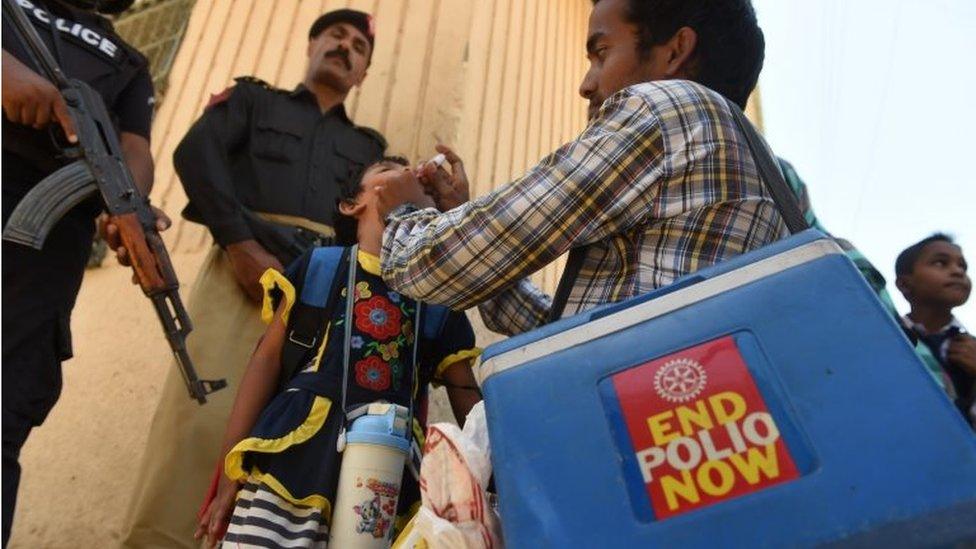
The week-long drive, which ran from April 13 to 19, aimed to vaccinate more than 45 million children. More than 400,000 polio workers conducted door-to-door vaccinations, administering oral polio drops along with Vitamin A supplements to bolster immunity, according to data released by the National Emergency Operations Centre, the body that coordinates the country’s polio eradication program.
In a statement, the NEOC described the effort as a success driven by the cooperation of parents and communities. “Due to the tireless efforts of polio workers, the vaccine reached over 44.7 million children across the country,” it said. Provincial figures showed the heaviest coverage in Punjab, where more than 23 million children were vaccinated. Sindh reported more than 10.4 million, Khyber Pakhtunkhwa more than 7.2 million and Balochistan more than 2.6 million. In the federal capital, Islamabad, the tally was more than 441,000; Gilgit-Baltistan recorded more than 292,000 and Azad Jammu and Kashmir about 717,000.
The shortfall of approximately 300,000 children was not unexpected, according to a senior polio expert. The expert noted that missed vaccinations typically stem from families traveling or from outright refusals. By comparison, he said, nationwide campaigns usually miss between 800,000 and 1 million children. “If accurate data has been provided, I believe that the latest campaign is an achievement,” the expert said.
Pakistan, along with neighboring Afghanistan, remains one of only two countries where wild poliovirus is still endemic. The disease, which spreads through contaminated water and can cause permanent paralysis, primarily strikes children under 5. Transmission peaks during the hot-weather months from May to September, when the virus becomes more active, and slows from late September through early May.
The expert stressed the urgency of sustaining high immunization rates as the high-transmission season approaches. “The virus responsible for the crippling disease becomes more active with the increase in temperature from May to September,” he said. The February campaign, the first of the year, vaccinated more than 44.3 million children but left about 1 million unvaccinated and recorded 53,000 refusals. So far this year, Pakistan has confirmed one polio case, in Sujawal district of Sindh province. The country reported 31 cases in 2025.
Pakistan’s polio eradication program, launched in 1994, has made substantial progress over the decades but has been repeatedly hampered by deep-seated challenges. Vaccine misinformation has persisted for years, fueled in part by religious hardliners who have portrayed the immunization drive as a Western conspiracy to sterilize Muslim children or a cover for espionage. Militant groups have repeatedly attacked vaccination teams, particularly in Khyber Pakhtunkhwa and Balochistan, forcing the government to deploy security personnel alongside health workers.
Those dangers were underscored again on the first day of the latest campaign, when gunmen opened fire on a polio team in Khyber Pakhtunkhwa, killing one police officer and wounding four others. Despite the obstacles, officials and health workers have continued the painstaking work of tracking down every child. The NEOC credited the latest campaign’s relatively strong performance to the “strong support and cooperation of parents and communities.”
Copyright © 2021 Independent Pakistan | All rights reserved