By Staff Reporter
ISLAMABAD: Pakistan’s trade deficit widened sharply in the opening months of the new fiscal year, as a resurgence in import demand outstripped export growth and renewed pressure on a currency and current-account position the government has spent the past two years trying to stabilize.
The gap between imports and exports climbed 18.1% from a year earlier to $7.12 billion in July and August, according to data released on Thursday by the Pakistan Bureau of Statistics. That compares with a $6.03 billion shortfall in the same period of the last fiscal year.
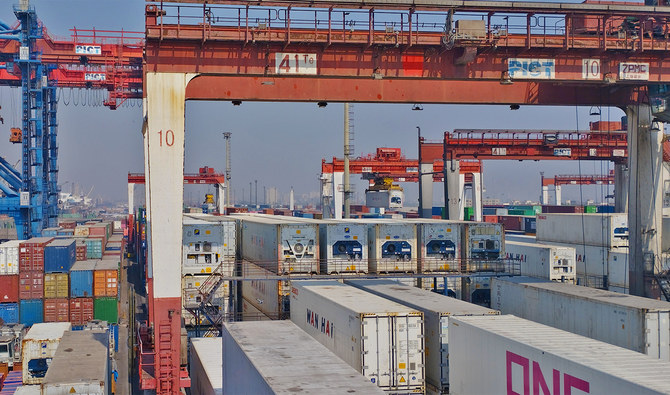
Imports rose 13% to $12.58 billion in the two-month period, while exports increased 7% to $5.46 billion. The divergence marks a continuation of a pattern that has dogged Pakistan’s external accounts for much of the past year: overseas sales are growing, but not fast enough to keep pace with the country’s appetite for imported goods.
The widening deficit complicates the picture for policymakers who have leaned on a tighter import regime and a series of external financing arrangements to shore up foreign-currency reserves since the balance-of-payments crisis of 2023. Pakistan is currently working through an economic overhaul tied to its arrangement with the International Monetary Fund, one that hinges in part on narrowing the structural gap between what the country buys from abroad and what it sells.
The two-month deficit builds on an already difficult start to the fiscal year. July’s shortfall alone came in at $3.94 billion, a 25.2% jump from the same month last year, as both imports and exports rose in tandem.
August brought some relief on a sequential basis. The monthly deficit narrowed 19.7% to $3.17 billion from July’s $3.95 billion, with imports falling 17.7% to $5.68 billion and exports slipping 15% to $2.51 billion. But the improvement was almost entirely a function of the pullback from July’s elevated levels rather than any underlying shift in trade dynamics — and the year-on-year comparison told a different story. August’s deficit was still 10.4% wider than the $2.87 billion recorded in the same month of 2025, with imports up 7.4% from $5.29 billion and exports rising a more modest 3.8% from $2.42 billion.
That pattern — a monthly deficit that looks smaller than the month before but larger than the year before — points to persistent strength in import demand that has yet to be matched on the export side, even as the government continues to tout a broader stabilization of macroeconomic conditions, including firmer industrial activity and rebuilt foreign reserves.
The trade data lands as Pakistan tries to project a steadier economic footing to investors and multilateral lenders after several years of volatility that included a currency crisis, near-default and a sharp compression in import volumes to conserve dwindling reserves. The current widening suggests that as economic activity picks up, the reflex to import — for energy, raw materials and intermediate goods feeding domestic industry — is reasserting itself faster than export competitiveness is improving.
Pakistan’s central bank and Ministry of Finance have repeatedly flagged the trade and current-account balance as a key vulnerability, particularly given the country’s reliance on external financing to meet debt-servicing obligations. A sustained widening in the goods deficit typically flows through to pressure on the rupee and on reserve buffers, unless offset by remittance inflows or other capital account support.
Copyright © 2021 Independent Pakistan | All rights reserved