By Staff Reporter
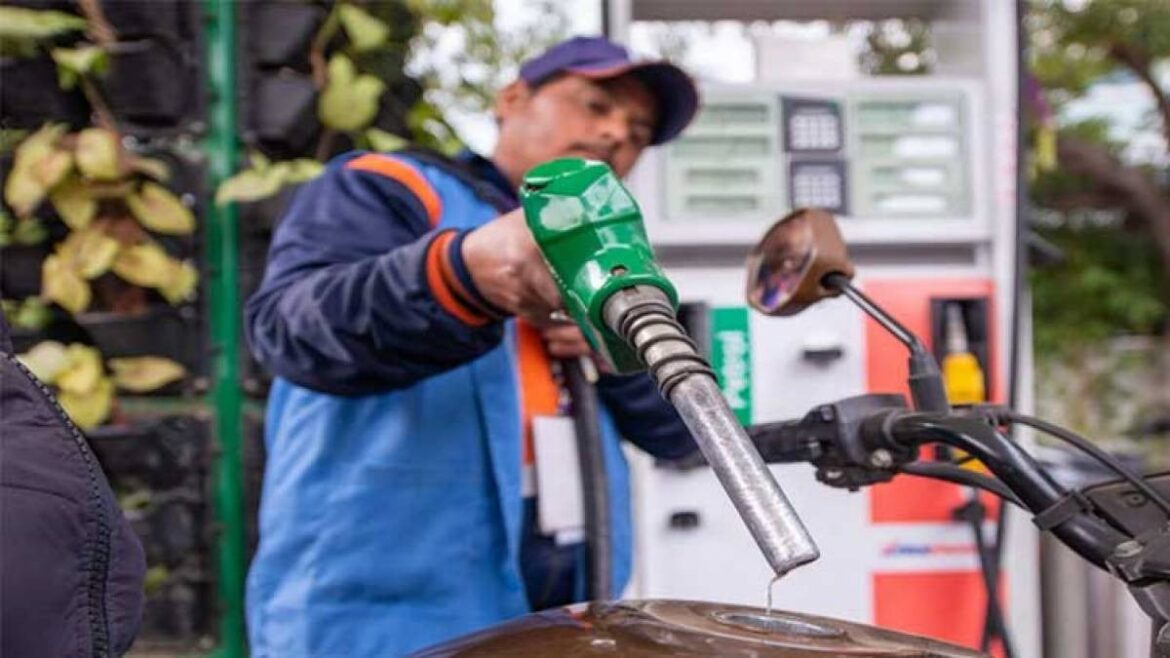
ISLAMABAD: Petrol and diesel prices in Pakistan are poised to climb by as much as Rs6.60 per litre starting July 16, 2025, industry estimates show, threatening to pile more pressure on an economy already reeling from high living cost and fiscal strain.
The petroleum industry forecasts a 2.5% increase in petrol prices, pushing the cost to Rs273.39 per litre from Rs266.79, and a 1.9% rise in high-speed diesel (HSD) to Rs278.25 per litre from Rs272.98 over the next 15 days.
In contrast, kerosene oil and light diesel oil (LDO) may see reductions of 2% and 1.3%, dropping by Rs3.74 and Rs2.23 per litre, respectively.
These projections hinge on a Petroleum Levy (PL) and Carbon Support Levy (CSL) of Rs78.02 per litre on petrol and Rs77.01 per litre on HSD, with Inland Freight Equalization Margins (IFEM) at Rs8.89 per litre for petrol and Rs6.04 per litre for HSD.
Exchange rate adjustments of Rs3 per litre on petrol and Rs2 per litre on HSD, alongside premiums of $9.68 per barrel on petrol and $3.25 per barrel on HSD, are also factored in.
The Oil and Gas Regulatory Authority (OGRA) is slated to finalize its recommendations on July 15, weighing global market trends against the government’s budgetary targets for the Petroleum Levy and carbon tax. The Finance Division will then announce the official prices, setting the stage for the latest round of adjustments.
The looming increases reflect a volatile international oil market and Pakistan’s domestic fiscal policies. The country imports 85% of its petroleum consumption as refined petrol and 15% as crude oil, leaving it exposed to global price swings, exacerbated recently by the Iran-Israel conflict.
At home, the government’s aggressive tax regime, including a new climate support levy, is adding to the burden at the pump. On July 1, petrol prices jumped 3.2% by Rs8.36 to Rs266.79 per litre, while HSD surged 3.8% by Rs10.39 to Rs272.98 per litre. Authorities pinned that hike on global market turbulence tied to the Middle East tensions, a trend that continues to shape the current outlook.
The price hikes will hit Pakistan’s transport and agriculture sectors hardest. HSD powers heavy vehicles, trucks, buses, and trains, as well as farm equipment like tractors, tube-wells, and threshers. Any uptick in its cost is expected to ripple through supply chains, driving up prices for vegetables and other essentials.
Transport fares, notoriously sticky downward, are unlikely to ease even if fuel prices later retreat. Petrol, fueling private cars, rickshaws, and two-wheelers, will further squeeze middle- and lower-middle-class households already battling the high cost of living. With consumer budgets stretched thin, the increases could dampen spending and deepen economic woes.
The government rakes in roughly Rs100 per litre in taxes on both petrol and HSD. That haul includes a Rs2.5 per litre climate support levy, rolled out on July 1, atop a Rs78 per litre petroleum development levy (PDL) on petrol, diesel, and high-octane blends. A customs duty of about Rs19 per litre applies to both locally produced and imported fuels, while oil companies and dealers pocket Rs17 per litre in distribution and sales margins. The general sales tax (GST) remains at zero. To accommodate the carbon tax, the PDL was trimmed slightly, from Rs78.02 to Rs75.52 per litre on petrol and from Rs77 to Rs74.51 per litre on HSD. Yet these tweaks have done little to blunt the overall price surge.
Copyright © 2021 Independent Pakistan | All rights reserved