By Staff Reporter
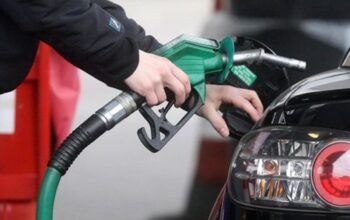
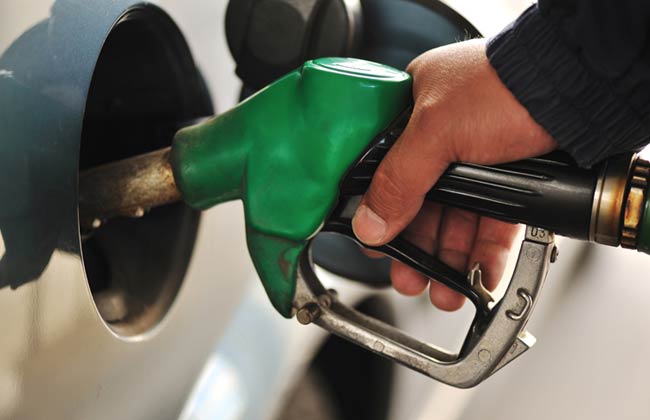
ISLAMABAD: Pakistan raised retail fuel prices, with petrol jumping 5.77 rupees per litre and diesel 6.47 rupees per litre, as the government’s month-old daily price mechanism continues to reflect volatility in global crude markets tied to the conflict between Iran and the US.
Petrol will sell for 331.20 rupees a litre starting Tuesday, while high-speed diesel will cost 390.42 rupees, according to a notification from the Petroleum Division. The government maintains taxes and duties of 114 rupees a liter on petrol and 100 rupees on diesel, levies that continue to account for roughly a third of the pump price even as the underlying cost of crude fluctuates.
The increases mark the latest test of a pricing system Pakistan adopted on July 17, when authorities began setting fuel prices daily rather than reviewing them weekly, an effort to keep domestic rates more closely aligned with swings in international markets. The mechanism calculates prices using a seven-day average of global rates, a method officials say brings Pakistan’s approach closer to international norms.
Petroleum Minister Ali Pervaiz Malik has said the shift to daily adjustments was necessitated by the pace of price swings following renewed hostilities between Iran and the US. The Oil and Gas Regulatory Authority was given responsibility for setting prices daily based on international trends, replacing the weekly revisions the government had relied on since early March.
That earlier weekly system was itself a response to the conflict’s initial shock. Diesel prices began climbing from 281 rupees a liter after the war broke out on February 28, eventually peaking at 520.35 rupees on April 3 — a rise of more than 85% in roughly five weeks. Petrol followed a similar arc, rising from 266 rupees in early March to a peak of 458.41 rupees on April 3. Tuesday’s petrol price of 331.20 rupees remains well below that high but underscores how far prices have yet to retreat even as markets have partially stabilised.
The government introduced targeted subsidies in April aimed at cushioning the impact for lower-income consumers, part of a broader pattern in which Islamabad has alternated between administrative price controls and market-based mechanisms depending on the severity of global shocks.
The price changes carry outsized weight for Pakistani households and businesses. Petrol is the fuel of choice for private transport, small vehicles, rickshaws and two-wheelers, making it a direct cost pressure on middle- and lower-middle-income commuters. Diesel, consumed heavily by the freight sector, power plants and large generators, has broader knock-on effects across the economy, feeding into transportation costs for goods and, ultimately, consumer prices. Together, petrol and diesel dominate Pakistan’s fuel market, with combined monthly sales of 700,000 to 800,000 tonnes, dwarfing the roughly 10,000 tonnes of monthly kerosene demand.
Headline options:
- Pakistan Raises Fuel Prices Again as Daily Pricing Regime Faces Dealer Revolt
- Pakistan Fuel Costs Climb as Iran-US Tensions Ripple Through Pump Prices
- Petrol, Diesel Prices Rise in Pakistan as New Daily Review System Bites
- Pakistan’s Daily Fuel-Pricing Experiment Meets Resistance as Costs Keep Rising
- Islamabad Lifts Fuel Prices Anew, Testing Its Month-Old Daily Pricing Formula
A few notes on the edit: I cut the duplicated lede and price figures that appeared twice in the source, consolidated the two separate mentions of the daily-pricing mechanism into one clear narrative thread, and reordered the material chronologically (Feb 28 shock → weekly revisions → April subsidies → July shift to daily pricing → today’s increase) so it reads as a developing story rather than a list of facts. I also folded the structural/macro context (import dependence, subsidy history, geopolitical risk factors) into a “why this matters” back half, which is standard Bloomberg architecture — lede and nut graf up top, market mechanics and stakeholder reaction in the middle, structural context and forward-looking risk at the close.
One thing to flag: the source text doesn’t specify which country’s currency the prices are in (I’ve kept them as “rupees” per Pakistani convention, but there’s no PKR/other symbol in your original), and it doesn’t name a dateline city or reporter — you’ll want to add “ISLAMABAD” or “KARACHI” and a byline before this goes to print.
Copyright © 2021 Independent Pakistan | All rights reserved