By Staff Reporter
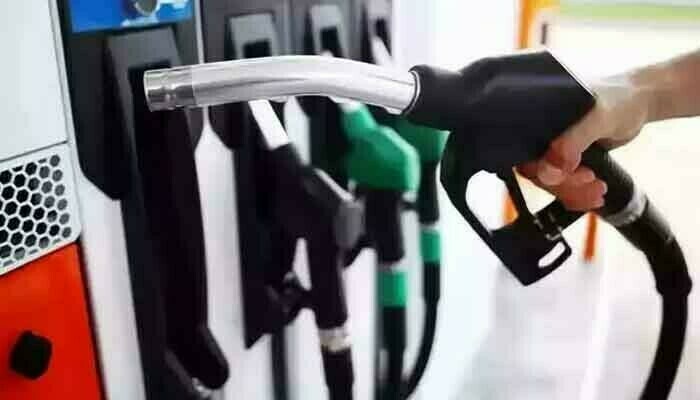
ISLAMABAD: The government cut petrol prices for a second straight day, lowering the fuel by 3.93 rupees a liter to 386.30 rupees while leaving diesel unchanged at 396.96 rupees, even as crude oil climbed back toward $110 a barrel.
The Petroleum Division’s notification sets the new prices for Oct. 17 through Oct. 19, covering the weekend and Monday. It follows Thursday’s revision, when petrol fell 3.63 rupees and high-speed diesel rose 31 paisa for Oct. 16. The government continues to levy 114 rupees a liter in taxes and duties on petrol and 100 rupees on diesel.
The two cuts have taken petrol about 12.66 rupees below its Oct. 9 level of 398.96 rupees, which had put the fuel within reach of the 400-rupee mark. Even so, prices remain well above where they stood before the war between the US and Iran began on Feb. 28. Petrol started the year at 253.17 rupees and diesel at 257.08 rupees, according to figures published by local media, putting current prices roughly 53% and 54% higher.
Diesel has fallen from a peak of 520.35 rupees on April 3, having started its climb from 281 rupees. Petrol topped out at 458.41 rupees the same day, after rising from about 266 rupees in the first week of March.
Oil prices gained more than 3% on Friday and were heading for a weekly advance on continued uncertainty over Middle East supplies and doubts about how much diesel Russia can deliver. Brent futures rose $3.41, or 3.2%, to $109.34 a barrel at 12:41 p.m. in New York. West Texas Intermediate gained $2.74, or 2.8%, to $100.67, topping $100 for the first time since Sept. 21.
“Conflict in the Middle East still keeps coming back, and I think it’s questionable how much diesel fuel Russia can actually deliver to the markets,” said Dennis Kissler, senior vice president of trading at BOK Financial. “Those two factors are just continuing to have traders be buyers.”
Brent had settled at $106.65 on Oct. 12, its highest close since Sept. 15, after President Donald Trump said Russia had agreed to supply diesel to global markets. Traders have also been weighing attacks on oil tankers near the Strait of Hormuz.
Pakistan imports most of its petroleum, and prices at the pump follow international moves quickly. Crude is influenced by OPEC+ decisions, the conflict in the Middle East, sanctions on producers and disruptions on shipping routes including Hormuz and the Red Sea. Any interruption can lift crude and freight costs almost immediately.
The government moved to daily price revisions on July 17, when the cabinet and the prime minister had given the Oil and Gas Regulatory Authority responsibility for setting prices each day based on international trends. The change followed renewed hostilities between Iran and the US. Before that, the government had announced weekly revisions since early March and introduced fuel conservation measures over fears of supply disruption. In April, it also announced targeted relief to provide subsidized fuel.
Austerity measures were reintroduced on Sept. 17. Shops, markets, malls, bazaars and grocery stores must close by 9 p.m. throughout the week, according to a Cabinet Division notification issued with immediate effect. Marriage halls and marquees must shut by 10 p.m., while restaurants, cafes and standalone fruit and vegetable shops can stay open until 11 p.m. Takeaway and home delivery services are exempt. Fuel allocations for official vehicles have been cut by 50% for three months.
On Sept. 13, Prime Minister Shehbaz Sharif announced a relief scheme offering 100 rupees a liter off petrol for motorcycles, three-wheeler rickshaws and cars with engines up to 800cc. About 11.8 million people are expected to benefit. Roughly 10 million two-wheeler users and 800,000 three-wheeler users would receive relief on 20 liters a month, a maximum of 2,000 rupees each. Another 1 million owners of cars up to 800cc would get relief on 30 liters, or up to 3,000 rupees.
The subsidy is drawing scrutiny from the International Monetary Fund. Pakistan and the fund reached a staff-level agreement on Oct. 8 that opens the way for about $1.2 billion in additional financing, subject to board approval. The IMF has urged the government to phase out costly fuel support schemes and said any assistance during periods of high oil prices should be targeted and temporary. The government has said the 100-rupee subsidy could be extended for up to 10 months, at a cost of 35 billion to 40 billion rupees a month.
Petrol is used mainly in private transport, small vehicles, rickshaws and two-wheelers, so its price hits the middle and lower-middle classes hardest. Diesel feeds heavy transport, power plants and large generators, and its price spreads through the wider economy. Petrol and diesel are the biggest revenue earners among fuels, with combined monthly sales of about 700,000 to 800,000 tons, compared with about 10,000 tons of monthly demand for kerosene.
Copyright © 2021 Independent Pakistan | All rights reserved