By Staff Reporter
ISLAMABAD: Pakistan will continue its diplomatic efforts to ease tensions between the United States and Iran, its foreign minister said on Monday as he closed a meeting of a 10-nation regional economic bloc in Islamabad.
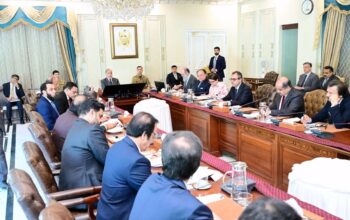
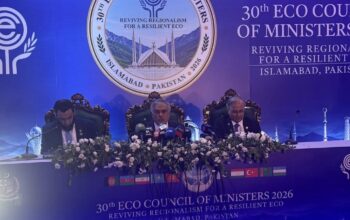
Ishaq Dar, who is also deputy prime minister, chaired the 30th Council of Ministers meeting of the Economic Cooperation Organisation (ECO). Pakistan holds the group’s chairmanship for 2026-27.
“Pakistan will continue these diplomatic efforts in support of dialogue, de-escalation, and lasting regional stability,” Dar said. He added that Prime Minister Shehbaz Sharif and Field Marshal Asim Munir, the chief of defence forces and army chief, “remained closely engaged with brotherly countries and international partners to facilitate peaceful outcomes”.
Pakistan hosted the first direct talks between Washington and Tehran in April, and the two sides signed an interim deal in June to end the conflict. Each has since accused the other of prolonging the standoff over the Strait of Hormuz, whose closure has pushed up oil prices and hurt Pakistan’s struggling economy.
The meeting, held under the theme “Reviving Regionalism for a Resilient ECO”, adopted the Strategic Goals of Economic Cooperation 2035 and the Islamabad Communiqué. Dar called the strategic goals an “important milestone in charting the future course of our organisation over the next decade”.
“Our task now is to translate our collective commitments into concrete action,” he said. “This will require clear priorities, realistic timelines, and effective follow-up mechanisms.”
Afghanistan
In his opening address, Dar said Pakistan wanted a “peaceful, prosperous and stable Afghanistan”, fully integrated into the ECO framework. That would open new avenues for trade, transit and economic cooperation, he said.
“At the same time, meaningful progress requires the Afghan authorities to address the legitimate security concerns of the neighbouring countries, particularly the threat of terrorism,” he said.
No Afghan diplomat attended the meeting. Relations between Islamabad and Kabul have worsened this year after repeated border clashes. Pakistan accuses the Taliban government of sheltering the Tehrik-e-Taliban Pakistan, the Baloch Liberation Army and al-Qaida in the Indian Subcontinent, a charge Kabul denies.
Dar also said regional connectivity “depends upon trust between states and confidence that international commitments will be honoured”. He warned that “unresolved disputes and the non-fulfilment of international obligations can erode that trust and impede economic progress”.
Iran’s address
Iranian Foreign Minister Abbas Araghchi called for a “reliable and sustainable regional energy mechanism to safeguard energy flows, ensure stable supplies, reduce external vulnerabilities and enhance collective resilience against geopolitical shocks and disruptions”, according to a transcript supplied by Iran’s embassy in Pakistan.
He spoke of the US-Israeli war on Iran, which has also choked the Strait of Hormuz and Bab al-Mandab, two key fuel supply routes. Araghchi said Iran had “remained committed to diplomatic engagement and peaceful solutions”, but that Washington had chosen a course “marked by aggression, threats, targeted assassinations, economic coercion, and blockades, in flagrant violation of international law and the UN Charter”.
He said Iran had “no inherent dispute” with countries in the region and that their “territories, airspace and facilities… must not be used as platforms for launching attacks against each other”. Iran’s “legitimate defensive measures”, he said, were aimed only at “the targets and military bases of the aggressors” and should not be read as actions against neighbouring peoples or governments.
Araghchi also described the genocide in Gaza as “the most pressing international crisis”. He said it was a moment that called for “an end to silence and indifference”. He argued that ECO was moving beyond its traditional role towards becoming “an effective platform for collective action”, and called for a “modern, new-generation, more inclusive, effective and operational trade agreement”.
Pakistan’s priorities
Dar set out five priorities for Pakistan’s chairmanship: expanding trade and investment, strengthening regional connectivity, advancing the ECO Trade Agreement, building regional resilience and promoting human development.
He said the region’s natural resources, energy reserves, agricultural potential and strategic location offered considerable opportunity. Realising it, he said, required working transport corridors, efficient border procedures and predictable transit arrangements.
Pakistan would seek to improve transport and transit links between Central Asia, South Asia and its ports on the Arabian Sea, he said. It would also push for harmonised customs procedures and wider market access, with greater private-sector participation, particularly by small and medium-sized businesses.
On the trade agreement, Dar said the negotiating strategy and roadmap approved by ECO trade ministers in November 2025 provided a basis for modernising the pact. On resilience, he called for closer cooperation on disaster preparedness, early warning systems, water management and climate-resilient infrastructure. He said climate change and mounting pressure on water and energy resources posed serious challenges to regional economies. He also stressed education, research, innovation and vocational training as ways to equip young people for changing economies.
“Peace and development reinforce each other,” he said, warning that conflict and insecurity could disrupt trade routes, energy supplies, investment and economic projects.
Meeting with the prime minister
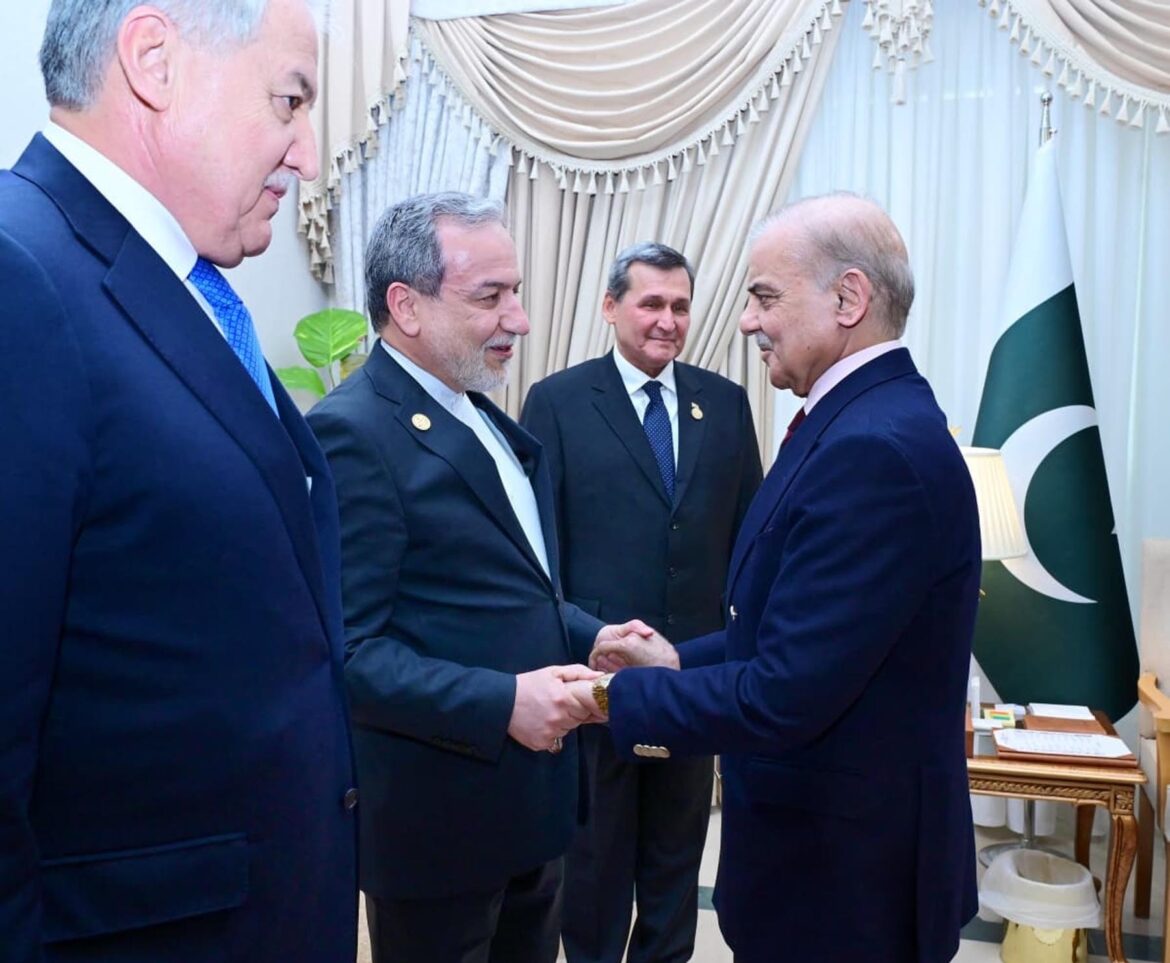
Separately, the foreign ministers and delegation heads of ECO member states called on Sharif, according to a handout from the prime minister’s office. He welcomed the adoption of the communiqué and the 2035 goals as “important steps” towards strengthening the organisation.
The handout said he pointed to Pakistan’s road, rail and multimodal links, including connections to the ports of Karachi, Port Qasim and Gwadar. These, it said, would help landlocked member states reach regional and international markets. He also urged more effective implementation of existing ECO agreements.
Senior officials from member states had finalised the agenda and draft communiqué on Sunday, at a preparatory meeting chaired by Foreign Secretary Asim Iftikhar Ahmad, the foreign ministry said.
The ECO was founded in 1964 and also includes Türkiye, Azerbaijan, Kazakhstan, Kyrgyzstan, Tajikistan, Turkmenistan and Uzbekistan, as well as Iran, Pakistan and Afghanistan.
Dar wished Iran success in hosting the 18th ECO summit on 3-4 December and said he looked forward to welcoming members back to Islamabad for the 31st Council of Ministers meeting in 2027.
Copyright © 2021 Independent Pakistan | All rights reserved