By Staff Reporter
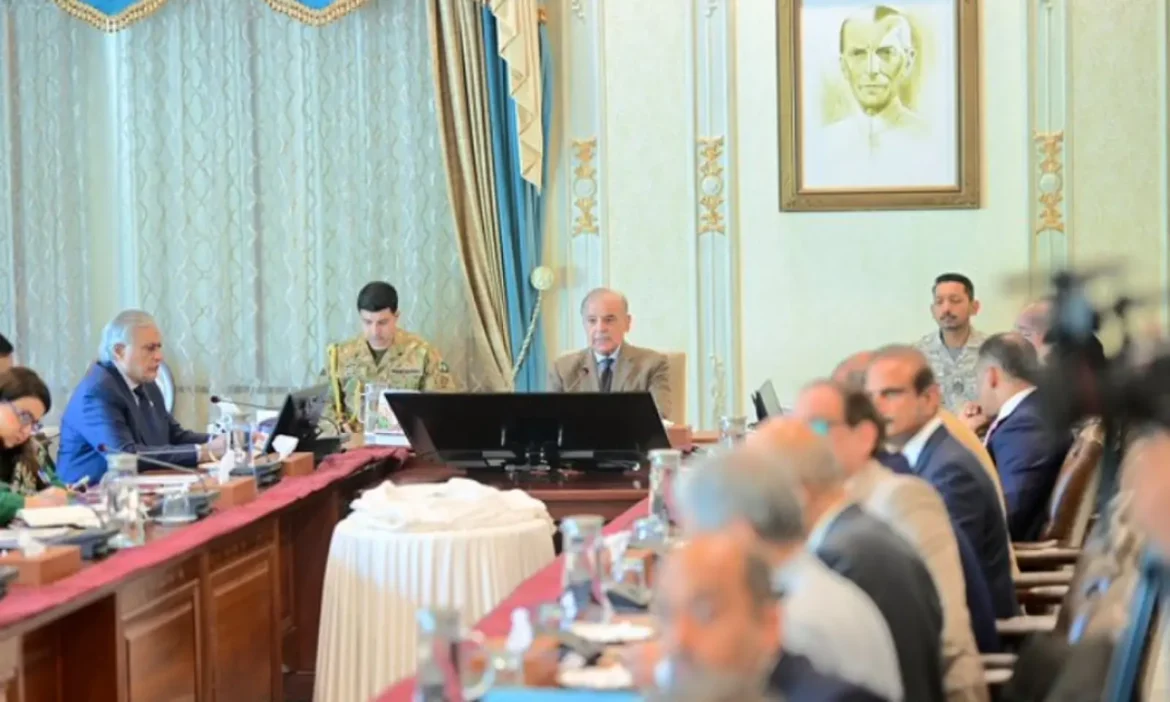
ISLAMABAD: Prime Minister Shehbaz Sharif ordered recoveries from oil marketing companies without discrimination after an audit of their bonded warehouses found tax irregularities of 24.4 billion rupees, his office said Tuesday.
The audit was conducted on the prime minister’s instructions, and he told authorities to take action and recover the outstanding amounts. The Prime Minister’s Office said recoveries are being pursued through legal procedure.
Sharif was chairing his weekly review of the Federal Board of Revenue, which he has used this year to press for higher collections and tighter enforcement. The fuel audit is the latest step in a campaign against leakage in bonded storage, where imported goods are held free of duty and tax until they are cleared or re-exported. In August, Sharif ordered an independent audit covering three years of operations at bonded warehouses nationwide, along with physical verification of stocks. In May, he formed a committee headed by Finance Minister Muhammad Aurangzeb to examine the possible recovery of 72 billion rupees in alleged windfall profits earned by oil marketing companies after oil price swings following the Gulf War.
The Tuesday meeting also covered the government’s push to widen the tax net and plug smuggling routes, according to the PMO statement.
Officials said a cargo tracking system is being developed to curb the sales tax gap and smuggling. It would follow goods from loading to delivery on a single digital platform, combining an electronic consignment note, a risk management system, field enforcement and an analytics dashboard. A steering committee with provincial representation is being formed to oversee its rollout.
The Indus Collectorate, an enforcement unit with 856 staff that operates on bridges over the Indus River, has seized illegal goods worth 1.85 billion rupees in 302 operations so far, the statement said.
Sharif directed faster customs clearance and immigration processing at airports and asked that smart scanning systems be running at all international airports as soon as possible. The systems, now being installed at major airports with the help of other agencies, will automatically send passengers’ baggage to the green or red channel.
Officials told the meeting that additional security features have been added to several software systems at Pakistan Revenue Automation Ltd., the FBR’s technology arm, to protect data integrity. Departmental action is also under way against FBR officers who had issued unauthorized consumption certificates under the tax exemption for the former tribal areas, known as FATA and PATA.
Sharif said he hopes recent visits by the FBR chairman to Karachi and Lahore, and his meetings with traders and industrialists, will help trade, exports and investment. The FBR is also opening an office in Karachi’s Korangi Industrial Estate to serve manufacturers locally.
The prime minister was told that separate sales tax zones are being created in the four largest taxpayer units: Karachi, Lahore, Islamabad and Multan. The move follows a decision to reverse the functional integration of sales tax and income tax collection after 17 years. Officials say the sales tax revenue gap has widened to 3.4 trillion rupees on weak enforcement and poor collection. The gap for income tax is estimated at 2 trillion rupees.
Sales tax and federal excise administration were moved from Customs to the Inland Revenue Service in 2009 under a World Bank-backed reform meant to integrate tax administration. Under the new arrangement, specialized officers will handle each tax separately, though both stay within the IRS rather than in separate services.
At the chief commissioner level, the structure for sales tax and income tax will stay unchanged for now, while functional separation begins at the commissioner level and extends to subordinate officers. Sales tax accounts for nearly 55% of the combined 6.2 trillion rupee revenue gap, and about 90% of its collections come from just 15,000 taxpayers, according to internal FBR estimates. Results of proficiency tests given by FBR Chairman Rashid Langrial, which were leaked to the media, showed only about 15 of 150 officers could decide sales tax cases on their own signature.
The Policy Research Institute of Market Economy, a think tank, said separate officers would break the link that lets an auditor who catches under-reported sales in one tax also uncover hidden income. The FBR has pointed to a 1.7% drop in domestic sales tax last fiscal year, against a 17% rise at the import stage, as the reason for the change.
Copyright © 2021 Independent Pakistan | All rights reserved