By Staff Reporter
ISLAMABAD: Prime Minister Shehbaz Sharif rejected yet another proposal to raise petrol and high-speed diesel prices, choosing instead to have the government absorb an additional Rs56 billion in costs as global oil prices remain elevated by the conflict in the Middle East.
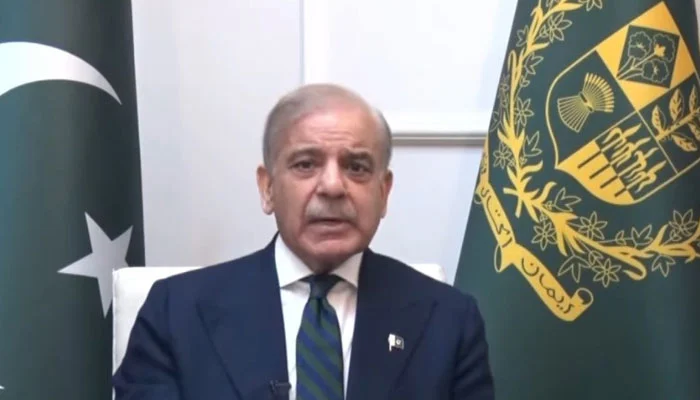
In a nationally televised address on Friday, Sharif said he had turned down a summary recommending an increase of Rs95 per liter for petrol and Rs203 per liter for high-speed diesel. The decision keeps retail prices unchanged for another week, with the federal government shouldering the full burden. “I was advised to increase the price of petrol by Rs95 per litre and diesel by Rs203 per litre, but I refused again in view of the difficulties faced by the people and decided that the government would bear the cost, amounting to Rs56b,” he said. “This week, the federal government will absorb an additional burden of Rs56 billion and the public will not have to bear this cost.”
The premier noted that international market prices would currently justify petrol at Rs544 per liter in Pakistan and high-speed diesel at Rs790 per liter. Instead, consumers are paying Rs322 for petrol and Rs335 for diesel. Over the past three weeks the government has already shouldered a cumulative Rs125 billion in such subsidies, money that could have financed major development projects but was redirected to protect household finances, he added. “This amount could have been used to fund numerous major development projects for your welfare, but at this moment, nothing is more important to me than protecting your financial well-being,” Sharif said.
The address followed an “extraordinary and extremely challenging situation” in global energy markets, where even resource-rich developed economies are struggling, the prime minister said. Pakistan, he added, had moved early to prepare for the storm by making tough choices, including a Rs100 billion cut in the development budget and a series of austerity measures across federal and provincial governments. “It must be clear to you that today every litre of petrol that is filled in your vehicle reflects the government’s policy of austerity and its realisation of responsibility,” Sharif said.
The latest decision follows a Rs55-per-liter, or roughly 20 percent, increase in both petrol and diesel prices announced on March 6 after the escalation of the US-Israel-Iran conflict disrupted supply chains and pushed crude to two-year highs. Iran’s subsequent threat to close the Strait of Hormuz added further pressure. Last week the government raised the fuel levy on high-octane gasoline used in luxury vehicles by Rs200 per liter, taking the total levy to Rs300 and the pump price to Rs600 per liter. Additional steps include an extra weekly holiday for government offices, reduced free-fuel allocations for ministers, curbs on protocol vehicles, and proposals for subsidized fuel for students.
In last Friday’s address Sharif had warned that further increases could not be ruled out if the situation deteriorated, while noting the government had already spent Rs69 billion to avert even larger jumps of Rs127 per liter in petrol and Rs252 per liter in diesel. He cited the imminent Eidul Fitr holiday as an additional reason for restraint this week, stressing that subsidizing fuel is not a long-term solution but remains the priority “to protect the public and provide relief to the poor.”
Sharif framed the government’s stance as operating on two parallel fronts. Domestically, it is absorbing the shock to shield ordinary Pakistanis. Internationally, Pakistan is engaged in intensive diplomatic efforts to help end the Middle East war and spare the region and “brotherly Muslim countries” from its “destructive and negative consequences.” “Pakistan is making sincere and full-fledged mediatory efforts on the diplomatic front for an end to this war,” he said. The aim is to pave the way for “lasting peace through collective wisdom and consultation.”
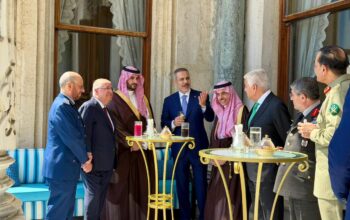
Such efforts, he added, are “not merely an international diplomatic responsibility, but they are also purely for the will of God and the benefit of ummah.” Regardless of sect or school of thought, “as Muslims, we all wish for peace,” Sharif said. He disclosed that he had held multiple detailed discussions with the leaders of Iran and Gulf countries. Deputy Prime Minister and Foreign Minister Ishaq Dar has been actively involved, while Chief of Army Staff Field Marshal Asim Munir is playing an “active and key role” in the process of rapprochement. “I appeal to you to pray for the fruition of these efforts,” the prime minister said.
Copyright © 2021 Independent Pakistan | All rights reserved