By Staff Reporter
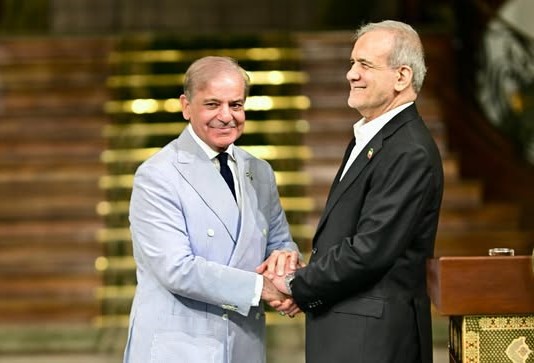
ISLAMABAD: Pakistan’s attempts to broker a path back to talks between Washington and Tehran gathered momentum on Wednesday, with diplomatic sources indicating that Prime Minister Shehbaz Sharif could meet Iranian President Masoud Pezeshkian as soon as Thursday on the sidelines of the United Nations General Assembly in New York.
Sharif’s own address to the assembly has meanwhile been pushed back to 12.30am Pakistan time on Friday, according to diplomatic sources, as a frantic week of shuttle diplomacy plays out around the UN’s annual gathering of world leaders.
The prospect of face-to-face talks between the two leaders comes as Islamabad continues its efforts to coax the United States and Iran back into direct negotiations, seven months into a war that has convulsed the Middle East and sent global energy prices spiralling.
Diplomatic sources say Qatar is running the immediate shuttle diplomacy between American and Iranian delegations in New York, while Pakistan is working a parallel, connected channel with Tehran, as regional powers scramble to prevent the fragile new contact between the two sides from breaking down altogether.
The division of labour has become clearer through reporting from US and international outlets on the renewed contact around the general assembly, with both Doha and Islamabad involved in keeping communication open, but via distinct routes. Qatar has taken the lead role in the New York shuttle itself, with the US special envoy Steve Witkoff saying mediators “shuttled between” the two delegations during lengthy talks on Tuesday. Qatar has also confirmed it is working with Pakistan to help de-escalate tensions and encourage dialogue between the two adversaries.
“We have not lost hope”
Speaking to reporters at UN headquarters on Wednesday, Sharif insisted Pakistan remained “completely focused” on ending the hostilities, despite the volatility that has followed the collapse of an earlier ceasefire agreement.
“Pakistan is playing the role of a sincere and honest mediator between Iran, our neighbourly country, and the United States,” he said, referring to the Islamabad Memorandum of Understanding he signed alongside President Pezeshkian and Donald Trump.
“Unfortunately, events after that got a bit unpredictable, but Pakistan is completely focused,” Sharif added. “We have not lost hope; we are absolutely determined that we will further make efforts and make progress to de-escalate the situation.”
Pakistan brokered a ceasefire between the two sides in April, and the Islamabad MoU was signed in June, giving Washington and Tehran 60 days to negotiate a long-term settlement. That process collapsed amid retaliatory strikes, with the US reimposing a naval blockade on Iranian ports and Iran shutting the Strait of Hormuz, one of the world’s most critical oil shipping lanes.
Iran sets out its conditions
Tehran said on Wednesday that it had used a two-hour exchange of messages, mediated by Qatar, to spell out the terms on which it would consider reviving diplomacy with Washington. Foreign ministry spokesperson Esmaeil Baghaei wrote on X that the contact on Tuesday was “a continuation of the discussions” being mediated between the two capitals, describing it as “another round of message exchange and clarification” conducted through Qatari mediation.
Baghaei said Iran had used the exchange to convey its position “in a manner that leaves no doubt or ambiguity and provides no excuses or pretexts for any party.” Tehran’s conditions, he said, include an end to what it calls US “aggressive actions” — among them the naval blockade and what Iranian officials term “economic terrorism” — alongside a halt to hostilities on all fronts and the release of Iranian assets currently frozen or restricted abroad. Iran is also demanding guarantees of safe passage through the Strait of Hormuz, based on an arrangement it says has already been agreed with Oman, the other state bordering the waterway.
The Iranian statement followed confirmation from Trump on Tuesday that US officials had held roughly three hours of talks in New York with representatives of the Iranian delegation, which he described as having gone “very well.” Iranian state television reported separately that foreign minister Abbas Araghchi had met the president’s envoys Steve Witkoff and Jared Kushner, at what it said was “the repeated request of US officials.” Iranian officials later clarified to Reuters that the contact had, in fact, been conducted through intermediaries rather than face to face — a distinction that mattered greatly in Tehran, where hardline factions reacted furiously to reports of direct engagement.
Defiance at the podium
The renewed contact came sandwiched between defiant addresses from both presidents at the general assembly’s main stage. Trump told the chamber on Tuesday that he was weighing whether to “annihilate” Iran, telling delegates: “Will a deal be made with Iran that lets them rebuild and create a far greater country than it ever was before… or do I annihilate the Islamic Republic, and do it quickly, never giving them a chance to kill and destroy people and countries again?” He predicted a deal would ultimately be reached, though only after November’s US midterm elections, suggesting Tehran was “waiting to see how I do” at the polls.
President Pezeshkian, addressing the assembly for the first time since the war began, struck an equally uncompromising tone, insisting his country would “never bow our head or bend at the knee” and warning that “the resistance of the Iranian people will only increase in the face of sanctions, increased pressure, increased bullying.” He accused Washington of “terrorism” over the killing of former supreme leader Ayatollah Ali Khamenei at the start of the conflict, holding up a photograph of him during his remarks, while insisting that Iran had never been the aggressor.
The Iranian president also warned that Tehran would not accept the Strait of Hormuz being used to Iran’s disadvantage, saying: “We cannot let some have free access and bolster their interests from the waterway, while at the same time using that waterway to impose their aggression upon us.” The strait has been intermittently blockaded since the war began, contributing to a spike in global fuel prices that has become a growing political liability for Trump’s Republicans ahead of the midterms.
Notably, Pezeshkian made no reference in his speech to the parallel diplomatic contact under way elsewhere in New York — an omission that underscored the gulf between the public rhetoric on display at the podium and the more tentative, indirect engagement happening away from the cameras.
His attendance at the assembly had itself been uncertain, after doubts over whether Washington would grant him a visa. It ultimately did, though several members of his delegation were refused entry.
Copyright © 2021 Independent Pakistan | All rights reserved