By Staff Reporter
SWAT: A constable assigned to protect a polio vaccination team was shot and killed by unidentified gunmen in the Swat district of Khyber Pakhtunkhwa Province on Tuesday, the police said, underscoring the persistent dangers facing Pakistan’s efforts to eradicate the disease amid rising cases and militant threats.
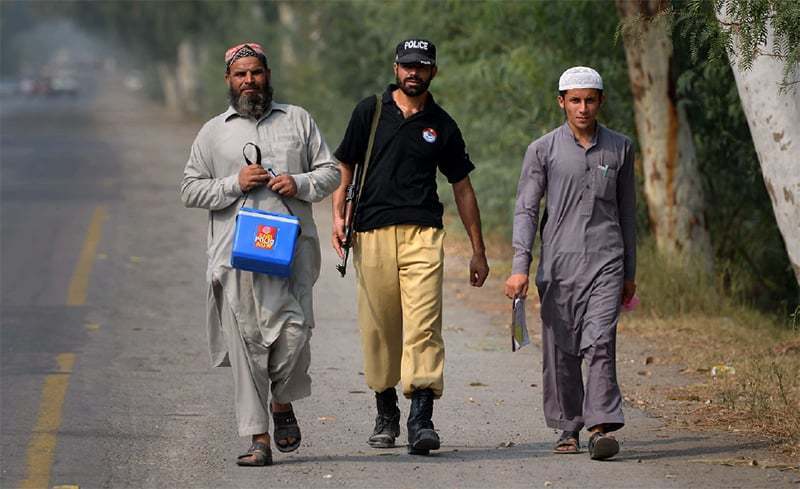
The attack occurred a day after the government began a nationwide polio eradication campaign intended to vaccinate more than 45 million children, with 285 police officers deployed across the country to safeguard the teams.
The constable, identified as Abdul Kabir, was guarding two female health workers as they administered vaccines inside a house when the assailants opened fire, according to Muhammad Umar Khan, the district police officer in Swat. “The workers were administering vaccines inside a house while the constable was standing guard outside when he was attacked,” Khan said. “The assailants fled the scene after the incident.” He said the constable “succumbed to injuries on the spot.” The police quickly cordoned off the area and initiated a search operation to apprehend the perpetrators, Khan said.
Interior Minister Mohsin Naqvi condemned the shooting and offered condolences to the constable’s family in a statement, paying tribute to the officer who was killed. “The assailants who fired on the team that was securing the future of children do not deserve any concession,” the statement quoted him as saying.
No group immediately claimed responsibility for the attack, though the banned Tehreek-i-Taliban Pakistan has previously taken credit for similar assaults on polio workers, often spreading false claims that the campaigns are a Western plot to sterilize children.
Pakistan, along with Afghanistan, remains one of only two countries where polio is still endemic. The highly infectious virus, which can cause permanent paralysis and has no cure, is preventable only through repeated doses of the oral polio vaccine for children under 5, combined with routine immunizations.
The country has seen significant progress since the 1990s, when annual cases topped 20,000, dropping to just eight by 2018. But setbacks persist, driven by vaccine hesitancy rooted in misinformation and opposition from some religious hardliners. Militant groups have repeatedly targeted vaccinators, particularly in restive areas like Khyber Pakhtunkhwa and Balochistan, where door-to-door teams often require armed escorts.
This year alone, Pakistan has reported 29 polio cases, including 18 in Khyber Pakhtunkhwa, nine in Sindh, and one each in Punjab and Gilgit-Baltistan. That marks a decline from 74 cases in 2024, which itself was a sharp increase from six in 2023 and one in 2021.
In Khyber Pakhtunkhwa, 20 people have been killed and 53 injured during anti-polio campaigns this year. Recent data from September indicated a drop in vaccine refusals in the province during the latest immunization drive. Still, resistance lingers in some pockets; in areas like Lowi Mamund tehsil, residents announced a boycott. In remote and unstable regions, vaccination efforts are frequently hampered by parental refusals and security threats, forcing teams to operate under heavy protection. Yet even those guards have become targets, as militants seek to disrupt the campaigns and exploit lingering doubts about the vaccine’s safety and intent.
Copyright © 2021 Independent Pakistan | All rights reserved