By Staff Reporter
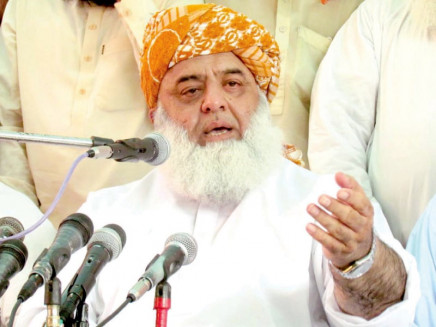
ISLAMABAD: Maulana Fazlur Rehman, the influential chief of pro-Taliban Jamiat Ulema-i-Islam party, offered on Tuesday to mediate between Pakistan and Afghanistan in an effort to ease escalating tensions, just days after deadly border clashes that left dozens dead and heightened friction between the two neighboring countries.
The proposal came amid a fragile lull on the 2,640-kilometre border between the two countries, following an episode on Sunday in which 23 Pakistani troops were killed and 200 Taliban fighters and affiliated terrorists were slain, according to Pakistan’s military. The clashes erupted on the night of Oct. 11 and 12 along the international border, after what the military described as an unprovoked attack launched by Afghan Taliban forces and India-sponsored militants from the banned Tehreek-i-Taliban Pakistan, a group the Pakistani state refers to as Fitna-al-Khawarij.
Rehman, speaking to reporters in Islamabad, drew on his unique standing as the only Pakistani political leader to have met the Taliban’s supreme leader, Shaikh Hibatullah, emphasizing his past role in de-escalating similar disputes and his ongoing influence with Afghan leaders. “In the past, I played a role in reducing tensions between Pakistan and Afghanistan, and I can do it now, too,” he said. “I have been in contact with the Afghan leadership, and they want to resolve the issues through understanding.”
With the ceasefire now holding, Rehman urged both sides to avoid assigning blame for the recent hostilities and to focus on deescalation. “Both countries should try to cool things down instead of provoking each other, including on social media,” he said.
The border violence has underscored longstanding grievances between Islamabad and Kabul, particularly since the Taliban’s return to power in Afghanistan in 2021. Pakistan has repeatedly accused the Taliban government of allowing armed groups, including the Tehreek-i-Taliban Pakistan, to operate from Afghan territory, a charge that Afghan officials have consistently denied, insisting that no one is permitted to use their soil to launch attacks against other countries. Last October, the Taliban government provided assurances to Pakistan that it would not tolerate such activities on its land.
Rehman addressed the controversy surrounding a visit by Afghanistan’s foreign minister, Amir Khan Muttaqi, to India, where Muttaqi reportedly referred to Kashmir as part of India, a statement that has stirred outrage in Pakistan. Rather than dwelling on the remark, Rehman called for introspection on Pakistan’s own approach to the disputed Kashmir region. “We should also look at our own role in Kashmir,” he said. “How many policies has Pakistan changed on Kashmir? Does Pakistan want a solution to Kashmir in accordance with the spirit of UN resolutions, and what progress has it made on this?”
Rehman also highlighted the disparity in military strength between the two nations, noting that Afghanistan’s intelligence and military capabilities remain in their nascent stages. He referenced a warning from the Afghan Taliban spokesman, Zabihullah Mujahid, who said on Sunday that Pakistani strikes on Kabul “will have consequences” and that Afghanistan possessed “weapons to respond.”
“Pakistan has a world-class army and capability,” Rehman said. “Our state should think whether opening a western front is somehow the right war strategy at this time.” The offer of mediation reflects Rehman’s longstanding ties to religious and political factions across the border, positioning him as a potential bridge in a relationship strained by cross-border militancy and mutual distrust.
Pakistani officials have not immediately responded to his proposal, but the ceasefire provides a window for dialogue amid fears of further escalation. The clashes have fueled a surge in terrorist activity within Pakistan, with armed groups showing increased boldness since the Taliban’s 2021 takeover. Islamabad’s insistence on Afghan complicity in these operations has led to repeated diplomatic standoffs, including airstrikes and border skirmishes that have claimed lives on both sides.
Copyright © 2021 Independent Pakistan | All rights reserved