By Staff Reporter
ISLAMABAD: Pakistan’s two dominant governing parties have agreed to form a coalition government in the northern territory of Gilgit-Baltistan, extending to the high-altitude region the same power-sharing arrangement that has underpinned their alliance in Islamabad since 2024’s federal elections.
The Pakistan Peoples Party and the Pakistan Muslim League-Nawaz announced the deal on Saturday night, following several rounds of negotiations that culminated in a joint press conference in which the parties’ respective GB presidents declared they had reached an agreement on the basis of “mutual trust, consensus and consultation”.
Under the formula agreed between the two parties, the chief minister of Gilgit-Baltistan will come from the PPP’s ranks, while the governorship — a position appointed by the federal government — will go to the PML-N. The opposition leader in the GB assembly and the post of deputy speaker will also be filled by the PML-N, giving the league a meaningful institutional foothold despite its smaller share of the vote.
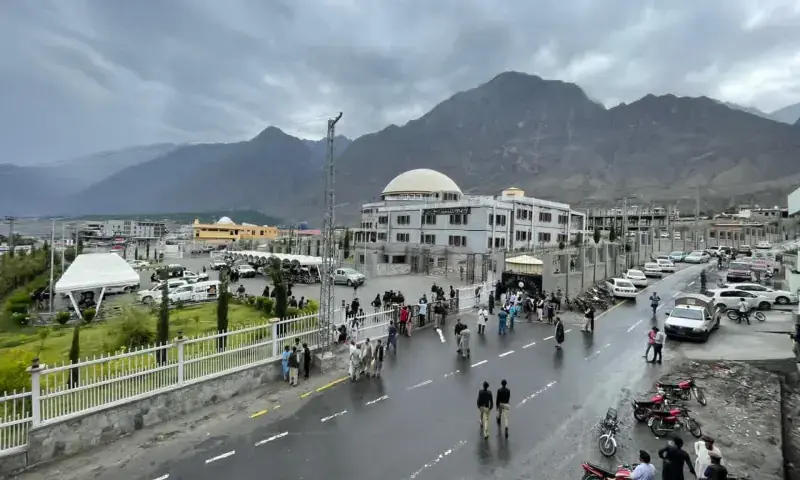
The announcement followed the Election Commission of Gilgit-Baltistan’s issuance of official results in 21 of the 24 constituencies contested in the June 7 polls — elections that were themselves delayed in some areas by complaints of irregularities and procedural lapses. In the seats declared, the PPP won nine, the PML-N six, and the Istehkam-e-Pakistan Party four. With reserved seats allocated on the basis of those results, the PPP’s total strength in the 33-member assembly rose to 13, the PML-N’s to nine, and the IPP’s to six. A seat each went to the Majlis Wahdat-e-Muslimeen and an independent candidate. Results for three constituencies — Skardu-3, Diamer-1 and Diamer-3 — remain pending due to ongoing legal proceedings.
Hafeezur Rehman, the PML-N’s president in Gilgit-Baltistan, said at the press conference that his party’s central leadership in Islamabad had directed the local chapter to support the PPP in forming the government — a direction, he confirmed, the local leadership had now formally endorsed. The PML-N would, he said, perform its remaining role from the opposition benches, holding the governorship and deputy speakership while formally sitting across the aisle. “The decision of the PML-N’s central leadership to support the PPP in forming a government has been endorsed by the local leadership,” Rehman said, adding that the arrangement reflected a genuine desire to preserve the democratic character of the election. “For the first time, the people of Gilgit-Baltistan exercised their right to vote democratically beyond sectarian, regional and ethnic boundaries, and we want to preserve that environment.”
The PPP’s GB president, Amjad Hussain, said the agreement would strengthen democratic institutions in the region. He thanked Prime Minister Shehbaz Sharif and the PML-N’s federal leadership for their support, attributing the cooperation to a personal request made by PPP chairman Bilawal Bhutto-Zardari. “To resolve Gilgit-Baltistan’s longstanding issues, both parties will work together,” he said. Candidates for key positions, he added, would be elected unopposed through what he described as a smooth transition process. He declined to give a definitive answer on whether the Istehkam-e-Pakistan Party would be brought into the government, saying that decision would rest with Bhutto-Zardari.
The joint statement issued by the two parties framed the coalition as “an important step towards promoting political tolerance, national unity and democratic continuity”, through which, it said, “effective, stable and people-friendly governance will be ensured in Gilgit-Baltistan”. Both parties pledged to prioritise political stability, public welfare and the acceleration of development in a region that faces chronic under-investment despite its strategic importance.
The outcome is consistent with a well-established pattern in Pakistani politics: historically, the party in power in Islamabad has performed well in Gilgit-Baltistan’s elections. The PPP won the 2009 GB polls while it held federal office; the PML-N did the same in 2015; and Imran Khan’s Pakistan Tehreek-e-Insaf swept the 2020 contest when his government was in power in Islamabad. The PPP’s victory this time, under a federal government it shares with the PML-N, continues that pattern — though the circumstances have drawn scrutiny from opposition parties who raised concerns about the conduct of polling.
Gilgit-Baltistan occupies a singular and legally ambiguous position in the South Asian political landscape. The Himalayan territory sits at the northern tip of Kashmir, a region whose status has been disputed between India and Pakistan since partition in 1947. India claims sovereignty over the entire former princely state of Jammu and Kashmir, including Gilgit-Baltistan; Pakistan rejects those claims and administers the territory as a semi-autonomous region rather than a full province, a status that has long frustrated its residents. The region is also a crucial corridor for the China-Pakistan Economic Corridor, which has heightened its geopolitical significance.
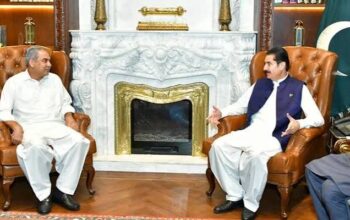
The PPP delegation at the consultative meeting included PPP central secretary general Nayyar Hussain Bukhari, former federal information minister Qamar Zaman Kaira, and Imran Nadeem, alongside Hussain. The PML-N was represented by Hafeezur Rehman, Ibrahim Sanai, Malik Kefayat, Sahab Khan, Rana Farooq and other parliamentary members.
Copyright © 2021 Independent Pakistan | All rights reserved