By Staff Reporter
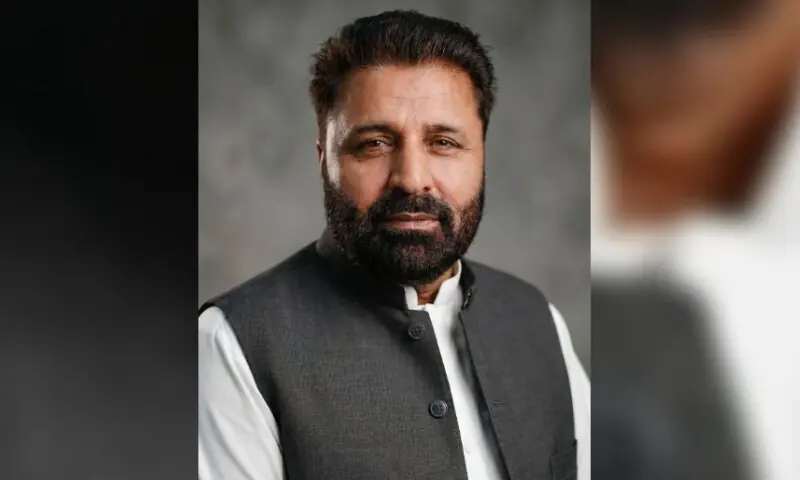
ISLAMABAD: Bilawal Bhutto-Zardari on Sunday named Amjad Hussain, a veteran lawyer and the Pakistan Peoples Party’s provincial president in Gilgit-Baltistan, as the region’s incoming chief minister, completing a swift consolidation of power after elections that were delayed, disputed and ultimately inconclusive in several constituencies.
The announcement confirmed what party insiders had signalled for days: that the PPP, which captured nine of the 24 contested assembly seats in the 7 June vote — the highest of any party — would leverage its lead into executive control of the autonomous region that straddles the Karakoram mountains and borders China, India and Afghanistan.
By Sunday evening, the political architecture of the new government was already taking shape. A day after agreeing a power-sharing formula with the Pakistan Muslim League-Nawaz, whose six elected members give the coalition its working majority, the Istehkam-e-Pakistan Party confirmed it too would join the alliance. IPP’s GB president, Haji Gul Bar Khan, made the announcement at a joint press conference in Gilgit, though he added that finer details of the arrangement would be settled by both parties’ central leaderships in Islamabad.
The deal as it stands allocates the chief ministership to the PPP, while the governorship of Gilgit-Baltistan — a largely ceremonial but symbolically significant post — will go to the PML-N. The federally ruling party, which heads the coalition government in Islamabad under Prime Minister Shehbaz Sharif, will also hold the posts of opposition leader and deputy speaker in the new assembly, an arrangement that struck some observers as unusual given that PML-N will simultaneously be a governing partner.
In a statement issued through the party’s official channels, Bhutto-Zardari said he had spoken with Hussain by telephone and issued instructions on the formation of the government and the implementation of what the PPP described as the “constitutional and economic rights” of the people of Gilgit-Baltistan — a cause that has animated Hussain’s political career for nearly two decades.
Who is Amjad Hussain?
To understand the choice, it helps to understand the man and the territory. Gilgit-Baltistan occupies a peculiar constitutional limbo: it is governed by Pakistan but not formally part of it, denied the rights of a proper province while subject to federal policy on critical matters from land ownership to tax. India claims it as part of Jammu and Kashmir, the disputed region over which both nuclear-armed neighbours have fought three wars. Pakistan rejects those claims, but the region’s residents have long found themselves caught between the competing nationalisms of two states and the indifference of both.
Hussain, who has served as PPP’s provincial president since 2016, made that constitutional grievance his defining cause. A practising advocate with deep familiarity in the region’s legal and constitutional complexities, he crafted what he called the Haq-e-Hukumat (Right to Rule) and Haq-e-Malkiat (Right to Ownership) movement — a campaign that argued local communities deserved not just governance but ownership of the land on which they lived. The movement, launched in 2016, was later incorporated wholesale into the PPP’s election manifesto for the region.
That agenda produced a concrete legislative result. In 2025, the GB Assembly passed the GB Land Reforms Act, legislation Hussain himself moved and which sought to transfer land ownership rights to the region’s inhabitants — a measure with significant implications in a territory where title disputes have long pitted communities against the state.
His electoral record is, by the standards of Pakistani regional politics, impressive. In the 2020 general elections, he contested two constituencies simultaneously — GBA-I Gilgit and GBA-IV Nagar — and won both, eventually vacating the Nagar seat to comply with parliamentary convention. He served as a member of the GB Assembly from 2020 to 2025, spending much of that time as leader of the opposition during the PTI-backed government of Khalid Khurshid, and previously sat on the GB Council from 2009 to 2014. In this month’s elections, he won again from GBA-I.
He has consistently called for Gilgit-Baltistan to be granted full provincial status — a demand that remains politically sensitive in Islamabad, where any formal integration of the territory risks inflaming the unresolved Kashmir dispute and drawing accusations that Pakistan is attempting to alter the region’s status unilaterally.
A fractious vote, a delayed result
The elections themselves were anything but smooth. Polling took place across Gilgit-Baltistan on 7 June, but results in several constituencies were held up for days as authorities ordered partial re-polling at specific stations following complaints of irregularities and procedural violations raised by multiple parties.
The Election Commission of Gilgit-Baltistan did not publish its final results until Friday, more than a week after polling day. When they came, the tally showed the PPP on nine seats, PML-N on six, and IPP on four — a breakdown that left no single party anywhere near the 17 seats needed for a majority in the 33-member assembly.
The reserved seats, allocated proportionally after the main results, shifted the numbers considerably. The PPP’s total rose to 13, PML-N’s to nine, and IPP’s to six. The Majlis Wahdat-e-Muslimeen secured one seat, as did an independent candidate. Results in three constituencies — GBA-9 Skardu-3, GBA-15 Diamer-1 and GBA-17 Diamer-3 — remain outstanding due to ongoing legal proceedings.
The IPP’s trajectory to the coalition table was itself unorthodox: the party won no seats in its own right on election night, but four independent candidates who had been elected under no party banner subsequently joined the IPP after meeting with Abdul Aleem Khan, the federal communications minister and the party’s national president, on 16 June. That manoeuvre gave the IPP four assembly members and a seat at the coalition negotiating table.
Hussain himself, speaking at the Sunday press conference where the IPP announced its support, called the emerging three-party arrangement a positive development, one that he said would set Gilgit-Baltistan on a course of development and economic growth. The formal process of government formation, he said, would begin on Monday.
Copyright © 2021 Independent Pakistan | All rights reserved