By Staff Reporter
ISLAMABAD: President Asif Ali Zardari expressed profound condolences to Iran on Wednesday following the killing of the country’s top national security official in Israeli airstrikes and offered Islamabad’s assistance in diplomatic efforts to defuse escalating tensions across the Middle East.
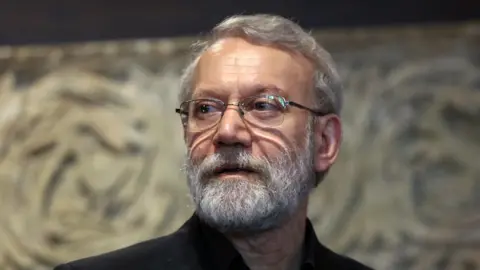
In a statement, Zardari’s office described the death of Dr. Ali Ardeshir Larijani — a close confidant of Iran’s late Supreme Leader Ayatollah Ali Khamenei and a pivotal figure who served as the country’s nuclear negotiator and parliament speaker — as a significant loss. Larijani was one of Iran’s most influential political and security leaders.
“President Asif Ali Zardari has expressed profound grief over the assassination of senior Iranian leader Dr. Ali Ardeshir Larijani amid ongoing Israeli attacks on Iran and extended his earnest condolences to the Government and people of the Islamic Republic of Iran,” the statement said. It added that Pakistan “remains committed to supporting all efforts aimed at de-escalation and the promotion of peace and stands ready to play a constructive role in facilitating dialogue and diplomatic efforts to help defuse tensions in the region.”
The Pakistani leader recalled Larijani’s visit to Pakistan last November, during which the two sides discussed deepening bilateral cooperation. Zardari called for immediate restraint by all parties and a cessation of hostilities, emphasizing the need to prioritize dialogue over conflict.
Information Minister Attaullah Tarar in an interview with Al-Jazeera on Wednesday said Pakistan is prepared to help de-escalate the situation given its longstanding regional ties. “Pakistan is involved in talking with various partners, and we have always wanted for this balance in relations to remain, and I think we are able to play a mediation role with the countries in the region,” Tarar said.
The killing of Larijani, who led Iran’s Supreme National Security Council as secretary, occurred as the U.S.-Israeli military campaign against Iran shows no signs of abating. On Feb. 28, the United States and Israel launched coordinated air and missile strikes on Iranian cities and military sites, with the stated aim of curbing Iran’s military and nuclear capabilities. Those attacks also resulted in the deaths of Iran’s supreme leader and numerous other top officials, according to Iranian accounts.
Iran responded with retaliatory strikes, including missile attacks on Tel Aviv using Khorramshahr 4 and Qadr missiles equipped with cluster warheads and multi-warheads. The assault killed two people in a neighborhood near densely populated areas of Tel Aviv that also house key military facilities, bringing the death toll in Israel to at least 14. Tehran also targeted U.S. bases and personnel in Gulf states, as well as oil depots, airports and energy infrastructure in countries it accused of hosting American forces. Iran additionally closed the Strait of Hormuz, a critical waterway for global oil and liquefied natural gas shipments. Iran’s Islamic Revolutionary Guard Corps claimed responsibility for the missile barrage.
Larijani’s son and his deputy, Alireza Bayat, were also killed in an Israeli attack Monday night, Iran’s Supreme National Security Council said.
Iran’s new supreme leader, Mojtaba Khamenei, attending his first foreign-policy meeting since assuming the position, rejected proposals for reducing tensions or a ceasefire with the United States. He stated it was not the right time for peace until the United States and Israel “are brought to their knees, accept defeat, and pay compensation,” according to the official.
The conflict has spilled over into Gulf Arab states, which have endured more than 2,000 missile and drone attacks on diplomatic missions, military bases, oil infrastructure, ports, airports and other sites, many targeting the United Arab Emirates. In response to the growing instability, Saudi Arabia is hosting a consultative meeting of foreign ministers from several Arab and Islamic countries in Riyadh on Wednesday evening to discuss ways to bolster regional security and stability, the kingdom’s Foreign Ministry announced. Pakistan has positioned itself as a potential bridge-builder in the crisis, leveraging its longstanding relationships in the region.
Copyright © 2021 Independent Pakistan | All rights reserved