ISLAMABAD: Pakistan announced a temporary halt in its military campaign against Afghan Taliban targets on Wednesday, a move framed as a goodwill gesture ahead of Eidul Fitr and prompted in part by appeals from three major Muslim allies.
Information Minister Ataullah Tarar said the government had decided on the pause “upon its own initiative as well as on the request from the brotherly Islamic countries of the Kingdom of Saudi Arabia, the State of Qatar and the Republic of Turkiye.” The suspension, he added, would run from midnight March 18-19 to midnight March 23-24. “Pakistan offers this gesture in good faith and in keeping with the Islamic norms,” Tarar wrote on the social media platform X.
He warned, however, that any cross-border attack, drone strike or terrorist incident inside Pakistan would trigger an immediate resumption of the operation “with renewed intensity.”
Hours later, the Afghan Taliban announced a parallel suspension of its own military actions against Pakistan, with spokesman Zabihullah Mujahid citing the same trio of mediating countries. The brief de-escalation comes as relations between Islamabad and the Taliban regime in Kabul have sunk to their lowest point since the group seized power in Afghanistan four years ago. The two sides have traded artillery fire and cross-border raids along the 2,600-kilometer frontier, with Pakistan accusing the Taliban of sheltering anti-Pakistan militants and the Taliban denying the charges.
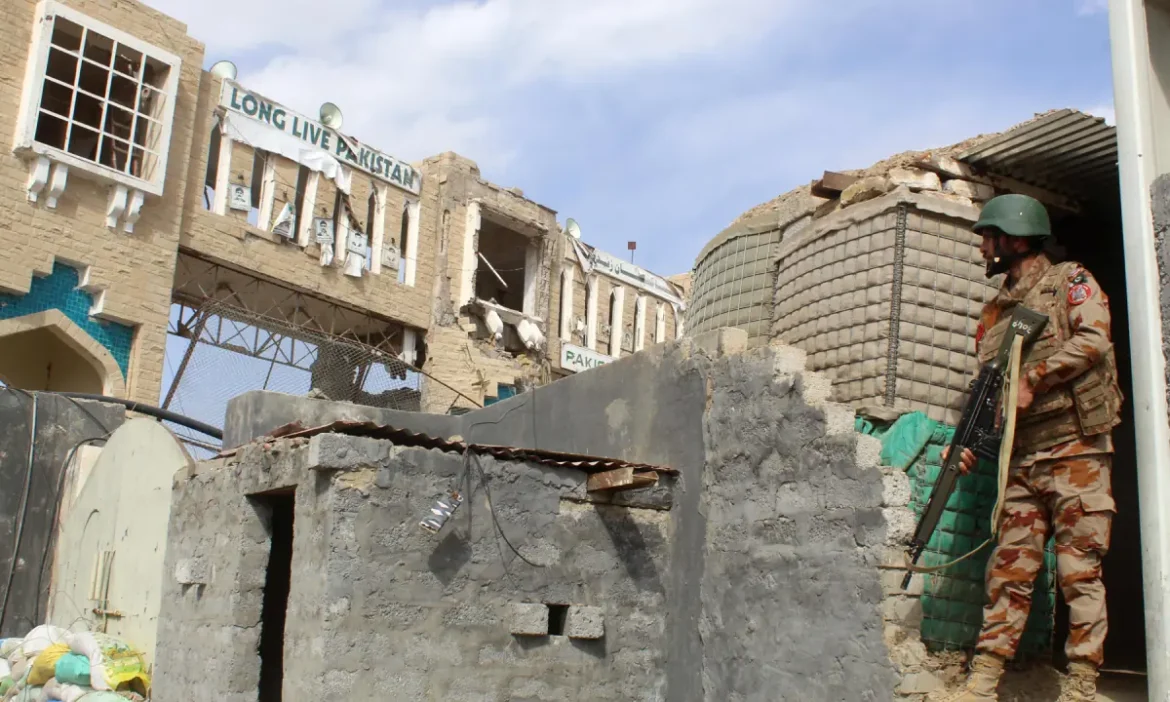
Operation Ghazab lil-Haq was launched on the night of Feb. 26 after an unprovoked firing from Afghan soil. The campaign has included airstrikes, artillery barrages and ground actions targeting what Islamabad calls “terrorists and their support infrastructure” inside Afghanistan — infrastructure it says is used by the banned Tehreek-i-Taliban Pakistan (TTP), which Pakistani authorities refer to as Fitna al Khawarij.
In a separate post Wednesday, Tarar released updated casualty figures from the operation: 707 militants killed and more than 938 injured. He said Pakistani forces had destroyed 255 militant posts, captured 44 others and eliminated 237 tanks, armored vehicles and artillery pieces. Eighty-one terrorist and support sites were struck from the air, he added.
Tarar highlighted strikes carried out on the night of March 16 against Afghan military installations in Kabul and Nangarhar provinces. Those raids, he said, destroyed drone storage facilities, technical support sites and ammunition depots that the Taliban and affiliated groups had been using to stage attacks inside Pakistan. Pakistani forces also hit Taliban posts in the Bajaur, Kurram, Torkham, Khyber, North and South Waziristan sectors along the border.
The minister released video footage of “precision engagements” against the targets. “No civilian population or infrastructure was targeted,” he insisted, “contrary to the false claims being propagated by Afghan regime officials and sections of the media.”
The latest escalation traces back to Oct. 22 border clashes last year that prompted Turkey and Qatar to mediate three rounds of talks in Doha. The first produced a fragile ceasefire; subsequent sessions yielded only vague commitments to create a verification mechanism and continue dialogue, with no lasting agreement.
On Feb. 22, Pakistan conducted overnight strikes on suspected terrorist camps in Afghanistan’s Nangarhar and Paktika provinces. The Taliban responded with cross-border fire, prompting Islamabad to launch the broader Operation Ghazab lil-Haq four days later.
Chief of Army Staff Field Marshal Syed Asim Munir has repeatedly stated that lasting peace with Afghanistan is possible only if the Taliban regime “renounced their support for terrorism and terrorist organisations.”
The operation has drawn sharp international attention, especially after a series of six “precise, deliberate and professional” airstrikes in Kabul and Nangarhar on Monday night that Pakistani officials say targeted an ammunition storage facility at the former U.S. military base known as Camp Phoenix. Video released by the information ministry showed flames and secondary explosions consistent with an arms depot, Tarar said Tuesday.
Afghan officials countered that the strikes hit a drug rehabilitation center called Omid Camp, claiming hundreds of casualties. The United Nations called for a swift and independent investigation. The European Union urged restraint on both sides. China pressed Islamabad and Kabul to “swiftly implement a ceasefire” and resolve their differences through dialogue.The diplomatic fallout extended to New Delhi. India’s Ministry of External Affairs condemned Pakistan’s actions as a “direct threat” to regional peace and stability. Pakistan’s Foreign Office rejected the criticism Wednesday as “baseless, misleading and unwarranted.”
Foreign Office spokesman Tahir Andrabi said the Indian statement reflected “blatant hypocrisy and duplicity,” pointing to what he called India’s “active sponsorship of terrorism directed at Pakistan from Afghan soil” and its “historical role as a spoiler.” He noted India’s record on Islamophobia, its treatment of Muslims and its support for Israel amid the Gaza conflict.
Andrabi also accused New Delhi of undermining the sovereignty of neighbors and suppressing Kashmiri self-determination in violation of U.N. resolutions.“India must refrain from supporting and sponsoring terrorist groups operating from Afghan soil,” he said, “including those listed under the UN Security Council sanctions list.”
Copyright © 2021 Independent Pakistan | All rights reserved