By Staff Reporter
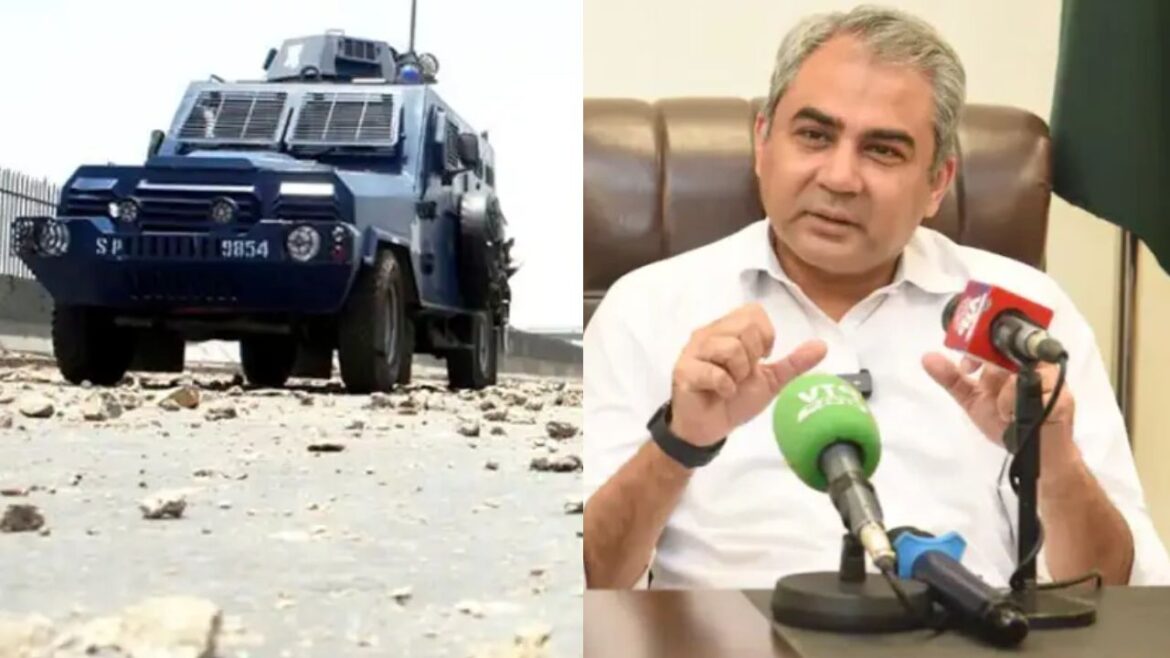
ISLAMABAD: In a swift and pointed exchange among Pakistan’s top officials, Interior Minister Mohsin Naqvi announced on Wednesday that bulletproof vehicles rejected by the chief minister of Khyber Pakhtunkhwa would be redirected to Balochistan, escalating a public dispute over federal support in the fight against a resurgent wave of terrorism.
The decision came after Sarfraz Bugti, the chief minister of Balochistan, appealed publicly for the vehicles late Tuesday, noting that his province, like Khyber Pakhtunkhwa, has been battered by militant attacks. Naqvi responded directly to Bugti’s post on the social media platform X. “CM sahib, done. These bulletproof vehicles will be sent to Balochistan immediately to enhance counter-terrorism efforts. Thank you for raising this.”
The episode underscores the deepening tensions between Pakistan’s federal government and its provinces amid a surge in terrorist activities, particularly in the restive regions of Khyber Pakhtunkhwa and Balochistan.
It began on Monday when Sohail Afridi, the newly appointed chief minister of Khyber Pakhtunkhwa, accused the federal authorities of pursuing a “flawed policy” that he said had fueled the return of violence in his province. He claimed that the central government was withholding funds allocated for the country’s ongoing war against terrorism, as well as denying the province “other constitutional rights.”
Afridi also took aim at the bulletproof vehicles provided by Naqvi, describing them as “defective and old” and calling for their recall. His remarks drew sharp criticism from federal officials, who portrayed the complaints as politically motivated maneuvering.
On Tuesday, Talal Chaudhry, the minister of state for interior, expressed disappointment that the “fight against terrorism and sacrifices made by soldiers were being overshadowed by politics.” He accused the Pakistan Tehreek-e-Insaf-led provincial government in Khyber Pakhtunkhwa of choosing not to engage in the battle against militants “so they could use it to blackmail the government.” Addressing Afridi’s specific grievances about the vehicles, Chaudhry called it “unfortunate that CM Afridi was returning necessary equipment to make the Centre look weak for political point scoring.” “If you did not like the bulletproof cars, then maybe give your own instead,” and charged that the Khyber Pakhtunkhwa government was “not fighting a war but only wasting time and creating unnecessary drama.”
Bugti, seizing on the controversy, highlighted Balochistan’s parallel struggles in his Tuesday post on X. “It is an appeal to the interior minister that if the KP government is refusing to take the bulletproof vehicles, they should be transferred to the Balochistan government so that terrorism can be countered effectively,” he wrote.
Pakistan has grappled with an uptick in terrorist incidents since the Tehreek-i-Taliban Pakistan ended its ceasefire with the government in November 2022. The violence has been concentrated in Khyber Pakhtunkhwa and Balochistan, where separatist insurgencies and militant groups have long posed challenges to state authority. The country ranked second in the Global Terrorism Index for 2025, reflecting the severity of the threat and the strain on resources across federal and provincial lines.
Officials in Islamabad have repeatedly defended their allocation of aid and equipment, insisting that provincial governments must share responsibility for security operations. The redirection of the vehicles to Balochistan could ease some immediate pressures there, but it also highlights the patchwork nature of Pakistan’s counterterrorism strategy, where disputes over resources often spill into the public domain.
Copyright © 2021 Independent Pakistan | All rights reserved