By Staff Reporter
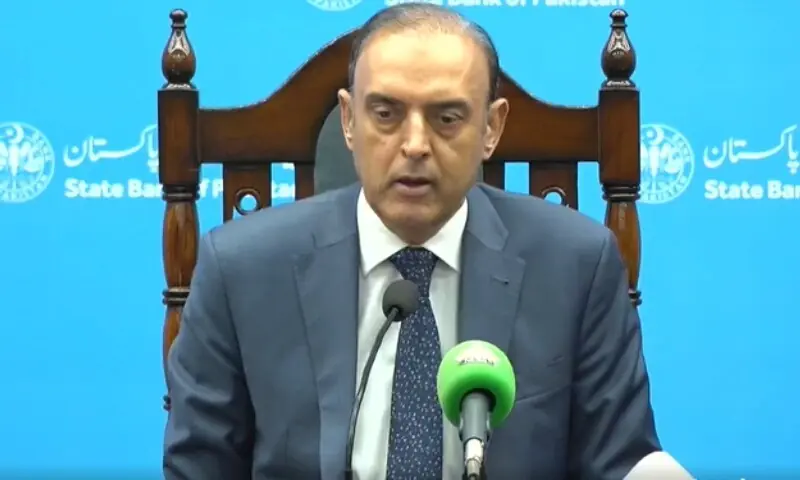
KARACHI: Pakistan needs higher exports, greater domestic savings and investment, and deeper financial markets to break its recurring boom-and-bust cycles, State Bank of Pakistan Governor Jameel Ahmad said on Wednesday, urging structural reforms to lock in stability gains now being tested by the war in the Middle East.
Speaking at Standard Chartered Plc’s annual global research briefing in Karachi, Ahmad said the country has made progress in restoring macroeconomic stability but must build on it through consistent policies, stronger institutions and wider private-sector participation. He called on businesses and financial institutions to help strengthen the economy’s structure.
Emerging markets are increasingly exposed to commodity-price swings, geopolitical tensions and climate-related disruption, Ahmad said. Countries with stronger fiscal and external buffers, credible policy frameworks and resilient institutions are better placed to absorb such shocks, he said.
Ahmad pointed to the policy response to the crisis of fiscal years 2022 and 2023, when the government and central bank tightened monetary policy, consolidated public finances and used temporary administrative measures to manage foreign-exchange outflows. Those steps, together with support from multilateral and bilateral partners, restored stability and rebuilt confidence, he said.
The turnaround has been large. Inflation peaked at 38% in May 2023, and the central bank’s reserves stood below $3 billion at the start of that year. They reached $21.7 billion at the end of October, up from $14.6 billion a year earlier.
That stronger starting point has helped Pakistan handle the fallout from the Middle East conflict better than it handled the Russia-Ukraine crisis, Ahmad said.
On the outlook, he said inflation averaged close to the target range in the fiscal year that ended in June and, despite a recent increase, is projected to ease gradually toward the medium-term range. The current account deficit is expected to stay within 0% to 1% of gross domestic product, he said, while foreign-exchange and fiscal buffers continue to build. Real GDP growth reached 3.7% in fiscal 2026, he said, and should improve in the current year. Credit-rating companies, multilateral partners and foreign investors are increasingly recognizing the gains, he added.
The inflation picture remains the central bank’s main concern. The State Bank raised its benchmark rate by 50 basis points to 12% on Oct. 26, its second increase this year after a 100-basis-point rise in April, with the monetary policy committee citing persistently high global energy prices from the Middle East conflict. Ahmad said at the time that it would take longer than planned for inflation to return to the 5%-to-7% target range, and the bank revised its growth projection for the fiscal year ending June 2027 to 3.7%.
Price pressures have begun to ease from their peak. Consumer prices rose 9.61% in October from a year earlier, down from 10.26% in September, according to the Pakistan Bureau of Statistics. August’s reading was 11.1%. Urban core inflation, which strips out food and energy, slowed to 7.8% in October, while the rural measure fell to 7.1%. Energy remains a risk: Brent crude was trading around $95.5 a barrel on Monday as investors weighed renewed hostilities in the region.
The external account has been more mixed. Pakistan recorded a current account surplus of $39 million in October, helped by workers’ remittances of $3.89 billion, though the deficit for the first four months of the fiscal year was $850 million, narrower than $1.06 billion a year earlier. The goods trade deficit widened 21.1% to $9.33 billion in the July-September quarter as imports grew nearly twice as fast as exports.
Pakistan is also leaning on its International Monetary Fund program. The Fund urged Islamabad this month to keep monetary policy sufficiently tight, and the two sides reached a staff-level agreement on Oct. 7 that could unlock about $1.21 billion. The deal covers the fourth review of the Extended Fund Facility and the third review of the Resilience and Sustainability Facility, and still needs approval from the IMF’s executive board.
Ahmad’s emphasis on exports and savings reflects a gap that official data show clearly. Investment ran at 14.4% of GDP in fiscal 2026 and national savings at 14.1%, levels economists say are too low to support significantly faster growth. Growth of 3.7% was the fastest in four years, though it fell short of the government’s 4.2% target. Ahmad has made the same argument before. Last November he said Pakistan’s historical growth range of 3% to 4% is insufficient for a population above 250 million.
The briefing was attended by Adil Salahuddin, chief executive officer of Standard Chartered Pakistan, and Philippe Dauba-Pantanacce, the bank’s global geopolitical strategist and senior economist, along with representatives of the corporate and financial sectors.
Copyright © 2021 Independent Pakistan | All rights reserved