By Staff Reporter
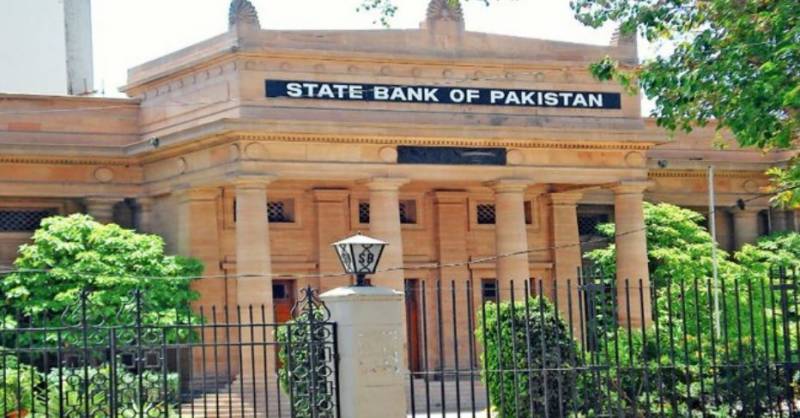
KARACHI: The central bank on Monday kept its benchmark interest rate unchanged at 10.5%, surprising analysts who expected further easing after inflation cooled and reserves swelled, as policymakers flagged sticky underlying prices and a bigger trade gap despite a brighter growth picture.
“The Monetary Policy Committee decided to keep the policy rate unchanged at 10.5 percent in its meeting today,” Governor Jameel Ahmad said at a press conference in Karachi, the first such gathering of 2026. The move comes after a 50-basis-point cut in December, part of 1,150 basis points of reductions since mid-2024 following a peak of 22% in 2023.
“The outlooks for inflation and the current account are broadly unchanged from its previous assessment, while the outlook for economic growth has improved significantly,” the State Bank of Pakistan said in a separate statement. “Based on this, the committee deemed it prudent to hold the policy rate unchanged at the current level to ensure price stability and support sustainable economic growth.”
Governor Ahmad warned that inflation may climb above 7% in some months during the second half of this calendar year, driven by swings in global commodities, local wheat prices and possible energy tariff increases.
The hold ran against market bets.
In a Reuters poll of 10 economists, seven forecast a half-point drop and two a 75-basis-point trim, citing tame price pressures, stronger foreign reserves and a steady rupee. Arif Habib Ltd. predicted a three-quarter-point cut to 9.75%, marking a shift to single digits. Topline Securities, based on a survey where 80% of participants anticipated easing, described the outcome as “a surprise,” attributing pre-meeting optimism to robust remittances and currency stability.
Business groups voiced frustration.
Saqib Fayyaz Magoon, chairman of the Businessmen Panel Progressive and senior vice president of the Federation of Pakistan Chambers of Commerce and Industry, called the decision a setback for trade and industry. “Inflation has gradually come down to 5.6 percent, leaving ample room for a reduction in the policy rate,” Magoon said in a statement. “The State Bank could have easily brought interest rates into single digits, but failing to do so is discouraging for the business community.”
He noted that conventional wisdom sets rates at 2 to 4 percentage points above inflation, suggesting a range of 7.6% to 9.6%. Companies had pushed for at least 7% to 8% to curb soaring finance and energy expenses that are hurting production and exports. “The cost of financing is already unbearable, overall business expenses have surged, and energy tariffs remain exceptionally high,” Magoon said. “Elevated interest rates are further squeezing industrial and commercial operations.”
The economy is picking up speed.
GDP is now seen growing 3.75% to 4.75% in fiscal 2026, with acceleration into 2027 aided by earlier easing. First-quarter expansion reached 3.7% from a year earlier, versus 1.6% previously, fueled by industry and agriculture. Momentum carried into the second quarter, per recent indicators: auto sales, cement deliveries, petroleum product volumes excluding furnace oil, fertilizer sales and machinery imports all advanced sharply, reflecting firm demand.
Factory output rose 8% in October and 10.4% in November, boosting the July-November figure to 6%. Wheat planting and satellite data indicate a strong crop, supporting services. Headline inflation slowed to 5.6% in December from 6.1% in November, thanks to softer food costs despite wheat spikes, though energy inflation picked up as tariff base effects waned. Core measures lingered at 7.4% in the fiscal year’s first half, after retreating through 2025.
“On balance, the committee projected inflation to stabilise within the target range of 5-7% in FY26 and FY27, after temporarily exceeding the upper bound for a few months during this calendar year,” the statement said. “This outlook is subject to risks emanating from volatility in global commodity and domestic wheat prices, unanticipated adjustments in administrative energy prices, and a sharper than assumed pickup in domestic demand.”
Externally, the current account deficit hit $1.2 billion in the first half, including $244 million in December. Imports volumes swelled, exports faltered on rice plunges while premium textiles endured. Remittances and tech services, plus mild global commodity prices, limited the damage. The bank projects a deficit of zero to 1% of GDP this year. Reserves exceeded the December target at $16.1 billion on Jan. 16 and should top $18 billion by June, approaching three months of imports in 2027—though trade fragmentation and geopolitics loom as hazards.
Fiscal trends mixed
Federal Board of Revenue taxes grew 9.5% in the first half, down from 26% last year and short by Rs329 billion, demanding a second-half surge. Reduced debt servicing and spending controls aided the overall balance and deficit target, but the primary surplus goal is elusive without tighter reins. Money supply increased 16.3% through early January, propelled by private credit and government debt. Loans expanded Rs578 billion through Jan. 9, dominated by textiles, trade, chemicals and consumers. The bank lowered lenders’ cash reserve ratio to 5% from 6% to encourage more. Sentiment surveys show brighter consumer and business views, with easing inflation expectations.
The International Monetary Fund, in a report linked to Pakistan’s $7 billion facility, slightly raised its growth projection but cautioned on premature loosening amid tariff and commodity uncertainties. The committee stressed vigilance to maintain a positive real rate, anchoring prices in the medium term. It called for aligned monetary and fiscal policies, alongside reforms to raise productivity, exports and enduring growth.
Copyright © 2021 Independent Pakistan | All rights reserved