By Staff Reporter
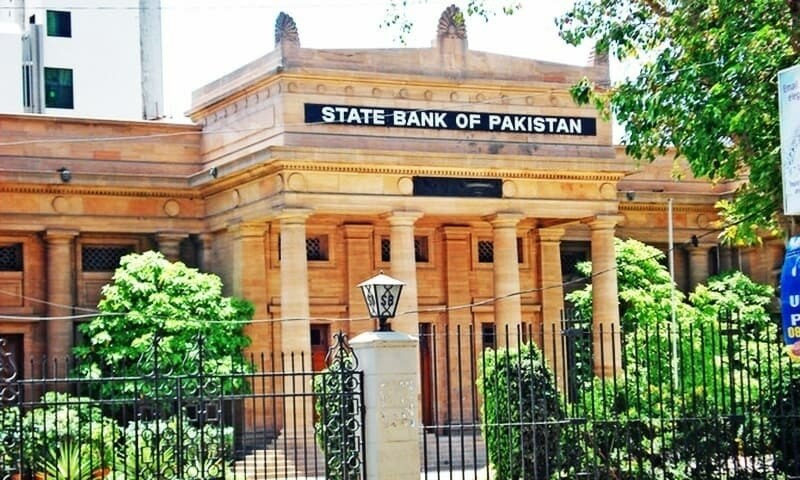
KARACHI: Pakistan’s central bank reversed course and raised interest rates by 100 basis points in April after a Middle East war pushed oil prices up and inflation into double digits, even as it lifted reserves past its year-end target with $8.1 billion of net dollar purchases, the State Bank of Pakistan said in its Governor’s Annual Report for fiscal 2026, released on Tuesday.
The report, published under a provision of the SBP Act that requires the governor to report to Parliament on monetary policy and the state of the economy, credits a “prudent and data-dependent” policy stance and continued fiscal consolidation for the economy’s resilience through a run of shocks. Those began with monsoon floods and uncertainty over US trade tariffs at the start of the year. The Middle East conflict followed from the end of February and sent global commodity prices sharply higher.
Inflation averaged 5.5% from July to February, the report said, before the oil spike took it into double digits. In the bank’s words, the surge “pushed the headline inflation into double digits from April 2026 onward.” The report said energy’s contribution to consumer-price inflation rose markedly between March and June. Food prices also climbed, driven by wheat and related products that were hit by supply constraints. Core inflation had been moderating for most of the year but ticked up once higher energy costs worked into production and transport. Even so, average inflation for the full year stayed close to the upper end of the central bank’s medium-term target range, which is 5–7%.
The hike was a sharp turn and the Monetary Policy Committee left rates unchanged for the first half of the fiscal year, then cut by 50 basis points in December, citing subdued inflation, anchored expectations, softer global commodity prices and a stronger external position. The bank held again in March at 10.5% and then raised by 100 basis points in April, a move that defied market expectations. It was the first increase in nearly three years. The report said the move aimed to “contain second-round effects and support macroeconomic stability,” and noted that “a similar policy response was observed globally,” with most central banks in advanced and emerging economies pausing cuts and some raising rates.
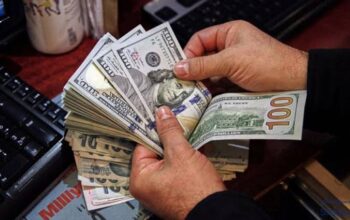
The bank’s reserve position strengthened over the same period. Reserves exceeded the $18 billion target for the end of June. The central bank bought $8.1 billion net in the foreign-exchange market and cut its forward and swap liabilities by $1.6 billion, which it called “a qualitative improvement in the country’s FX reserve position.” That build-up came despite a current account deficit, which stayed moderate because higher remittances and information-technology exports offset a wider merchandise trade gap. Multilateral and bilateral inflows and successful bond issues also helped.
The report linked the stronger reserves, fiscal consolidation and successful completion of reviews under the International Monetary Fund’s Extended Fund Facility and Resilience and Sustainability Facility to better sovereign ratings, renewed investor confidence and a steadier exchange rate.
On financial stability, the ratio of non-performing loans to total loans fell notably at banks and development finance institutions. It rose slightly at microfinance banks, though the report said adequate loan-loss coverage contained the impact. Banks and development lenders stayed well-capitalized, with capital adequacy ratios well above regulatory minimums. Islamic banking kept expanding, helped by a favorable regulatory environment and growing demand for Shariah-compliant products.
The central bank also introduced a recovery-planning framework to prepare banks for financial distress and issued instructions to facilitate banking relationships with licensed virtual-asset service providers. It began a phased adoption of Basel III through revised credit-risk standards. Under its financial-inclusion strategy, it set up 12 Digital Model Villages and launched a digital agriculture lending platform called Zarkhez-e. It also introduced a framework letting teenagers own and operate bank accounts and digital wallets, published a Financial Inclusion Index and launched a Green Taxonomy with the government.
The pressure the report describes has not eased. On Oct. 26, the monetary policy committee raised the policy rate by 50 basis points to 12%, with nine of its ten members voting in favor, the first increase since April. Governor Jameel Ahmad said crude oil hovering around $100 a barrel had added to pressure on domestic prices, and that bringing inflation back to the earlier expected path would now take longer. Headline inflation was 10.3% in September. It slowed to 9.61% in October, according to the Pakistan Bureau of Statistics, the first single-digit reading in three months. Urban core inflation eased to 7.8%.
Other indicators look steadier. Reserves were around $21.5 billion at the time of the October decision, equal to about three months of imports. The committee projects growth of 3.5% to 4.5% in fiscal 2027, with risks from further escalation in the Middle East and El Niño-related weather. Fiscal 2026 growth was revised to 3.7%. The IMF reached a staff-level agreement on Oct. 7 that moves Pakistan closer to $1.21 billion of further financing. It remains subject to approval by the IMF’s Executive Board.
Copyright © 2021 Independent Pakistan | All rights reserved