By Staff Reporter
QUETTA: Security forces in Pakistan’s Balochistan province killed 145 militants in operations over the past 40 hours after separatist gunmen carried out coordinated attacks that left dozens dead, the provincial chief minister said on Sunday, as officials accused neighbouring India of orchestrating the violence.
The assaults struck at least 12 towns across the restive southwestern province on Saturday, targeting civilians and security personnel in places such as Quetta, Mastung, Nushki, Dalbandin, Kharan, Panjgur, Tump, Gwadar and Pasni, according to the military and government statements.
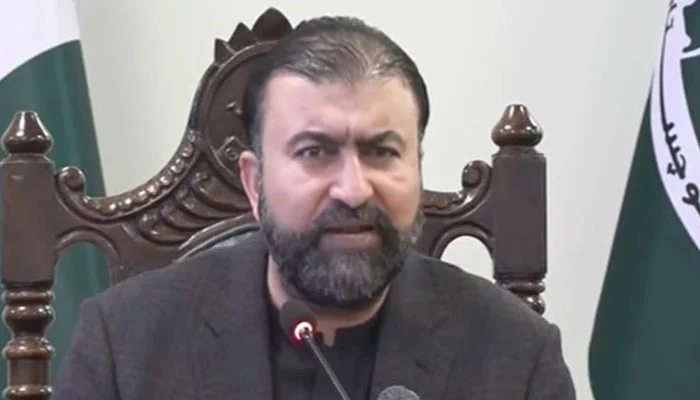
Balochistan Chief Minister Sarfraz Bugti told reporters at a news conference in the provincial capital Quetta that 17 members of law enforcement agencies, including police, Frontier Corps personnel and one navy serviceman, died in the fighting. Civilian deaths reached 31, he said.
The Inter-Services Public Relations (ISPR), the army’s media wing, said earlier that 15 security personnel and 18 civilians, among them women and children, had been killed. It described the attackers as belonging to “Fitna-al-Hindustan”, a label Pakistani authorities apply to Baloch militant groups to underscore what they say is Indian involvement in fomenting unrest. The Balochistan Liberation Army (BLA), an outlawed separatist group, took responsibility for the attacks in a statement on Saturday, terming them “Operation Herof 2.0”.
Bugti said the militants’ bodies remained with the authorities. “This is the highest number since Pakistan is facing this war on terror,” he said. The chief minister noted that intelligence had indicated an imminent large-scale operation by the militants, leading to pre-emptive strikes a day before the main attacks. In Shaban and Panjgur, forces eliminated about 40 gunmen in those initial actions. The militants sought to breach Quetta’s high-security Red Zone and seize key installations, including an attempt to overrun a police training centre. Forces prevented the incursions, though clearing Nushki took additional time. The area is now secure, with search operations continuing. In Gwadar, attackers killed five women and three children from a Baloch family in Khuzdar who were living in a labour colony, Bugti said, calling it the most distressing episode. The provincial chief said tracing and combing operations were ongoing. “We will not let them go.”
Defence Minister Khawaja Asif, speaking to reporters in Sialkot, said calm had returned to the province, and forces were conducting final sweeps. “The attacks had been fully repelled, with militants in retreat.” Asif detailed failed bids to assault Frontier Corps bases in Nushki and Dalbandin, including a suicide bombing attempt in Dalbandin. All threats were neutralised, he said.
The BLA has increasingly deployed female bombers, Asif said, with women involved in at least two of the attacks, including a suicide mission in Pasni. “Young women and children are being indoctrinated for such roles,” he said, “with handlers based in Afghanistan targeting labourers and the impoverished.” Balochistan’s expansive, thinly populated landscape aids militant movements, Asif acknowledged, but the government plans measures to counter that.
Back in Quetta, Bugti rejected portrayals of the conflict as rooted in political grievances or deprivation. The BLA is not a legitimate political entity open to talks, he said. “Is BLA a registered party with whom you have to hold a dialogue?” he asked. The group aims to enforce its views through arms and drag Baloch people into pointless conflict, Bugti said. “Rationalising this violence in the name of ethno-nationalism was a direct support to BLA.”
Bugti rejected calls for dialogue. “As a result of dialogue, they want us to surrender? We will not. We will fight this war for a thousand years.” “We are not ready to surrender even for a second. They can carry out a thousand such attacks. They can destabilise us, but they cannot take an inch from us,” he said. “This Pakistan is not for breaking away. These people cannot do it. And neither can their masters.” The state bears no malice toward the Baloch people but views militants solely as terrorists, regardless of origin, Bugti said. “A terrorist is only a terrorist.”
The chief minister accused India’s Research & Analysis Wing (RAW) of backing the activities, saying authorities had “solid and circumstantial evidence.” He also pointed to Afghanistan as a base for militants, naming figures like Bashir Zeb, Rehman Gul and Allah Nazar as operating from there, and said weapons left behind after the U.S. withdrawal from Afghanistan had spread into the market and were provided to the attackers by their handlers.
Bugti said militants were using Afghan nationals in operations and blending into civilian populations, sometimes with children as young as 11 used as human shields. “Should we become brutal like them?” he asked. “We could kill 10 [terrorists] by throwing one mortar, but what about the 20 civilians with them? This is the only reason why we do not want to become brutal like them.” He stressed that no large-scale military operations were underway in Balochistan, only intelligence-based operations (IBOs). “When has force ever been used in Balochistan?” Bugti asked, adding: “It is a purely intelligence-driven war.”
The chief minister blamed a post-2018 policy of appeasement by institutions and political leadership for the surge in terrorism, saying it had allowed militants to regroup. He called the National Action Plan the most important counterterrorism document after the constitution and criticised the labelling of militants as “angry Baloch.” Bugti said “tools such as certain Sardars and social media” were being used to alienate youth from the state and pledged to boost engagement with the population.
Attackers used diverse weaponry, including arms from Afghanistan’s post-U.S. withdrawal market supplied by backers, Bugti said. Figures like Bashir Zeb, Rehman Gul and Allah Nazar operate from Afghanistan, with Afghan nationals aiding operations. Interior Minister Mohsin Naqvi also blamed India for the attacks, citing intelligence and militant confessions as evidence.
Balochistan, rich in minerals but plagued by poverty, has endured a separatist insurgency for decades. Groups like the BLA seek independence, alleging exploitation by Islamabad. The federal government counters with development initiatives and denies the charges. Pakistan accuses militants of sanctuary in Afghanistan alongside the Tehreek-e-Taliban Pakistan.
Bugti, a leader of the Pakistan Peoples Party, warned that the land would be turned into hell for them. “Why will we get tired? We are the state of Pakistan. We will not get tired.” The chief minister said the province was a conflict zone where Pakistan was fighting India’s proxy networks, but reaffirmed the resolve to continue intelligence-led operations to drag militants from their hideouts and bring Balochistan toward peace. “Operations will persist to root out militants, turning the province into their hell.”
Copyright © 2021 Independent Pakistan | All rights reserved