By Staff Reporter
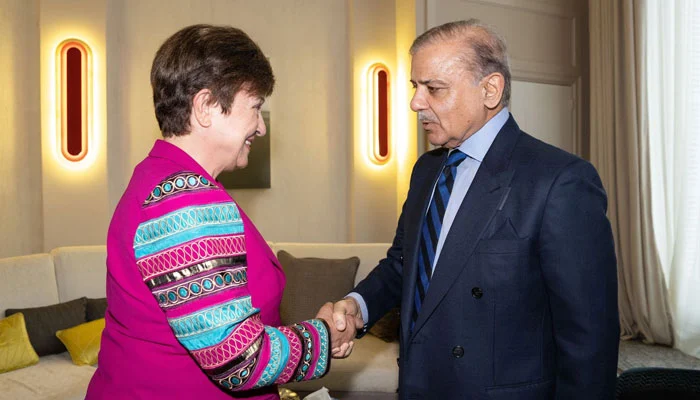
ISLAMABAD: Pakistani Prime Minister Shehbaz Sharif plans to meet with International Monetary Fund Managing Director Kristalina Georgieva next week at the World Economic Forum in Davos, pressing for support on a sweeping relief package aimed at easing crushing taxes and energy costs that have hammered industries and households, Express Tribune newspaper reported on Sunday.
The push comes as Sharif seeks to unwind some of the painful reforms his government implemented under a $7 billion IMF bailout secured last year, which staved off a sovereign default but fueled record unemployment and poverty. The proposed package, valued at as much as Rs2 trillion, would slash corporate and personal income taxes, scrap distortive levies and potentially trim sales taxes to revive investment and growth, according to people familiar with the matter, asking not to be identified.
Sharif’s office confirmed the scheduled meeting, while the Ministry of Finance declined to comment. The IMF didn’t respond to requests for comment. The encounter echoes a 2023 summit in Paris where Sharif pledged to Georgieva that Pakistan would undertake tough measures to stabilise its economy and avert default. Those steps delivered on that promise but at a steep cost: soaring joblessness and destitution that Sharif now aims to address in the Swiss Alps resort.
Developed in consultation with the military-backed Special Investment Facilitation Council, business leaders and finance officials, the plan targets tax anomalies introduced since 2013. Key elements include deep cuts to income tax rates for companies and individuals, elimination of a 10% super tax, a 15% inter-corporate dividend tax and other measures that have pushed effective tax rates as high as 60%, the people said.
A private-sector advisory panel last month urged tax reductions totalling Rs975 billion to buoy the formal economy. With additional components, the full package could swell to between Rs1.5 trillion and Rs2 trillion, depending on the final outline presented to the IMF.
Finance Minister Muhammad Aurangzeb and Finance Secretary Imdad Ullah Bosal will join Sharif in Davos, an unusual move for the secretary, who typically doesn’t attend the annual WEF gathering amid sub-zero temperatures. While high-level meetings like this rarely hash out technical details—those are usually delegated to IMF regional teams—Sharif hopes to secure preliminary buy-in. A fuller assessment of the plan’s feasibility is likely during next month’s third review under the bailout program, one of the people said.
Pakistan’s economy has shown glimmers of recovery, with inflation cooling and foreign reserves building, but the business community has grown increasingly vocal about inequities in energy pricing and taxation, driving away investors. Deputy Prime Minister Ishaq Dar signalled the shift this week, telling an audience that IMF programs often hinder growth and that Islamabad would push the lender for pro-growth adjustments. At the same event, Aurangzeb acknowledged that elevated energy costs and taxes were prompting some companies to exit, even as he emphasised the need for a “sustainable path” forward.
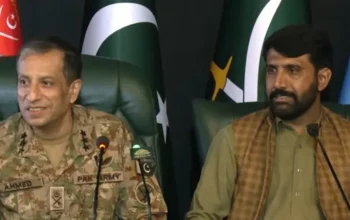
Earlier, the SIFC’s national coordinator, Lt. Gen. Sarfraz Ahmed, highlighted how industrialists have become “easy prey” for tax authorities, calling for the super tax’s abolition, dividend tax removal and a drop in the corporate rate to 25%. SM Tanveer, a prominent textile executive and Federation of Pakistan Chambers of Commerce and Industry representative, warned Friday that 150 factories built over generations have shuttered, with more teetering on closure, and implored cuts to taxes and power tariffs to stem the bleed.
Specific proposals under discussion include trimming the corporate tax from 29% to 25%, capping the top individual rate at 30% from 45%, limiting salaried workers’ taxes to 25%, and reducing the standard sales tax to 15% from 18%, according to a report last month in the Express Tribune newspaper. The sales tax cut alone could dent revenues by more than Rs600 billion annually, pushing the total fiscal hit above Rs1.5 trillion, the people said.
The salaried class has borne the brunt: Federal Board of Revenue data show withholding taxes on salaries surged 55% last fiscal year to Rs214.2 billion, driven by fewer slabs and steeper rates. Former Finance Secretary Younus Dagha noted this week that taxation on this group has ballooned 230% under the IMF deal. To offset the revenue gap, the plan banks on a rebound in stalled domestic and foreign investment to juice economic activity. Officials anticipate flat or negative tax growth in year one without eroding the tax-to-GDP ratio, with catch-up in subsequent years. The government may also commit to halving state-owned enterprise losses over three years to curb spending.
World Bank Country Director Bolormaa Amarsaikhan told Aurangzeb this week that investment is lagging behind targets in the $20 billion Country Partnership Framework. The finance ministry, stung by criticism that it conceded too much for the modest $7 billion facility over three years, is eager for concessions this time.
Yet challenges persist: The federal government has faltered on the National Fiscal Pact, recently greenlighting a 465 billion-rupee provincial motorway and a health initiative despite devolved powers. Provinces have dragged feet on agricultural income taxes, citing flood fallout, even as national accounts showed positive first-quarter farm growth and rice output exceeding pre-flood levels. Harmonising goods and services taxes between the centre and provinces remains unresolved.
Pakistan’s economy expanded 2.5% last fiscal year, below the 3.5% IMF target, amid tight fiscal and monetary policies. Reserves have climbed to $9 billion, but external debt repayments loom large, underscoring the urgency of Sharif’s Davos pitch.
Copyright © 2021 Independent Pakistan | All rights reserved