By Staff Reporter
RAWALAKOT: The streets of this mountain city in Azad Jammu and Kashmir were quiet on Monday under a second consecutive day of shuttered shops and absent traffic — an uneasy stillness that followed weekend clashes that left eleven people dead, including four law enforcement officers, and that a banned political committee was seeking to channel into a region-wide general strike and protest march.
The violence, which erupted late Sunday night in Rawalakot, represented the bloodiest episode yet in a months-long campaign by the Joint Awami Action Committee, a proscribed organisation that has pressed the regional government on a range of economic and political grievances, most prominently the abolition of subsidised quotas for government jobs and university seats for Azad Kashmir residents. What began as a standoff spiralled into what officials described as a coordinated, paramilitary-style assault on security forces, leaving the territory’s administration to weigh a show of overwhelming force against the risk of further inflaming a restive public.
By Monday, authorities had rounded up more than 200 people across the region and driven much of the committee’s leadership underground, according to officials and witnesses. Yet the JAAC pressed ahead with calls for a shutter-down and wheel-jam strike on Tuesday, with organisers announcing plans for a long march that would begin in the southern district of Bhimber, proceed north through Mirpur, Kotli and Poonch, and culminate in a sit-in outside the Legislative Assembly in Muzaffarabad on June 10.
Government officials, however, expressed confidence — carefully calibrated — that the movement had been substantially weakened.
“Situation is fluid,” one official said. “The JAAC leadership and crowd pullers are on the run. So far, they haven’t been able to pull numbers on the streets, but there is a possibility of small protests at several places.”
A second official was blunter about what would be tolerated. “It has been firmly decided that protesters will not be allowed to assemble anywhere, let alone stage a long march from one part of the state to the other,” the official said.
A Hospital Besieged
The night’s worst confrontation unfolded at and around Rawalakot’s Combined Military Hospital, where the violence took on a particularly charged character. Divisional Commissioner Sardar Waheed Khan said protesters had blocked access to the facility and effectively seized control of it, forcing doctors and paramedics to flee. He alleged that those inside obstructed treatment for wounded law enforcement personnel, inflicted further injuries on some of them, and desecrated the body of a killed police constable.
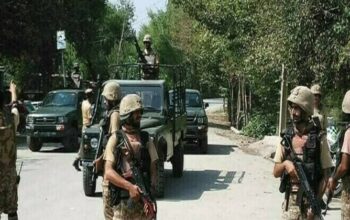
Khan said the protesters were armed with long-range firearms, petrol bombs and other munitions. “They attacked law enforcers from side alleys with full planning, on the pattern of a guerrilla war,” he said. Security forces eventually dispersed the crowd shortly after midnight.
Among the 30 or so protesters hospitalised in the aftermath, three whose injuries were described as critical were airlifted by helicopter to Islamabad, along with four law enforcement personnel. Six other detained activists remained under treatment at the hospital, while others were transferred to police custody.
The Dead
The seven civilians killed were identified by officials as Usman Sabir of Koiyan village, Fahad Barkat of Rehara village, Naqash Zardad of Matyalmera Danna village, Jamshed Ashraf of Hussainkot village, Muhammad Rasheed of Choti Nakkar Pakhar village, and Tariq Resham of Dothan village. A seventh, Wasaid Siddique of Parrat village, was a former military serviceman whom the commissioner said was caught in the crossfire.
The three policemen killed were identified as Station House Officer Hajira Muhammad Inayat and Constables Muhammad Faisal and Faheem Anwar. Funeral prayers for the officers were held Monday afternoon at Rawalakot Police Lines with full state honors, attended by Chief Secretary Khushal Khan, Inspector General of Police Liaqat Ali Malik and Maj. Gen. Zarrar Mahmood, the General Officer Commanding Murree.
The burial of three other activists, including Shazeb Habib — whose body had been held in the hospital mortuary since Saturday — was conducted by the administration and police, officials said. The remaining civilians were buried by their families without reported incident.
A Movement Divided Against Itself
Outside observers described a protest movement that had lost its footing — at least in part through its own miscalculations. Some analysts said that while the JAAC had identified genuine public grievances, its leadership had pushed into confrontation beyond what the broader population was prepared to support.
“It was a good movement for rights in the beginning,” said a retired government servant, who spoke on condition of anonymity. “But some of the committee’s obdurate and myopic leaders pushed it into a blind alley, for reasons best known to them.” He added: “Abolition of the quota system may be close to the majority’s hearts in AJK, but it should not have been made a matter of life and death.”
Some analysts suggested that Monday’s strike call was unlikely to generate an overwhelming response precisely because of what they characterised as the leadership’s intransigence, even if shops remained closed and roads empty out of fear rather than solidarity.
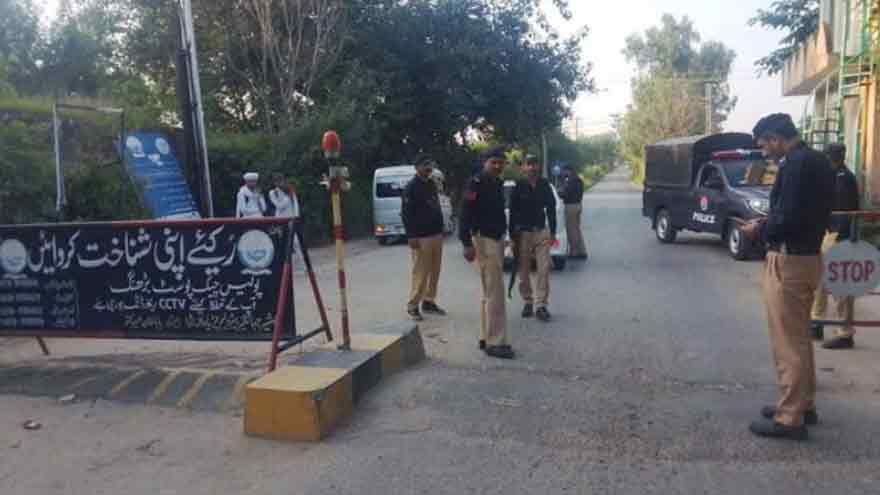
Officials said the administration would not compel shopkeepers to open their businesses, but made equally clear it would not tolerate pressure from the other direction.
“As long as people remain peaceful, the law will tolerate them,” one official said. “But the moment they try to create any problem, they will be dealt with firmly.”
In a statement posted to Facebook, a spokesperson for the inspector general warned that legal proceedings against committee members allegedly involved in armed violence were continuing, and that those responsible for attacks on security personnel and state property would face prosecution.
Copyright © 2021 Independent Pakistan | All rights reserved