By Staff Reporter
ISLAMABAD: Pakistan’s budget preparations descended into open disarray on Monday as the government postponed a key economic planning meeting for the third consecutive time, struggled to win International Monetary Fund backing for a controversial revenue-sharing manoeuvre, and faced a provincial revolt over a demand to claw back more than Rs1.2 trillion that would otherwise flow to the country’s four provinces under a constitutional formula.
The National Economic Council — the constitutional body chaired by the prime minister and attended by all provincial chief ministers that must approve the national macroeconomic framework and development budget — was due to convene on Monday but was put off without explanation, leaving the government’s announced June 10 budget presentation date looking increasingly untenable. A rescheduled NEC session for Tuesday was described as uncertain. The Finance Ministry did not respond to requests for comment on either the revised budget timetable or the delayed release of the Economic Survey of Pakistan.
At the centre of the standoff is an audacious fiscal proposition: Islamabad wants to freeze provincial shares in the federal divisible pool at this year’s actual transfer levels, effectively retaining the roughly Rs1.2 trillion increment that the four provinces would otherwise receive in FY2026–27 as a result of projected growth in federal tax collection. The funds, according to government sources, are earmarked for defence spending, strategic water infrastructure, corporate tax relief, and reductions in withholding taxes on property transactions — outlays the federal government says cannot be accommodated within its own constrained fiscal space.
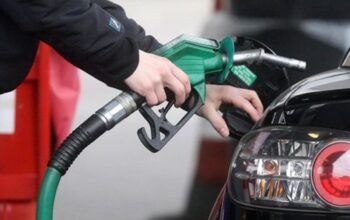
The ask is substantial. The Federal Board of Revenue has underperformed its targets by approximately Rs2.2 trillion over the past two fiscal years, a shortfall that has already forced the government to push the petroleum levy to Rs116 per litre and left it heavily dependent on provincial goodwill heading into the budget season. The Rs1.2 trillion now being sought from provinces is, in effect, nearly half that accumulated revenue gap landing on the doorsteps of Karachi, Lahore, Peshawar and Quetta.
Provincial Pushback
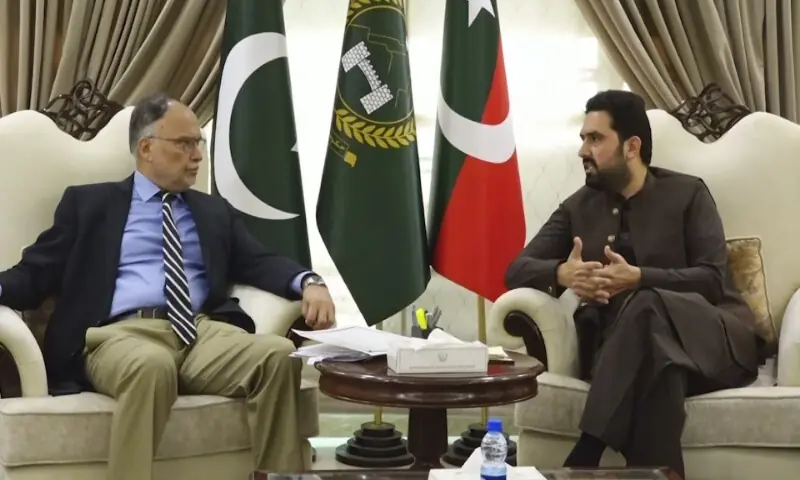
Muzzammil Aslam, finance adviser to Khyber Pakhtunkhwa Chief Minister Sohail Afridi, was blunt after Monday’s meeting with a federal delegation led by Planning Minister Ahsan Iqbal and Finance Secretary Imdadullah Bosal. “Everything is fluid, uncertain, and no one has the clarity,” he told reporters. He said he had not encountered a situation this precarious in more than two decades of tracking Pakistani budgets, including six or seven years of direct involvement at the federal and provincial levels.
Aslam confirmed the federal government’s proposal to freeze NFC transfers at this year’s level — a year in which provinces are expected to receive Rs7.5 trillion rather than the Rs8.2 trillion originally indicated, itself a consequence of FBR’s poor revenue performance. For the coming year, Islamabad wants the windfall from improved collection to flow back to the centre rather than to the provinces. The breakdown of the demand, as described by Aslam: Punjab approximately Rs650 billion, Sindh around Rs300 billion, KP Rs180 billion, and Balochistan Rs110 billion.
The legal architecture for this arrangement is, at best, unsettled. Aslam said flatly that “the NEC is not the forum to deduct provincial shares,” pointing to the constitutional bar on reducing provincial NFC entitlements during a fiscal year. He suggested the federal government may be contemplating a circular mechanism — transferring funds to the provinces and then seeking their return — but acknowledged there was “no clear answer on the table.” Any such move, he added, risked violating the cash surplus targets Pakistan’s provinces have already committed to under the national fiscal pact demanded by the IMF.
That last point is where the arithmetic becomes especially treacherous. Provinces have already signed on to deliver a combined cash surplus of Rs1.95 trillion under the IMF-backed fiscal framework. The additional Rs1.2 trillion demand sits entirely on top of that commitment. Accepting it would push provincial budgets into deficit and, as Aslam put it, make it “difficult for them to run their governments.” The federal team’s suggested remedies — freeze public sector salaries, curtail development schemes — were met with resistance.
The IMF Complication
The Finance Ministry’s difficulties were compounded on Monday by the IMF’s apparent reluctance to endorse the NEC-based mechanism being proposed to justify the provincial transfer. Government sources said ministry officials spent the day examining various options to bring the Fund on board, including the possibility of a direct call to IMF Managing Director Kristalina Georgieva. The ministry declined to confirm whether it had shared its position with the Fund, whether the IMF had agreed to the arrangement, or whether the funds being sought from provinces were solely for defence or would also finance tax relief measures.
Finance Minister Muhammad Aurangzeb had offered an upbeat assessment as recently as last week, saying budget talks with coalition partners and the IMF were proceeding positively and that the government intended to widen the tax base without imposing new levies. The picture that emerged Monday was considerably more complicated.
A Political Problem, Too
Aslam was candid that the dispute had migrated from the technical to the political. With KP governed by Pakistan Tehreek-e-Insaf, the opposition party whose founder, Imran Khan, is imprisoned at Adiala Jail, the province’s participation in any budget compromise requires political clearance from Khan himself. Aslam said Chief Minister Afridi, and he had requested urgent access to Khan to consult him on the matter. The federal delegation, he said, acknowledged KP’s position and promised to revert with an answer on facilitating that meeting.
“The demand for the strategic purpose is not unjustified and is in the national interest,” Aslam said, “but Sindh and Punjab will have to show generosity.” He suggested Khan was “large-hearted” and might be more accommodating than the current coalition’s leadership — a pointed dig at the PPP and PML-N governments in Sindh and Punjab, whose combined contribution would account for the bulk of any provincial transfer.
The timing of Monday’s high-level meeting between President Asif Ali Zardari and Prime Minister Shehbaz Sharif at Aiwan-e-Sadr was, in that context, freighted with significance. Zardari’s PPP governs Sindh, the province facing a demand of around Rs300 billion. The presidential readout stressed that Zardari had urged the budget to prioritise “public welfare, provincial rights and economic stability” — language that, in the circumstances, carried the weight of a negotiating position as much as a policy aspiration.
Also unresolved at day’s end: MQM-P, another coalition partner, has conditioned its budget support on the reappointment of Kamran Tessori as Sindh governor — adding a further transactional dimension to what has become a multi-front political negotiation.
KP’s Afridi separately raised a catalogue of provincial grievances during Monday’s federal meeting: a Rs10 billion mid-process cut to development allocations for the merged districts, eight years of allegedly unconstitutional withholding of NFC shares owed to those districts, gas shortages in a province producing over 500 mmcfd of natural gas daily, and the non-operationalisation of a completed dam in Swat and the Peshawar Bus Terminal due to pending federal clearances. Planning Minister Iqbal promised the bus terminal’s no-objection certificate within 24 hours and said other concerns would be raised with the prime minister.
Whether the budget is ultimately presented June 10, June 12, or later still, the shape of the fiscal year ahead is becoming clearer: a government squeezed between an IMF programme demanding consolidation, provinces resisting constitutional encroachment on their revenues, a defence establishment with strategic spending requirements, and a population seeking relief from years of punishing inflation. Balancing all four may prove harder than any budget date.
Copyright © 2021 Independent Pakistan | All rights reserved