By Staff Reporter
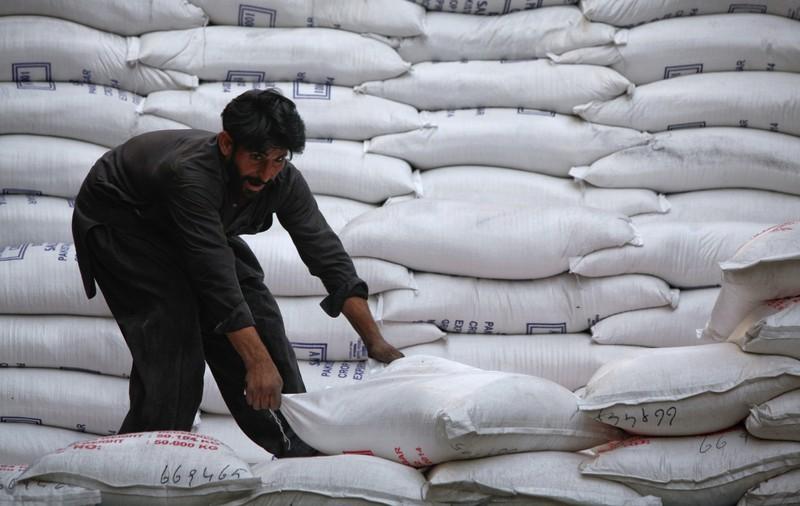
ISLAMABAD: Pakistan’s sugar mills have amassed Rs300 billion in profits as sugar prices surge, according to the Auditor General of Pakistan, who testified before the Public Accounts Committee (PAC) on Tuesday.
The disclosure ignited fierce debate over soaring sugar prices, a lack of transparency in the industry, and allegations of political patronage, as lawmakers demanded accountability for what they called a crisis of profiteering and mismanagement.
The PAC, chaired by Junaid Akbar Khan, convened to scrutinize the country’s sugar import and export policies, escalating prices, and the opaque operations of the sugar sector. Industries and Production Secretary Saif Anjum briefed the committee, asserting that price regulation and relevant laws fall under provincial jurisdiction.
He detailed that from 2013 to 2023, the Economic Coordination Committee (ECC) permitted exports of 5.09 million metric tonnes of sugar, with 3.927 million tonnes actually shipped. For 2023-24, Pakistan had a surplus of 1.3 million tonnes, and 790,000 tonnes were cleared for export. Anjum maintained that the price remained “stable” during this period.
But PAC members sharply contradicted the government’s narrative, pointing to stark realities on the ground. Omar Ayub reported sugar selling for over Rs200 per kilogram in many regions, while Senator Fauzia Arshad described the commodity as both scarce and unaffordable.
National Food Security Secretary Amir Mohyuddin countered that the national average price stood at Rs173 per kilogram, a claim that did little to quell the committee’s concerns.
Chairman Khan slammed the recurring cycle of exporting sugar only to import it later, calling it a “drama” that burdens consumers. “Every year we repeat the same drama: first export (sugar), then import it,” he said. The PTI lawmaker zeroed in on transparency, demanding, “Who owns these sugar mills?” The committee had requested a list of owners, but Anjum provided only directors’ names—a response the PAC rejected outright. “No further briefings will be accepted without disclosure of owners,” the panel warned.
The Sugar Advisory Board (SAB) faced blistering criticism for its failure to regulate the industry. “This is daylight robbery,” declared MNA Khawaja Sheraz Mehmood, decrying massive profiteering and poor governance. MNA Riaz Fatyana alleged that “Rs287 billion have gone into a few pockets,” while other members accused President Asif Ali Zardari and Prime Minister Shehbaz Sharif of protecting the profiteers.
A detailed list of sugar mills that exported sugar between July 2024 and June 2025 was presented, showing 67 mills shipped over 746,469 tons worth more than $400.02 million (Rs111.97 billion). JDW Sugar Mills topped the list, exporting 73,090 metric tons valued at Rs11.1 billion, followed by Tandlianwala Sugar Mills with 41,412 metric tons (Rs5.98 billion) and Hamza Sugar Mills with 32,486 metric tons (Rs5.03 billion).
Other significant exporters included: Thal Industries Corporation Limited: 29,107 metric tons (Rs4.55 billion), Almoiz Industries: 29,453 metric tons (Rs4.32 billion), JK Sugar Mills: 29,969 metric tons (Rs4.09 billion), Madina Sugar Mills: 18,869 metric tons (Rs2.79 billion), Fatima Sugar Mills: 17,365 metric tons (Rs2.68 billion).
The meeting grew heated as Malik Amir Dogar accused top political figures—President Asif Ali Zardari, Jahangir Tareen, and the Sharif family, of owning major stakes in the sugar industry and reaping benefits from government policies. The claims triggered a firestorm. PPP’s Shazia Marri demanded proof, PMLN’s Afnanullah Khan accused Dogar of selective criticism, and Senator Bilal Mandokhail urged him to retract the remarks.
Chairman Khan noted that just 42 families profited from the windfall, asking, “Why is no one else allowed to set up sugar mills?”—a pointed critique of the sector’s monopolistic structure.
Anjum clarified that sugar regulation is a provincial matter, though the SAB includes federal and provincial representatives alongside industry stakeholders. He revealed that Pakistan produced 7.66 million metric tons of sugar last year, with 500,000 tons reserved for 2024 and 790,000 tons approved for export in three phases, earning over $400 million. At the time of the export decision, the domestic price was Rs143 per kilogram.
The government now plans to import 300,000 tons through open tenders, unrestricted by the IMF, with current stocks at 1.9 million tons and imports slated for September. Lawmakers pressed further, questioning subsidies for exports and tax exemptions. “Why were sugar mill owners granted subsidies?” Khan demanded. Sanaullah Mastikhel even floated nationalizing the mills. Moin Aamir Pirzada accused a “sugar mafia” of infiltrating successive governments, while Fatyana claimed the nation had been defrauded of Rs287 billion through price manipulation.
Copyright © 2021 Independent Pakistan | All rights reserved