By Staff Reporter
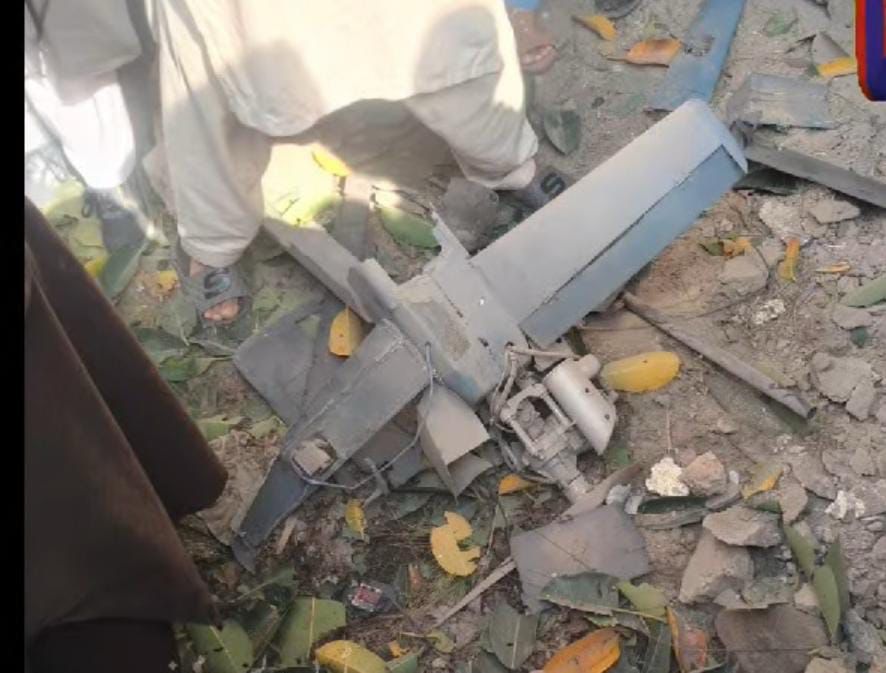
WANA: Three sisters were killed and four other members of their family were wounded before dawn on Sunday when explosives believed to have been dropped by a quadcopter drone struck their home in a remote district of northwestern Pakistan, according to local officials and hospital sources, the latest in a monthslong string of unexplained aerial attacks that has left residents of the country’s tribal belt increasingly afraid to sleep in their own houses.
The strike hit a household belonging to the Dinor subtribe in the Nargasi area of Birmal tehsil, part of Lower South Waziristan in Khyber Pakhtunkhwa province, according to people familiar with the incident. The girls killed ranged in age from 6 to 15. A woman and three boys were injured and remain hospitalized.
Neighbors reached the house within minutes and began pulling survivors from the wreckage, then carried the wounded roughly 30 miles to the District Headquarters Hospital in Wana, the area’s main population center, where doctors were treating them on Sunday and monitoring their condition, according to hospital sources.
There are no official account of what happened. That silence has become almost routine in this stretch of Pakistan near the Afghan border, where dozens of similar incidents have been reported over the past year without a single one being publicly attributed to a specific party.
The attack drew immediate condemnation from residents of Birmal, many of whom said they have grown numb with grief and are now demanding an independent inquiry into who is flying the drones and why children keep dying beneath them.
Local accounts point to a disturbing pattern radiating out from Birmal tehsil. Similar quadcopter incidents have previously struck the nearby areas of Azam Warsak, Guldona Ghundai, Karmazi, Staff, and Kalotai, according to residents, who say the cumulative toll of dead and wounded has climbed steadily even as authorities have offered no explanation for any single episode.
That toll has arrived alongside a broader collapse in public safety across Lower South Waziristan. Residents describe a security picture that has deteriorated markedly over the past year and a half, marked by a rise in bombings, targeted killings, kidnappings for ransom, extortion rackets, and armed assaults on police and security personnel. The compounding effect, they say, is a population that no longer trusts that a quiet night will stay that way, and that has repeatedly pressed the government to restore basic order and account for the strikes hitting their homes.
Sunday’s deaths were not an isolated event even within the past several days. Earlier this week, a woman was killed and six relatives were wounded in a suspected drone strike on a house in Pastawana, a village in the mountainous Hassan Khel subdivision roughly 50 miles south of Peshawar — an attack that marked one of the first of its kind to reach so close to the provincial capital and prompted the activation of an anti-drone detection system in the city.
Days before that, in Khyber Pakhtunkhwa’s Bajaur district along the Afghan frontier, three people were killed and 10 others wounded when police say a quadcopter dropped a bomb on a residential house, one of several such strikes to hit Bajaur in a matter of weeks. And the week before that, a 9-year-old boy was killed and a woman injured in a separate suspected quadcopter attack in Bajaur’s War Mamund tehsil, according to police, adding to a death toll in that single district that has climbed into the double digits since the spring.
Together, the attacks have traced an arc across some of Pakistan’s most volatile borderland districts, all sharing the same features: a house struck in the middle of the night or the small hours of morning, a family with no apparent connection to armed conflict, and, in the aftermath, official silence about who was flying the drone or why.
Pakistani security officials have said in the past that armed groups — chiefly the Tehreek-e-Taliban Pakistan, the outlawed militant network known as the Pakistani Taliban — have increasingly turned to modified commercial drones to carry explosives, a tactic they say has been used against security checkpoints as well as civilians. Officials have insisted that state forces are not responsible for the strikes on private homes. Families of victims and elected representatives from the region have pushed back against that account, calling for transparent, independent investigations rather than assurances from the same authorities they blame for failing to protect them.
Copyright © 2021 Independent Pakistan | All rights reserved