By Staff Reporter
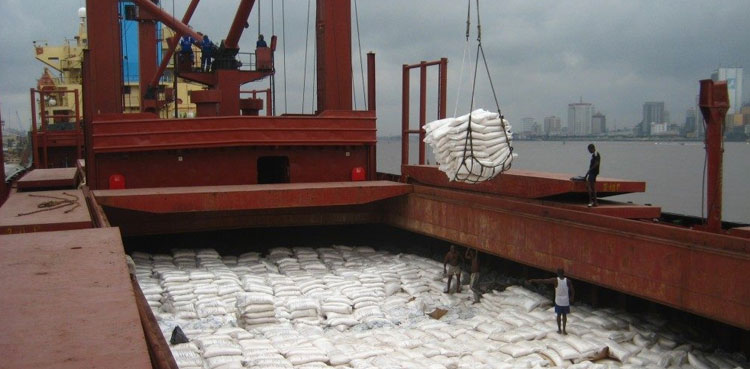
Pakistan’s sugar market is spiralling out of control, and the tremors are rattling global soft-commodity markets. What began as a domestic shortfall has morphed into a high-stakes drama of geopolitical brinkmanship, price manipulation, and supply-chain upheaval. A 2.1 million-metric-ton demand gap has forced Islamabad into emergency imports—three tenders in one month. Yes, two of them failed. The third tender for 200,000 metric tons is now in motion, the first shipment due in early September 2025, according to the Ministry of National Food Security and Research.
For investors, this is a battlefield where sharp instincts can yield big wins, but the chaos also lays bare a troubling truth: Pakistan’s sugar woes are a microcosm of structural rot that is always a talking point in global supply chains. The world ignored the warnings and just took action. This mess didn’t materialise overnight. Domestic sugar production for the 2024–25 season has cratered to 5.9 million metric tons (MMT), down 14 percent from prior years, thanks to erratic monsoons and farming practices stuck in the last century. Yet exports ballooned to 765,000 tons in FY2025, slashing reserves to a paltry 2.8 MMT against a monthly need of 535,000 tons. Math doesn’t add up, and neither does the policy.
Food Security Minister Rana Tanveer Hussain insists there’s no shortage, claiming 5.8 MMT from this year’s output plus a 500,000-ton buffer meets the annual 6.3 MMT demand. Last year’s export of 750,000 tons, he says, earned $402 million and was “not abrupt” but data-vetted. Tell that to consumers paying Rs 200 per kilogram, well above the government’s latest high-end Rs 173 cap, while imported sugar lands at Karachi for Rs 155–160. Crazy data-vetting. The government’s response? A frantic tender excluding India and Israel: despite India’s projected 8 MMT surplus for 2025/26, the April 2025 Kashmir attack and decades of enmity have made that border a no-go, rerouting cargo through the UAE and jacking up costs. Thai giants like Mitr Phol and Charoen Pokphand Group are swooping in, their lean supply chains primed to profit. But Pakistan’s sugarcane water productivity—lagging 53 percent behind the global average at 2.28 kg/m³—signals a deeper malaise: a system too broken to sustain itself.
Don’t be fooled by the weather excuse. This crisis reeks of human failure, specifically a cartel of sugar-mill owners with political muscle. “The sugar crisis is not new; it recurs every two to three years regardless of which party is in power,” economist Dr. Kaiser Bengali told a local news platform in an interview last week. “This pattern continues due to weak enforcement, lack of transparency in stock reporting, and poor regulatory oversight at all levels.” He points the finger at mill owners who “manipulate prices by influencing both the federal and provincial governments’ policy decisions,” creating artificial shortages to cash in. Each year, they lobby for exports—last time with subsidies—then cry shortage when prices spike.
The Competition Commission of Pakistan (CCP) is finally stirring, with hearings set for some time today, targeting the Pakistan Sugar Mills Association and its members for alleged collusion. This follows a Rs 44 billion fine in 2021, now under rehearing. But don’t hold your breath; many of these tycoons are untouchable, their influence woven into the fabric of Islamabad’s elite. Newspaper Express Tribune nails it: “The control of sugar mills by politically powerful families was the major reason for the crisis.” The Public Accounts Committee, led by PTI loyalist Junaid Akbar, is digging into mill owners’ records, but history suggests this is theatre more than reckoning.
The fallout isn’t confined to Pakistan. Global sugar futures are twitching, NY Sugar Futures up 1.39 percent in July 2025, London ICE White Sugar down 1.51 percent, as traders eye this volatility. The government’s duty-free import window until September 30, 2025, is a siren call for arbitrageurs. But the IMF dislikes concessions. With local prices at Rs 200/kg and imports at Rs 155–160/kg (despite a 40 percent tariff outside the window), the profit margin is tantalising. Speed is everything. Shipments must hit port by September 30, with a five-day grace for containers. “The purpose of the import is to ensure the availability of sugar in the market and maintain price stability,” the Ministry insists, projecting balance with that first September shipment. Good luck enforcing that cap. Investors have options. Thai producers like Mitr Phol and Charoen Pokphand Group are poised to dominate supply, their efficiency a stark contrast to Pakistan’s dysfunction. Shipping firms, think DryShips Inc. or Euronav NV, could ride a wave of rerouted cargo demand. Karachi and Gwadar ports, straining under new traffic, scream for infrastructure bets. Big traders like Cargill or local player Engro Foods, able to meet the 25,000-ton bid minimum, can exploit both import arbitrage and domestic distribution. Even India’s DCM Shriram and EID Parry might pivot surplus to third markets if New Delhi eases export bans.
This isn’t a sure thing, but it’s not entirely uncertain either. The IMF is unwilling to allow duty-free sugar imports even if heaven falls. Protests from Imran Khan’s party could paralyse logistics, at least in KPK, at a moment’s notice. Smuggling to Afghanistan, a perennial excuse for export pushes, could siphon gains. Hedging is non-negotiable: diversify into firms with broad exposure, not just Pakistan’s quicksand. Experts say the sector needs “structured, technology-enabled, and market-aligned regulatory frameworks,” not “reactive firefighting.” Their Rx? Boost yields, enforce anti-cartel laws, digitise supply tracking, and set transparent pricing. “There is no easy solution, only the hard path of structural reform.”
Analysts talk of deregulation and new mill licenses sounding bold, but in a market rigged by oligopolists, some from the Sharif or even Bhutto-Zardari families, it’s a recipe for more concentration, not competition. The Sugar Advisory Board’s data, massaged by vested interests, keeps feeding this cycle. Pakistan’s sugar crisis is a warning flare for global markets: supply chains are only as strong as their weakest links. For now, it’s a playground for the nimble, those who can ride the September 2025 deadline to riches. But without smashing the cartel and modernising the fields, this will replay every few years, a boom-bust loop as predictable as Pakistan’s IMF bailouts. Investors, take your shot. Everyone else, demand reform, or brace for the next crash.
Copyright © 2021 Independent Pakistan | All rights reserved