By Staff Reporter
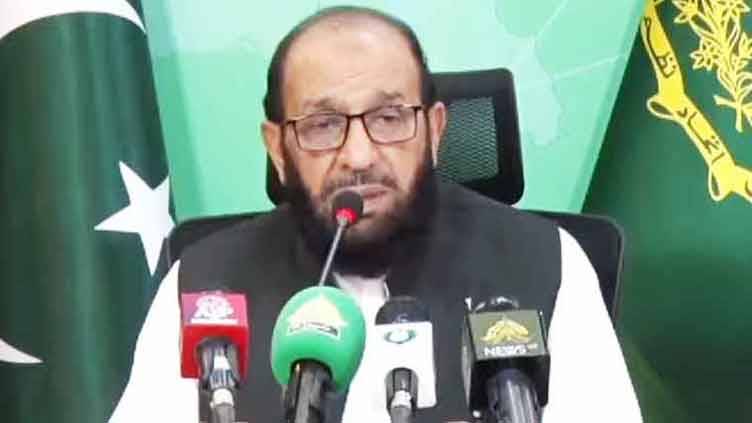
ISLAMABAD: Only 25,698 Pakistani pilgrims will perform Hajj under the private scheme this year, far below the allocated quota, after private tour operators failed to meet Saudi Arabia’s deadlines and regulations, the religious affairs minister said on Friday.
“The private sector, which includes NGOs and clusters of tour operators, failed to comply with the instructions,” Minister for Religious Affairs Sardar Muhammad Yousaf told a news conference. “They know the reasons for this failure.”
Yousaf said private tour operators failed in utilising Pakistan’s full Hajj quota, pointing to missed payment deadlines and attempts to operate under outdated companies against Saudi Arabia’s rules.
In January 2025, Pakistan and Saudi Arabia signed an annual Hajj agreement allotting Pakistan 179,210 slots, split evenly between government and private schemes. The government scheme, managed directly by the ministry, met its quota of approximately 90,000 pilgrims, completing payments and securing approvals within Saudi deadlines.
The private scheme, however, faltered dramatically, leaving thousands unable to perform Hajj, one of Islam’s five fundamental pillars that draws millions globally each year.
“Some people now claim ignorance, but the ministry had fulfilled its duty responsibly and issued timely instructions,” the minister said, referencing repeated public notices urging pilgrims to use only authorised companies.
Yousaf explained that the Hajj policy, approved in November 2024 before he assumed office in March 2025, required private operators to form clusters of at least 2,000 pilgrims under new Saudi rules, a shift from the previous minimum of 500.
Of the 904 companies that formed clusters under the oversight of their umbrella organisation, HOPE, few met the financial and procedural benchmarks.
“HOPE was given a February 14 deadline to deposit 25% of the amount required for the process to proceed. However, bookings could not proceed without these payments,” the minister said. By the deadline, only 3,600 pilgrims had paid, and even after a one-week extension and an additional 48 hours, the total reached just 13,600.
With 700 million riyals required, the ministry’s director general of Hajj account received just 50 million, much of it misdirected to outdated accounts. They were returned between December and January.
Realising the shortfall, Yousaf travelled to Saudi Arabia to seek an extension, but Saudi authorities emphasised that global Hajj policy could not be adjusted for one country.
“The Saudi Minister for Hajj confirmed that the timeline was clearly stated in the official agreement, which was signed by HOPE’s representative Waheed Butt,” the minister added. After briefing Prime Minister Shehbaz Sharif, who directed the foreign minister to intervene, Saudi Arabia granted an additional 10,000 slots—offered equally to other Muslim countries—bringing the private scheme total to 25,698.
“The Saudi government is not granting any additional Hajj quota, and those who have been left out under the private scheme will not be accommodated this year,” Yousaf said, noting that all Hajj flights would conclude by May 30.
The fallout has sparked outrage among affected pilgrims, a sentiment Yousaf acknowledged. “The government is aware of this, and action will be taken,” he promised.
“The PM has already formed an inquiry committee, and action will follow after the report is submitted,” Yousaf said. “Those found responsible will be held accountable once the inquiry report is submitted.”
Copyright © 2021 Independent Pakistan | All rights reserved