By Staff Reporter
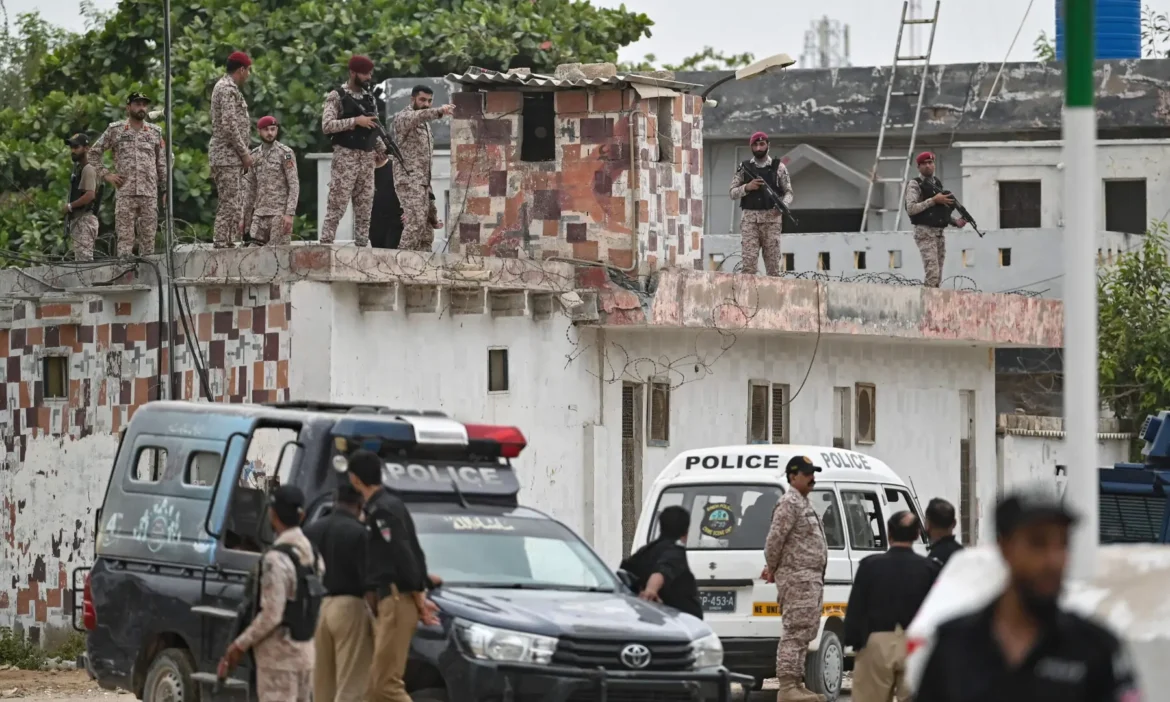
KARACHI: An explosive-laden vehicle driven into the gates of a Sindh Rangers compound in Karachi killed three paramilitary troops and wounded four others on Saturday night, the military said, as a Pakistani Taliban faction claimed responsibility for one of the deadliest militant strikes on a security installation in Pakistan’s commercial capital in years.
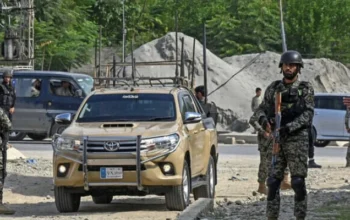
Security forces killed three of the attackers and captured a fourth — identified as a wounded Afghan national — after repelling a follow-on assault in which gunfire sent residents scrambling for cover across the surrounding Gulistan-i-Jauhar neighbourhood, the Inter-Services Public Relations (ISPR) directorate said in a statement on Sunday.
The attack began at around 8 p.m. local time when assailants drove a vehicle-borne improvised explosive device into the main gate of the Rangers compound in Block 5 of Gulistan-i-Jauhar, triggering a powerful blast. Surviving attackers then rushed the compound and opened fire, Sindh Inspector General of Police Javed Alam Odho confirmed to media.
Jamaat-ul-Ahrar, a faction of the Tehreek-e-Taliban Pakistan (TTP), claimed responsibility for the assault — the first such claim by a TTP-affiliated group targeting Karachi in several years. The group has operated primarily in the northwestern Khyber Pakhtunkhwa province, where it has carried out strikes against civilians, security personnel and government officials.
Pakistan’s military accused India of orchestrating the attack. ISPR said the assault was carried out by militants acting as an “India proxy”. Islamabad uses the designation “Fitna al-Hindustan” — broadly meaning India’s sedition — as an umbrella term for militant groups it says are sponsored by New Delhi to execute attacks on Pakistani soil.
ISPR said Pakistan’s top military commanders had offered condolences to the families of the fallen troops and warned that Islamabad would “undertake retribution operations against the perpetrators.” Counter-terrorism operations would continue uninterrupted under the military’s campaign known as “Azm-e-Istehkam,” or Determination for Stability, it added.
President Asif Ali Zardari and Prime Minister Shehbaz Sharif both condemned the attack on Sunday. Sharif praised Rangers personnel for their professionalism and bravery in defeating the “cowardly” attack and declared that the group and its “patrons” would never achieve their objectives. Zardari said the nation would never forget the sacrifices of its security forces and that “externally backed terrorist elements” would not prevail.
Interior Minister Mohsin Naqvi called the troops who died “heroes of the entire nation.”
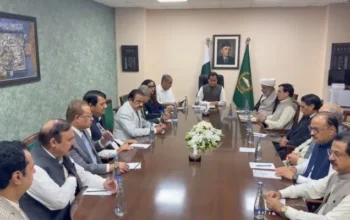
Sindh Chief Minister Syed Murad Ali Shah moved quickly to coordinate a response, contacting the provincial police chief and Karachi’s Additional Inspector General to ensure immediate deployment to the scene. Home Minister Ziaul Hassan Lanjar also sought a detailed incident report from police. Multiple arterial roads around Mosamiyat Chowrangi were sealed as Rangers commandos and police conducted what the Sindh IG described as a “mopping operation” that stretched late into the night. Special units, including the Rapid Response Force and police commandos, were dispatched to the compound, and Rescue 1122 Sindh sent emergency teams from its central command centre.
Saturday’s attack was the worst militant assault on a security installation in Karachi since February 2023, when TTP gunmen launched an hours-long battle at the Karachi Police Office on Sharea Faisal. That confrontation — involving the Army’s Special Service Group, Sindh Rangers and Sindh Police — killed four and wounded 19 before all three attackers were shot dead.
The most recent major militant incident in the city before Saturday was a bombing near Karachi’s international airport in October 2024 that killed one person and wounded 11, including foreign nationals. The BLA claimed the attack; two suspects were arrested the following month.
Saturday’s strike comes against a backdrop of deteriorating national security. Pakistan recorded 128 terrorist attacks in May — a 27 percent increase over the 101 registered in April and a reversal of two consecutive months of improvement — according to the Pakistan Institute for Conflict and Security Studies. Violence has been concentrated in Khyber Pakhtunkhwa and Balochistan, but the assault underscored the persistent threat facing Karachi, the country’s economic engine and home to more than 20 million people.
Militant groups, including the TTP and the separatist Baloch Liberation Army have long regarded Karachi as a strategic target, previously striking security forces, government installations and Chinese economic interests in the city.
Copyright © 2021 Independent Pakistan | All rights reserved