By Staff Reporter
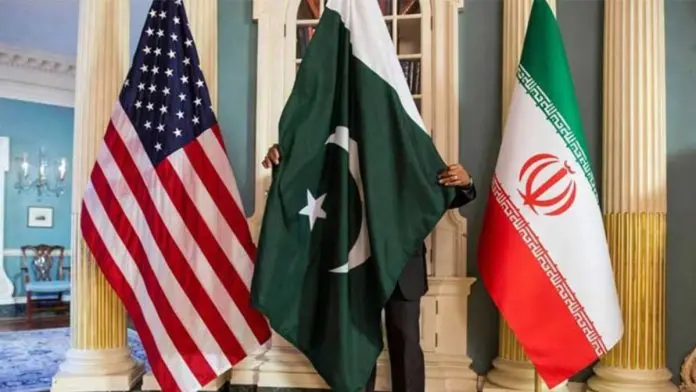
ISLAMABAD: Pakistan said on Wednesday that the United States and Iran, along with their allies, had reached an immediate ceasefire across the Middle East, including in Lebanon, after weeks of intensifying conflict that began with American and Israeli strikes on Iranian targets in late February.
The announcement came hours after President Donald Trump said he would suspend US bombing of Iran for two weeks if Tehran reopened the Strait of Hormuz, a pivotal waterway for global energy supplies that Iran had effectively blockaded.
Prime Minister Shehbaz Sharif, who has positioned Pakistan as a central mediator between Washington and Tehran, broke the news in an early-morning post on X. He welcomed what he described as a breakthrough driven by “remarkable wisdom and understanding” on both sides and extended “deepest gratitude” to the leadership of Iran and the United States. Sharif invited delegations from both countries to Islamabad on April 10 for formal negotiations aimed at a lasting settlement of all disputes.
“Both sides have displayed remarkable wisdom and understanding and remained constructively engaged in furthering the cause of peace and stability,” Sharif wrote. He expressed hope that the “Islamabad Talks” would produce sustainable peace and that “more positive developments would follow in the coming days.”
The prime minister’s statement framed the agreement as a comprehensive pause in hostilities. Yet the White House offered a note of caution. Press Secretary Karoline Leavitt said the United States had not yet formally agreed to the broader terms outlined by Pakistan. “There are discussions about in-person talks, but nothing is final until announced by the President or the White House,” she said.
The development marked a dramatic de-escalation less than two hours before Trump’s self-imposed 8 p.m. Eastern time deadline on Tuesday, when he had threatened widespread strikes on Iranian infrastructure if Tehran refused to reopen the strait and accept a deal. In a Truth Social post issued shortly before the deadline lapsed, Trump said he had spoken with Sharif and Pakistan’s army chief, Field Marshal Asim Munir, and agreed to the suspension “subject to the Islamic Republic of Iran agreeing to the COMPLETE, IMMEDIATE, and SAFE OPENING of the Strait of Hormuz.” “This will be a double sided CEASEFIRE!” Trump wrote.
He said the US had already “met and exceeded all Military objectives” and was “very far along with a definitive Agreement concerning Longterm PEACE with Iran, and PEACE in the Middle East.” Trump added that Iran had submitted a 10-point proposal that he viewed as “a workable basis on which to negotiate,” noting that “almost all of the various points of past contention have been agreed to between the United States and Iran” and that the two-week window would allow a final deal to be “finalised and consummated.”
Iran responded swiftly. Foreign Minister Abbas Araghchi, speaking on behalf of the Supreme National Security Council, said that if attacks on Iran halted, its armed forces would cease defensive operations. “For a period of two weeks, safe passage through the Strait of Hormuz will be possible via coordination with Iran’s armed forces and with due consideration of technical limitations,” he said. Araghchi thanked Sharif and Munir for their “tireless efforts to end the war in the region” and referenced both Iran’s 10-point proposal and a US 15-point framework as bases for further talks.
State-run Press TV later detailed Iran’s 10-point plan, which Tehran said Washington had accepted in principle. The points included a US commitment to non-aggression; Iranian control over the Strait of Hormuz; acceptance of Iran’s right to uranium enrichment; the lifting of all primary and secondary sanctions; termination of UN Security Council and International Atomic Energy Agency resolutions targeting Iran; compensation for damages; withdrawal of US combat forces from the region; and a cessation of hostilities on all fronts, including against Hezbollah in Lebanon.
The ceasefire extends to Israel, according to multiple reports citing Israeli officials, though concerns remain in Jerusalem about the durability of the pause. Axios, citing an Israeli official, reported that Israel had agreed to the two-week terms once the Hormuz blockade lifted.
The agreement came after intense last-minute diplomacy led by Pakistan. On Tuesday, as Trump’s deadline loomed and B-52 bombers were reported en route toward Iranian airspace, Sharif posted on X urging an extension. “Diplomatic efforts for peaceful settlement of the ongoing war in the Middle East are progressing steadily, strongly and powerfully with the potential to lead to substantive results in the near future,” he wrote. He asked Trump to extend the deadline by two weeks, requested that Iran open the strait for the same period as a “goodwill gesture,” and called on all parties to observe a ceasefire “everywhere for two weeks to allow diplomacy to achieve conclusive termination of war.”
Trump later credited those conversations with Sharif and Munir for his decision. Iran’s response followed within minutes of the American announcement.
The war erupted on Feb. 28 when the United States and Israel launched strikes inside Iran. Over the ensuing five weeks, Iranian forces retaliated by tightening their grip on the Strait of Hormuz — through which roughly one-fifth of the world’s oil and liquefied natural gas normally flows — slowing tanker traffic to a trickle. Global energy markets shuddered. In the hours before the ceasefire took hold, Israeli aircraft hit Iranian infrastructure targets, including a rail bridge in Kashan, bridges near Karaj, Qom and Tabriz, and a power substation that caused blackouts. The U.S. struck about 50 military sites on Kharg Island, Iran’s primary oil export terminal. Iran’s Revolutionary Guard Corps responded by targeting Saudi Arabia’s Jubail petrochemical complex.
Even as fighting continued into Tuesday evening, Sharif’s government had been quietly laying groundwork for de-escalation. Deputy Prime Minister and Foreign Minister Ishaq Dar held four rapid phone calls on Wednesday morning with his counterparts in Morocco, Saudi Arabia, Türkiye and Egypt. The Foreign Office said the conversations focused on the latest developments and Pakistan’s sustained mediation efforts. Saudi Arabia, Türkiye and Egypt had sent their foreign ministers to Islamabad the previous week for a quadrilateral meeting on de-escalation. Dar had told reporters afterwards that both Iran and the United States had expressed confidence in Pakistan’s facilitation role and that Islamabad would be “honoured to host dialogue in coming days.”
A day after that meeting, Pakistan and China issued a five-point initiative for restoring stability in the Gulf and broader Middle East during talks in Beijing. Sharif had first offered on March 24 to host “meaningful and conclusive talks” between the two sides. Iranian media had reported earlier rejections of American proposals, including a negative response on March 25 and another 10-clause counteroffer conveyed through Pakistan on Monday that emphasised a permanent end to the war rather than a temporary truce.
The conditional two-week ceasefire now provides breathing room. Markets reacted immediately. Benchmark Brent crude fell 15.9 percent to $92.30 a barrel, while U.S. crude dropped 16.5 percent to $93.80. Both prices remain well above pre-war levels of around $70. Asian stock markets surged in early Wednesday trading, with Japan’s Nikkei 225 rising 4.5 percent and South Korea’s Kospi jumping 5.5 percent, reflecting relief among energy-import-dependent economies.
The pause arrives amid broader international concern. U.N. Secretary-General António Guterres had reminded member states through his spokesperson that attacks on civilian infrastructure violate international law. Iran’s U.N. ambassador, Amir-Saeid Iravani, had warned in a Security Council session that Trump’s threats amounted to “incitement to war crimes — and potentially genocide,” vowing Tehran would exercise its right of self-defence. Trump had dismissed such criticism, telling reporters he was “not at all” worried about being labelled a war criminal.
Copyright © 2021 Independent Pakistan | All rights reserved