By Staff Reporter
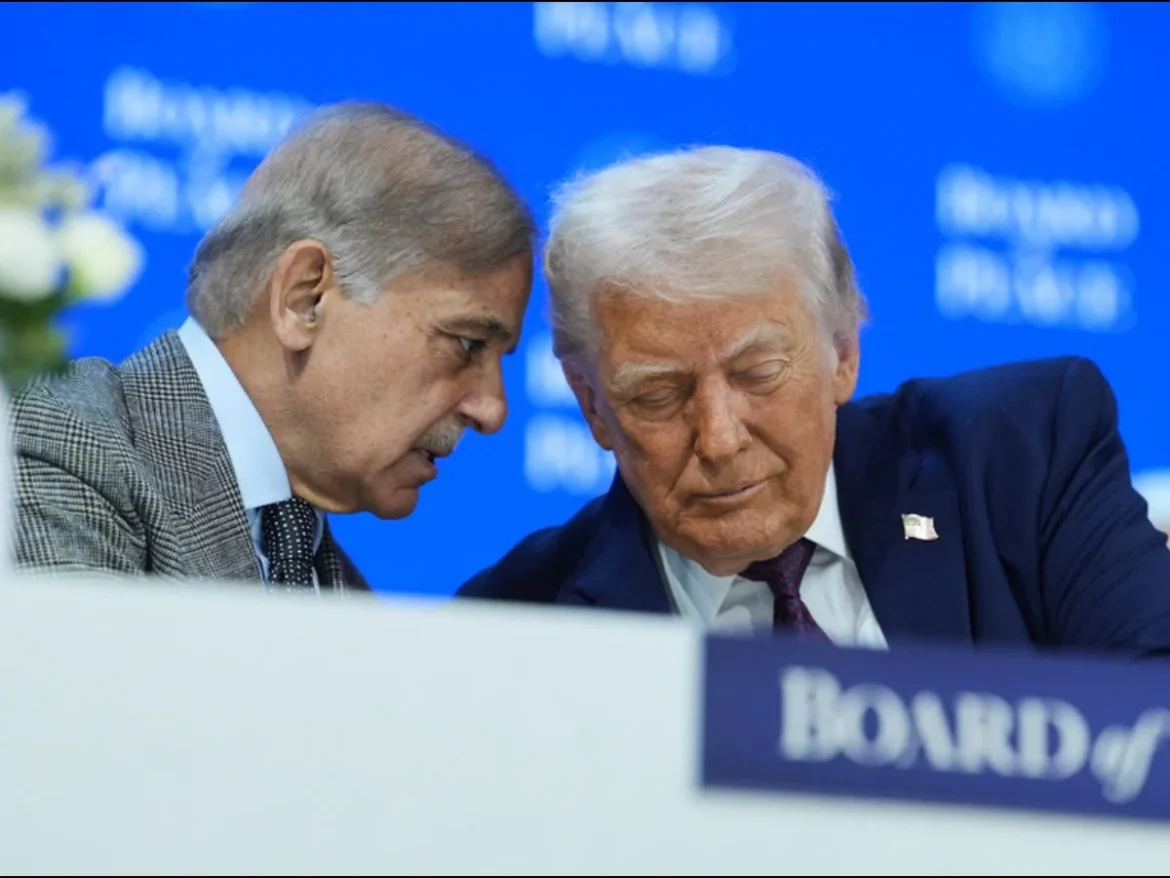
ISLAMABAD: Prime Minister Shehbaz Sharif appealed directly to President Donald Trump on Tuesday to grant Iran a two-week extension on a looming US deadline to reopen the Strait of Hormuz and reach a deal with Washington, warning that failure to allow more time for diplomacy could derail a fragile peace process in the Middle East.
Sharif’s plea, delivered hours before Trump’s 8 pm Eastern Time deadline expired, came as the US president had renewed threats of expanded military action against Iranian infrastructure if Tehran refused to comply. In a post on X, Sharif described ongoing diplomatic efforts as “progressing steadily, strongly and powerfully with the potential to lead to substantive results in the near future.” “To allow diplomacy to run its course, I earnestly request President Trump to extend the deadline for two weeks,” Sharif wrote.
He also called on Iran to reopen the strategic waterway — through which roughly 20 percent of the world’s oil and liquefied natural gas flowed before the conflict began — for the same two-week period “as a goodwill gesture.” Sharif urged all warring parties to observe a complete cease-fire during that window “to allow diplomacy to achieve conclusive termination of war, in the interest of long-term peace and stability in the region.”
The appeal followed a day of escalating rhetoric from Washington. On Monday, Trump had warned Iran that “a whole civilisation will die tonight” if it ignored his ultimatum, according to US officials and media reports. The White House had threatened wider bombing of Iranian power plants and other critical sites if Tehran did not agree to a cease-fire and reopen the strait.
Soon after Sharif’s post, White House Press Secretary Karoline Leavitt told reporters that Trump had been briefed on the Pakistani request. “The President has been made aware of the proposal, and a response will come,” she said, according to Axios. A senior Iranian official, quoted by Reuters, said Tehran was “positively reviewing” Pakistan’s proposal. Pakistan has cast itself as an unusually active mediator in the crisis, which erupted Feb. 28 after joint US-Israeli strikes on Iran. In retaliation, Tehran sharply restricted maritime traffic through the Strait of Hormuz, triggering a global fuel crisis that has driven up energy prices worldwide.
In a detailed briefing to Pakistan’s Senate on Tuesday, Deputy Prime Minister and Foreign Minister Ishaq Dar said Israel’s latest strike on Iranian petrochemical facilities — followed by Iran’s retaliatory attack on a petrochemical complex in Saudi Arabia’s Jubail industrial area — had “severely damaged the peace process” at the very moment Washington and Tehran appeared ready to negotiate.
“Just as both parties were close to sitting at the negotiating table, Israel attacked Iran, which led Iran to target oil installations in Saudi Arabia’s Jubail city,” Dar told lawmakers. “This situation has severely damaged the peace process.” He expressed regret that the attacks had reversed what he described as promising momentum, noting that he had been “very optimistic” before the latest round of violence.
Dar outlined an intensive Pakistani diplomatic campaign that began immediately after the initial US-Israeli strikes. While in Medina, Saudi Arabia, for an Organization of Islamic Cooperation meeting, he said he personally contacted Iran’s foreign minister to convey Islamabad’s condemnation of the attacks on a sovereign country and its offer to help de-escalate.
Pakistan, Dar said, quickly reached out to key regional and international players — including China, Saudi Arabia, Egypt, Turkey, Japan, Britain, Canada and European governments — and helped convene multiple forums. Saudi Arabia hosted a March 19 meeting of 12 countries in Riyadh, where Pakistan helped shape a joint statement that condemned Israel. A smaller four-nation group — Saudi Arabia, Egypt, Turkey and Pakistan — held follow-up talks, with foreign ministers from the three other countries traveling to Islamabad on March 29 for bilateral and quadrilateral sessions.
Dar also said that Pakistan had shuttled concrete proposals between the two sides. In March, he said, Islamabad conveyed a 15-point US proposal to Iran and, in return, passed Iran’s five-point counterproposal to Washington. Those exchanges, he said, had created the possibility of a ceasefire and direct talks in Islamabad. Prime Minister Sharif and Field Marshal Syed Asim Munir, Pakistan’s chief of army staff and chief of defence forces, played central roles in the effort, Dar said. Pakistan consulted closely with China; during a March 31 visit to Beijing, the two governments discussed a five-point regional peace initiative that was later made public. United Nations Secretary-General António Guterres telephoned Dar to praise Pakistan’s mediation and offer support. “Pakistan does not desire any medal or credit, but the goal was to establish peace in the region,” Dar told the Senate. He cautioned, however, that a prolonged conflict would carry grave consequences for the global economy — and for Pakistan — through higher oil prices and broader instability.
Dar expressed hope that the latest diplomatic overtures, including Sharif’s direct appeal to Trump, would still create space for a pause and eventual negotiated settlement. “Pakistan will continue efforts to establish peace in the region, fulfilling its responsibility,” he said. The Pakistani government’s unusually public and high-level engagement reflects Islamabad’s delicate balancing act. Long a close US partner while maintaining working ties with Tehran, Pakistan has sought to leverage those relationships to position itself as a credible go-between in one of the Middle East’s most dangerous flash points in years.
Copyright © 2021 Independent Pakistan | All rights reserved