By Staff Reporter
ISLAMABAD: President Donald Trump said on Tuesday that he had directed the US military to extend an already strained ceasefire with Iran, keeping a naval blockade in place while Tehran prepares what he called a “unified proposal” to end the conflict that began with American and Israeli strikes in late February.
The decision, conveyed in a pair of statements on Trump’s Truth Social platform, marked a sharp reversal hours after the president had signalled that time was nearly up and that US forces were “raring to go” for renewed attacks on Iranian infrastructure.
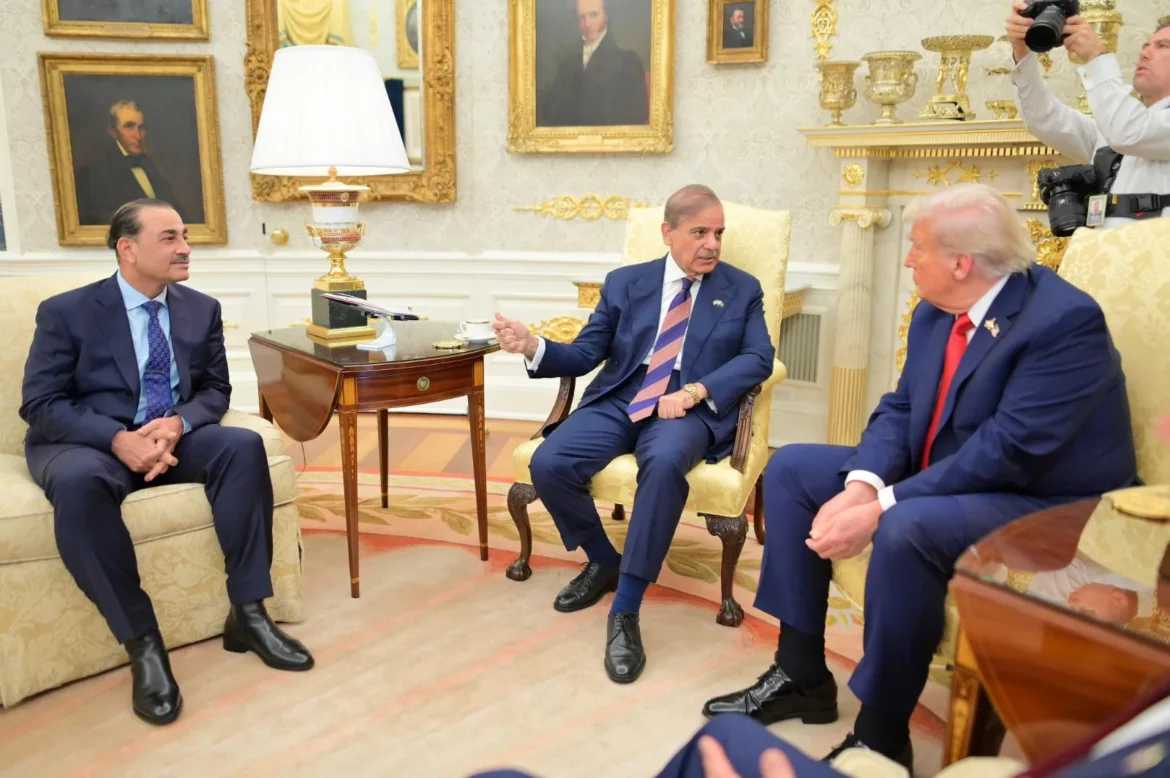
It came at the explicit request of Pakistani Prime Minister Shehbaz Sharif and Field Marshal Asim Munir, the country’s army chief, who have positioned Islamabad as the sole mediator between Washington and Tehran.
“I have therefore directed our Military to continue the Blockade and, in all other respects, remain ready and able, and will therefore extend the Ceasefire until such time as their proposal is submitted, and discussions are concluded, one way or the other,” Trump wrote. He added that the extension was granted “based on the fact that the Government of Iran is seriously fractured, not unexpectedly so.”
The original two-week truce, brokered by Pakistan and announced on April 8, had been set to expire on Wednesday evening Washington time. Trump’s statement contained no new deadline, leaving the pause open-ended from the US side. Iran offered no immediate official reaction. The semi-official Tasnim news agency said only that Tehran’s position “will be officially announced later.”
The about-face came as Iranian officials stepped up their criticism of the American blockade of the country’s ports, an action they have described as a violation of the ceasefire and an “act of war.” Foreign Minister Abbas Araghchi wrote earlier on Tuesday that “Iran knows how to neutralise restrictions, how to defend its interests, and how to resist bullying.”
Mohammad Bagher Ghalibaf, speaker of Iran’s parliament and a lead figure in recent negotiations, had his personal adviser, Mahdi Mohammadi, dismiss the extension as “a ploy to buy time for a surprise strike.” Mohammadi added on social media that “the losing side cannot dictate terms” and that the continued siege “must be met with a military response.”
But Sharif, who has worked feverishly to keep the talks alive, welcomed the move. In a post on X, he thanked Trump personally and on behalf of Munir, saying Pakistan would “continue its earnest efforts for a negotiated settlement.” He expressed hope that both sides would observe the ceasefire and reach a “comprehensive ‘Peace Deal’” in a second round of talks scheduled for Islamabad.
The first round of direct US-Iran negotiations, held in the Pakistani capital on April 11 and 12, ended without agreement on the core disputes: Iran’s nuclear program, its ballistic-missile production, its support for regional proxies including Hezbollah and Hamas, and control of the Strait of Hormuz. Those disagreements have persisted even as the ceasefire has held, however tenuously.
US demands include a complete shutdown of Iran’s nuclear program, limits on missile development and curbs on support for its allied militias. Tehran has insisted on its right to enrich uranium for civilian purposes, rejected any concessions on its regional alliances and refused to allow existing stockpiles of highly enriched uranium to leave the country. Trump has claimed Iran agreed to the extraction of nuclear material from bombed sites; Iranian officials have said no such agreement exists.
Compounding the impasse, the United States last week imposed a naval blockade on Iranian ports and, on Sunday, seized an Iranian-flagged cargo vessel in the Gulf of Oman. On Tuesday, US forces boarded a second tanker, the Tifani, which ship-tracking data showed was carrying 2 million barrels of crude oil loaded at Iran’s Kharg Island terminal. Iran’s foreign ministry spokesman, Esmaeil Baghaei, called the actions “piracy at sea and state terrorism” and questioned whether Washington was serious about negotiations.
Iran responded by closing — then briefly reopening and re-closing — the Strait of Hormuz, the narrow waterway through which about one-fifth of global oil and gas passes. The disruption, combined with the effects of Russia’s war in Ukraine on European gas supplies, has produced what Fatih Birol, executive director of the International Energy Agency, called “the biggest crisis in history” in global energy markets.
The conflict itself began Feb. 28 with US and Israeli strikes that killed Iran’s supreme leader, Ayatollah Ali Khamenei, among other senior officials. Khamenei was succeeded by his son Mojtaba Khamenei, who has not appeared publicly since his selection last month. The Islamic Revolutionary Guard Corps has continued to direct the war effort, and no major defections from the governing system have been reported.
Trump has repeatedly asserted that Iran’s leadership is “seriously fractured” and that those now in charge are “much more rational.” But analysts tracking the Iranian system say that assessment is mistaken. They described the new leadership as “very unified,” noting that Mojtaba Khamenei and his inner circle “have been working together for the past 15 years” and occupy the key centres of decision-making.
They said the ceasefire extension appeared to be “a way to cover the embarrassment” of negotiations that have floundered from the start. Trump had been willing to send Vice President JD Vance to Islamabad for the second round, but Iranian officials signalled they were not prepared to attend while the blockade remained in place. Iran has gained leverage through its control of the Strait of Hormuz and urged Washington to drop its “maximalist demands” and offer a serious gesture toward resolution.
Uncertainty hung over the planned talks in Islamabad even after the extension. A White House official said late on Tuesday that Vance’s trip “will not be happening today,” with any further updates to be announced later.
Pakistani officials, who had deployed thousands of security personnel, closed government offices and barred civilians from much of the capital’s centre, expressed confidence that Iran would eventually return to the table. Prime Minister Sharif, Field Marshal Munir, and Foreign Minister Ishaq Dar and his office had spent the day pressing both sides to extend the ceasefire and keep diplomacy alive, but the reality for now is that the blockade persists, Hormuz is closed, Iranian ports remain under siege, and the threat of renewed US strikes on power stations and other infrastructure has only been deferred.
Copyright © 2021 Independent Pakistan | All rights reserved