By Staff Reporter
ISLAMABAD: US President Donald Trump has sent his negotiators back to the table with Iran after rejecting the draft terms of a potential ceasefire deal, demanding stronger language on the disposal of Tehran’s enriched uranium stockpile and the reopening of the Strait of Hormuz — in a move that risks prolonging one of the most dangerous standoffs the Middle East has seen in years.
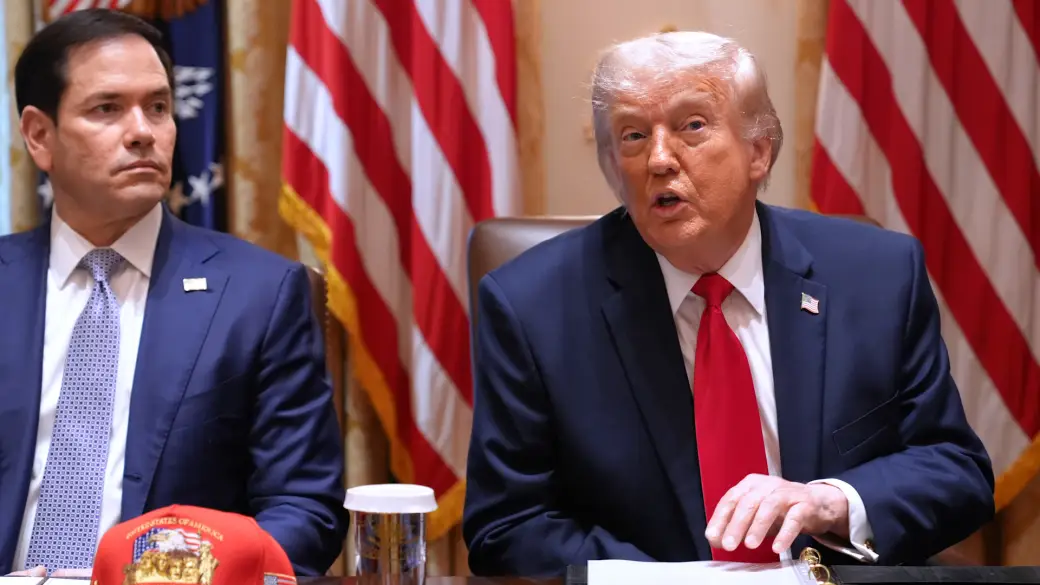
Trump convened a meeting in the Situation Room on Friday to review the proposed memorandum of understanding, which his envoys had spent weeks hammering out with their Iranian counterparts. But rather than sign off, he asked for several clauses to be renegotiated — a decision that has set the two sides back by what officials estimate could be a week or more.
“There will be a deal. The imminence of it, we’ll see,” a senior administration official told reporters. “We’re willing to wait so the president gets what he asks for. It could be a week. It could be less. It could be more. At the turn of the week, we hope to have something.”
The memorandum of understanding, as it currently stands, commits Iran not to pursue nuclear weapons — but contains no specific concessions beyond that statement of intent. It provides for a 60-day negotiating window during which the two sides would discuss Iran’s nuclear commitments and the lifting of US sanctions, with the immediate priority being what to do with Iran’s stockpile of enriched uranium and any limits on future enrichment.
It is precisely this section that Trump has targeted. According to two US officials briefed on the matter, he wants far more concrete language on how, and how quickly, the United States would take possession of the enriched material. “It’s more specifics about how the US gets the material and the timing,” a senior administration official said.
Trump is also said to have objected to the wording around the Strait of Hormuz — the narrow but strategically vital waterway between Iran and Oman through which roughly a fifth of the world’s oil supply ordinarily passes — pushing for clearer guarantees of its reopening.
Iranian officials, for their part, told state media that the deal had not been finalised from their side either, despite earlier claims by two US officials that Tehran had been ready to sign and was merely waiting on Trump’s approval. Iranian state media has separately reported that the country would receive billions of dollars in previously frozen funds under the deal — a claim the White House has flatly denied.
The fraught diplomacy is unfolding against an increasingly volatile military backdrop. On Saturday, US Central Command confirmed that American forces had fired a missile into the engine room of the Gambia-flagged cargo vessel Lian Star after it repeatedly attempted to breach Washington’s blockade of Iranian ports. The ship ignored more than 20 warnings overnight before attempting to enter an Iranian port, the military said. It remains adrift in the Gulf of Oman; US forces have not boarded it.
The Lian Star is the sixth vessel the US military has stopped since it imposed its naval blockade on 17 April, a measure enacted in retaliation for Iran’s effective closure of the Strait of Hormuz following the outbreak of conflict in late February. One ship has been allowed to proceed; a further 116 have been redirected. A fragile ceasefire has held since 7 April.
The economic consequences have been severe. Oil, natural gas and fertiliser shipments that would ordinarily pass through the strait are largely stranded, adding to inflationary pressure on consumers and squeezing food producers across the world. The blockade is designed in part to tighten the financial noose on Tehran, whose economy was already severely weakened before the war began.
What limited commercial traffic has continued to move through the strait does so in conditions of deep uncertainty. Iran has claimed the right to vet any transits, and has been levying transit fees of up to $2m per vessel — a practice Qatar’s Deputy Prime Minister Sheikh Saoud bin Abdulrahman Al Thani described on Saturday as potentially negotiable only if the revenues were directed toward mine clearing or the restoration of safe passage. International maritime law experts have characterised the toll regime as a straightforward violation of the principle of freedom of navigation. US officials say they have so far found and destroyed no mines in the strait.
Iran’s joint military command has warned that any vessel attempting to transit without permission would have its safety placed “at serious risk,” and that military ships seeking to interfere would be targeted.
With Trump’s revised terms now making their way back to Iranian negotiators, American officials cautioned that a response could take several days. The senior administration official noted, with a certain bluntness, that communications with Iranian counterparts were not straightforward: “They’re literally in caves and they’re not using email.”
The remark was a reminder of how precarious the architecture of this negotiation remains. Both sides have strong domestic incentives to be seen as immovable, even as the costs of continued confrontation mount. For Trump, any deal must be seen to have delivered tangible constraints on Iran’s nuclear programme rather than a vague promise of future talks — a distinction he apparently feels the current draft fails to make with sufficient clarity. For Tehran, capitulation to American pressure on nuclear material, the one area of genuine strategic leverage it retains, carries its own profound political risks.
Copyright © 2021 Independent Pakistan | All rights reserved