By Staff Reporter
ISLAMABAD: Iran cast doubt on Saturday on the sincerity of American diplomacy following renewed naval clashes in the Persian Gulf, leaving the Trump administration without a clear response to its latest proposal for extending a month-old ceasefire and opening talks on a permanent settlement.
President Donald Trump had said Friday that he expected Tehran to reply to the American plan — conveyed through Pakistani mediators — “supposedly tonight.” But Iranian officials gave no public sign that a response had been delivered. Instead, Foreign Minister Abbas Araghchi used a telephone call with his Turkish counterpart to question Washington’s reliability. “The recent escalation of tensions by American forces in the Arabian Gulf and their numerous actions in violating the ceasefire have added to suspicions about the motivation and seriousness of the American side in the path of diplomacy,” Araghchi said, according to an account of the conversation released by Iran’s state-affiliated ISNA news agency.
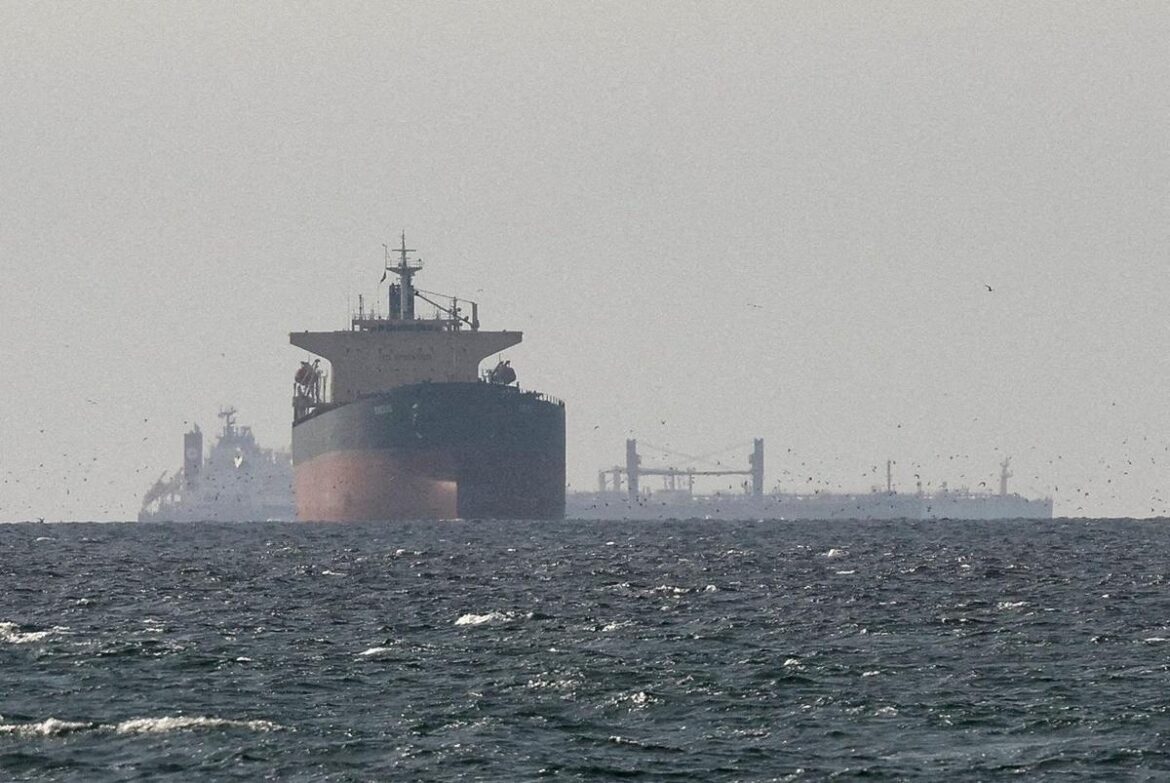
The latest flare-up occurred on Friday when a US fighter jet fired on and disabled two Iranian-flagged tankers that Washington said were challenging its naval blockade of Iranian ports. An Iranian military official told local media that Tehran’s navy had answered “American terrorism with strikes” and that the immediate clashes had ended. The incident followed a separate exchange of fire overnight Thursday into Friday in the Strait of Hormuz, the narrow chokepoint through which one-fifth of the world’s oil supply flowed before the conflict began. US Secretary of State Marco Rubio reiterated on Friday that it was “unacceptable” for Iran to attempt to control the vital waterway.
The US proposal, delivered via Pakistani intermediaries, would extend the ceasefire — announced April 7 — long enough to allow negotiations on a final resolution of the war that erupted Feb. 28 with US-Israeli airstrikes across Iran. Iran’s foreign ministry spokesman, Esmaeil Baqaei, said on Friday that the plan remained “under review.”
Qatar’s prime minister, Sheikh Mohammed bin Abdulrahman Al Thani, met Friday in Washington with Vice President JD Vance to discuss the Pakistani-mediated effort. Iran has launched attacks on sites in Qatar during the conflict, underscoring the emirate’s sensitive position as host of a major US air base.
Satellite imagery analysed on Saturday showed an oil slick spreading off Iran’s Kharg Island, the Islamic Republic’s primary oil export terminal in the northern Gulf. The slick, initially estimated by the monitoring group Orbital EOS to cover more than 20 square miles, had “much reduced” by Saturday, according to the UK-based Conflict and Environment Observatory. The group told Agence France-Presse that the spill appeared to stem from leaking infrastructure rather than combat damage.
The war has already reshaped global energy flows. After the initial US-Israeli strikes, Iran largely closed the Strait of Hormuz, sending oil prices soaring. Washington responded last month by imposing its own blockade on Iranian ports. Trump announced a US naval operation Sunday aimed at reopening the strait to commercial shipping, only to abandon it within 48 hours in favor of renewed negotiations.
Despite the diplomatic track, fighting has persisted. Sporadic clashes continued on Friday between Iranian forces and US vessels in the strait, Iranian state-linked outlets Fars and Tasnim reported. The US military confirmed it struck two Iran-linked vessels attempting to enter an Iranian port, using a fighter jet to hit their smokestacks and force them to turn back.
The violence reached beyond the waterway. The United Arab Emirates said its air defenses intercepted two Iranian ballistic missiles and three drones on Friday, leaving three people with moderate injuries. Iranian officials have repeatedly targeted Gulf states that host US military installations. Tehran described its stepped-up attacks this week as a response to Trump’s short-lived “Project Freedom” escort operation.
Trump insisted Thursday that the ceasefire was holding “despite the flare-ups.” Iran accused the United States of violating it. Araghchi told reporters on Friday that “every time a diplomatic solution is on the table, the US opts for a reckless military adventure.” Iran’s Mehr news agency reported that a US Navy strike late Thursday on an Iranian commercial ship killed one crew member, wounded 10 and left six missing.
A senior US intelligence assessment concluded that Iran could endure the naval blockade for roughly four months without suffering severe economic damage, according to a US official familiar with the findings. The assessment, first reported by The Washington Post, has raised questions inside the administration about the leverage the blockade actually provides. A senior intelligence official later described the public characterization of the CIA analysis as “false.”
The blockade has already curtailed Iranian oil exports. Tanker loadings have fallen from about 11 million barrels per week to roughly 6 million to 8 million, experts said. Iran has begun reducing production to avoid filling storage tanks and has experience managing such cutbacks from previous rounds of sanctions. Much of its crude can be refined domestically, allowing many fields to keep operating. “They’re going to have to shut down about half of their production,” said Robin Mills of Qamar Energy and Columbia University’s Center on Global Energy Policy. “They can keep producing because they can refine it domestically.” Gregory Brew of the Eurasia Group noted that Iran has twice slashed output under past US sanctions. “I don’t think it’s going to do tremendous damage to their infrastructure,” he said. “They know how to do this. They’ve done it before.”
The US administration has found limited international backing for its approach. After meeting Italian Prime Minister Giorgia Meloni in Rome on Friday, Rubio questioned why European allies were not more supportive of efforts to reopen the strait, warning that allowing Iran to dictate terms in an international waterway would set a dangerous precedent.
Even as it pursued talks, the White House tightened economic pressure. On Friday the Treasury Department announced sanctions on 10 individuals and companies — including several in China and Hong Kong — accused of helping Iran obtain components for its Shahed drones. The department warned that it was prepared to impose secondary sanctions on foreign financial institutions, including those tied to China’s independent oil refineries, that facilitate Iranian commerce. With Trump scheduled to meet Chinese President Xi Jinping in the coming days, the sanctions signaled that Washington intends to keep squeezing Tehran’s supply lines regardless of the pace of diplomacy.
Copyright © 2021 Independent Pakistan | All rights reserved