“We have no space to give our economy a stimulus package, which would create jobs, and provide people with the sustainable incomes they need. We are still in a long, relentless struggle to save lives.”
By Staff Reporter
ISLAMABAD: The United Nations has revised up its humanitarian appeal for Pakistan five-fold to $816 million from $160 million for floods relief as the country’s climate change minister said on Tuesday Islamabad is short of money to spend on immediate recovery.
Earlier in Geneva Julien Harneis, UN Humanitarian Coordinator for Pakistan, said the country is “now entering a second wave of death and destruction”.
“There will be an increase in child morbidity and it will be pretty terrible unless we act rapidly to support the government in increasing the provision of health, nutrition and water and sanitation services across the affected areas,” he said.
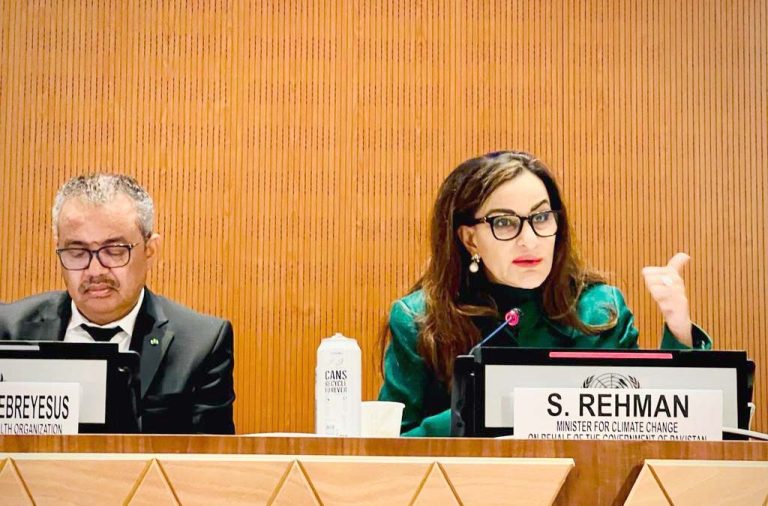
Minister Senator Sherry Rehman in Geneva said the second Appeal urgently seeks $816 million to provide prioritized multi-sectoral aid.
“Meeting the needs on the ground even for the relief phase is beyond the overstretched capacities of any one country, especially one that has already been paying for climate losses to the tune of 9.1 percent of our GDP, the minister said.
“We have no space to give our economy a stimulus package, which would create jobs, and provide people with the sustainable incomes they need. We are still in a long, relentless struggle to save lives.”
Rehman said there are a total of 20.6 million people still in need.
“Imagine rescuing, feeding, sheltering, resettling an entire country? We have been working around the clock, flat out through the aftershocks, but just to pick up the pieces.”
In the monster downpour that inundated one third of Pakistan, approximately 1,700 people have lost their lives and close to 13,000 are injured. Around 7.9 million are still displaced. Women and children make up nearly 70 percent of the 33 million affected and one-third of all recorded deaths and injuries are children.
Minister Rehman has implored the international community on the critical nature of the climate crisis.
“34 districts are crisis affected with 46,000 square kilometers still in fluid conditions and an estimated 20.6 million people are in need. This number is more than the size of Switzerland and Portugal’s population combined.”
Minister said despite 16 weeks since the first monsoon rain, the country is still in the lifesaving response stage, as this year, the flooding was of all types; flash flooding, hill torrents, and the monster monsoon.
“With 11 districts still under water, many still seek aid hubs for food, clean water and medical assistance, and tragically even dry land, to bury their dead. And because large swathes of the country, particularly in the south, which is lower than sea level now, are still festering under huge swampy lakes of water which has nowhere to drain, 8.2 million people require urgent medical services, while 4 percent of the disaster affected population is actually pregnant.”
She said as winter approaches soon, many of those affected have been left to the mercy of the open sky, shelters have been made available for 598,000 people only, while 7.9 million still scramble for dry land to pitch tarpaulins, which we desperately need. 4 million people live in areas where temperatures turn sub-zero, and even in the warmest affected areas, the mercury typically falls below 10 C.
With FAO surveys suggesting 9.4 million acres of standing crops inundated and affected, this will directly put at risk 14.6 million people, who live and work very close to nature, in the line of a food sector and agriculture crisis. Livelihoods will continue to face aftershocks, but 15.4 million more people will be pushed into hardscrabble poverty.
Relief efforts have been slowed down because the fury of the floods have ripped out over 13,000 km of roads and torn down 440 bridges all over the country. Railway lines are still not fully restored.
Copyright © 2021 Independent Pakistan | All rights reserved