By Staff Reporter
ISLAMABAD: US President Donald Trump said on Tuesday that he had been within an hour of ordering a fresh round of US military strikes on Iran before calling them off, a dramatic reversal that underscored the fragile state of the three-month-old conflict and the persistent deadlock over Tehran’s nuclear program and control of the Strait of Hormuz.
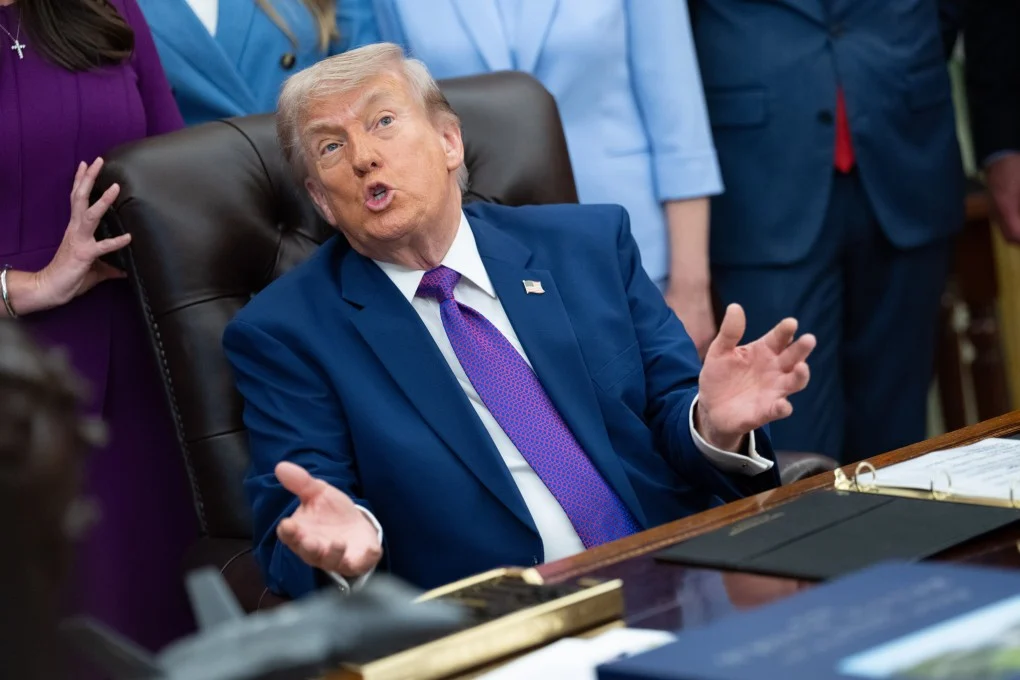
The comments, delivered to reporters at the White House, came a day after Trump announced he had postponed a planned resumption of hostilities to allow time for a new Iranian peace proposal conveyed through Pakistani intermediaries. In Trump’s account, the United States and Iran remain on the brink: close enough to a deal to warrant delay, yet far enough that renewed bombing remains a live option. “I was an hour away from making the decision to go today,” Trump told reporters. “The ships were all loaded — loaded to the brim — and we were all set to start.”
He added that Iranian leaders were “begging for a deal” but warned that a new US attack could come “in the coming days” if no agreement materialized. “Two or three days, maybe Friday, Saturday, Sunday, something, maybe early next week — a limited period of time,” he said.
The episode reflects the pattern that has defined Trump’s approach to the war he and Israeli Prime Minister Benjamin Netanyahu launched in late February: alternating threats of overwhelming force with last-minute pauses, often after appeals from Gulf Arab or Pakistani leaders. The conflict, which began with joint US-Israeli airstrikes aimed at dismantling Iran’s nuclear program, missile arsenal and support for regional militias, has killed thousands in Iran and Lebanon, displaced hundreds of thousands and effectively closed the Strait of Hormuz, a chokepoint for roughly one-fifth of global oil supplies.
Gas prices remain elevated in the United States, contributing to a sharp decline in Trump’s approval ratings as congressional elections approach in November. The administration has struggled to translate battlefield gains into a durable exit that would reopen shipping lanes and prevent a regional nuclear arms race.
Vice President JD Vance, who briefed reporters at the White House on Tuesday, struck a more measured tone while emphasizing American resolve. “We think that we’ve made a lot of progress,” he said. “We think the Iranians want to make a deal.” Yet he acknowledged the difficulties of negotiating with what he called a “fractured” Iranian leadership. “It’s not sometimes totally clear what the negotiating position of the team is,” Vance said, adding that the United States was making its own “red lines” explicit.
Vance framed the core U.S. objective as preventing Iran from acquiring a nuclear weapon, warning that success would otherwise trigger proliferation across the Gulf and beyond. “We want to keep the number of countries that have nuclear weapons small,” he said. He described the moment as an opportunity “to reset the relationship that has existed between Iran and the United States for 47 years,” while cautioning that “it takes two to tango.”
The latest Iranian proposal, shared with Washington via Pakistan, calls for an end to hostilities on all fronts — including Lebanon — the withdrawal of U.S. forces from areas near Iran, reparations for damage caused by the U.S.-Israeli campaign, the lifting of all sanctions, the release of frozen Iranian assets and the end of the U.S. naval blockade of Iranian ports.
Iranian state media, citing Deputy Foreign Minister Kazem Gharibabadi, said the offer including Tehran’s insistence on its “right to enrich and enjoy peaceful nuclear rights.” The terms appear little changed from an earlier proposal that Trump dismissed last week as “garbage,” according to multiple accounts. A senior Iranian official last week that the two sides had exchanged several drafts, with the United States initially demanding a 25-year ban on uranium enrichment before softening to 20 years. Iran rejected both. More recent discussions have touched on partial sanctions relief on oil exports in exchange for Iran curbing support for proxy groups, as well as the possible transfer of some enriched uranium stockpiles abroad.
Iranian officials responded defiantly to Trump’s remarks. Ebrahim Azizi, head of the Iranian parliament’s national security committee, wrote on X that the pause reflected Trump’s recognition that any new attack would provoke a “decisive military response.” Gharibabadi posted that Iran was “united and resolutely … prepared to confront any military aggression,” adding that “surrender holds no meaning; we either triumph or become martyrs.” Iran’s army spokesman, Mohammad Akraminia, warned that any renewed aggression would prompt Tehran to “open new fronts … with new equipment and new methods,” according to the state news agency ISNA.
The war’s human and strategic toll remains stark. U.S.-Israeli strikes killed thousands in Iran before a ceasefire took hold in early April. Israel’s subsequent invasion of Lebanon, targeting the Iran-backed Hezbollah militia, has killed thousands more and displaced hundreds of thousands. Iranian missile and drone strikes on Israel and Gulf states have killed dozens. A fragile truce has largely held, though drones launched from Iraq — apparently by Iran and its allies — have targeted Saudi Arabia and Kuwait in recent days.
Open-source analysts and U.S. military movements have fueled speculation of imminent action. Dozens of KC-46 and KC-135 refueling aircraft were recently observed at Ben Gurion Airport in Tel Aviv. Adm. Brad Cooper, commander of U.S. Central Command, testified before the House Armed Services Committee on Tuesday that American forces in the region remain at the highest level of readiness. “I am prepared to execute a broad range of contingencies,” he said. CENTCOM continues to enforce a blockade on vessels entering or leaving Iranian ports, redirecting 88 commercial ships since April 13 and disabling four boats to enforce compliance, Cooper told lawmakers.
Trump has repeatedly cast himself as the “dealmaker-in-chief,” insisting his mix of threats and incentives has kept Iran from crossing the nuclear threshold. Yet the president’s policy has shown signs of improvisation. He has leaned heavily on Gulf leaders — Saudi Crown Prince Mohammed bin Salman, UAE President Sheikh Mohamed bin Zayed and Qatari Emir Sheikh Tamim bin Hamad Al Thani — who urged him to pause any strike because “serious negotiations are now taking place” and a deal would be “very acceptable to the United States of America,” Trump said.
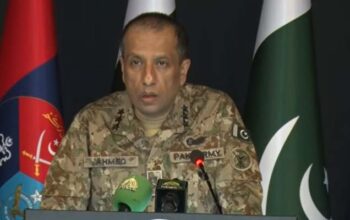
Pakistani diplomats, who hosted the only direct round of talks last month and continue to shuttle proposals, told Reuters that both sides “keep changing their goalposts” and that “we don’t have much time.” Qatar’s foreign ministry spokesman, Majed al-Ansari, calls for patience, saying the Pakistani-mediated effort “needs more time.”
The Trump administration has formally notified Congress that the original operation, dubbed Epic Fury, has been terminated, yet senior officials continue to signal openness to escalation. Trump has described the current ceasefire as being on “life support. In Tehran, officials have portrayed the latest proposal as non-negotiable on core sovereignty issues. President Masoud Pezeshkian, a relative moderate, said renewed talks did not mean “surrender” and pledged to protect Iranian rights. The Islamic Revolutionary Guard Corps remains the dominant voice in hardline circles. Trump left the door open Tuesday. “I hope we don’t have to do the war,” he said, “but we may have to give them another big hit. I’m not sure yet.”
Copyright © 2021 Independent Pakistan | All rights reserved