By Staff Reporter
ISLAMABAD: The White House believes it is close to securing a one-page memorandum of understanding with Iran that would formally end the two-month war in the Persian Gulf and establish a framework for more substantive negotiations over Tehran’s nuclear program, according to US news outlet Axios, quoting two officials and two other people briefed on the discussions.
Iranian responses to several outstanding points are expected within the next 48 hours, the people said. No final agreement has been reached, but the sources described the current round as the closest the two sides have come to a deal since the conflict erupted in late February. The proposed memorandum would require Iran to observe a moratorium on uranium enrichment for at least a dozen years — possibly as long as 15 — while committing never to pursue a nuclear weapon or conduct related weaponization activities. In exchange, the United States would agree to a phased lifting of sanctions and the gradual release of billions of dollars in frozen Iranian assets held around the world. Both sides would also ease restrictions on commercial transit through the Strait of Hormuz, the critical chokepoint for global oil shipments that has been largely paralyzed by the fighting.
Many provisions in the draft document would remain contingent on the successful conclusion of a fuller agreement after an initial 30-day negotiating period. That structure leaves open the possibility that the hot war could resume or that the conflict could settle into an extended, uneasy limbo. US officials have voiced cautious optimism at several junctures during the war and the preceding rounds of diplomacy, only to watch talks collapse. Some remain skeptical that even this limited initial accord can be finalised.
The White House assessment, according to people familiar with internal deliberations, is that Iran’s leadership remains fractured, making consensus among competing factions difficult. The memorandum is being negotiated by President Donald Trump’s special envoys Steve Witkoff and Jared Kushner with Iranian officials, both in direct contacts and through intermediaries. In its current draft, the 14-point document would declare an end to hostilities and launch 30 days of follow-on talks, potentially in Islamabad or Geneva, aimed at permanently reopening the strait, imposing lasting limits on Iran’s nuclear activities and lifting US sanctions.
During that window, Iran’s restrictions on shipping and the American naval blockade would be phased out. If the negotiations fail, however, US forces would retain the option to reimpose the blockade or resume military operations, a US official said. Negotiators are still haggling over the precise length of the enrichment moratorium. Iran initially proposed five years; the United States demanded 20. Three sources described a likely landing point of at least 12 years, with one calling 15 years the probable compromise. The United States is also seeking a clause that would automatically extend the moratorium in the event of any Iranian violation. After the period expires, Tehran would be permitted to enrich uranium only to the low level of 3.67 percent.
Iran would further pledge not to operate underground nuclear facilities and to accept an enhanced inspections regime that includes snap visits by United Nations monitors. Two people with knowledge of the talks said Iran has also signaled willingness to remove its stockpile of highly enriched uranium from the country — a longstanding US priority that Tehran had previously rejected — though the destination for the material remains under discussion.
An Iranian foreign ministry spokesperson, cited by Iran’s ISNA news agency, said Iran would convey its response soon via Pakistan, which hosted the war’s only peace talks and has since served as the main conduit for messages between the sides.
Trump pauses naval escort operation, citing diplomatic progress
The apparent momentum in the talks prompted Trump on Wednesday to suspend “Project Freedom,” the US naval operation to escort commercial vessels through the Strait of Hormuz that had begun only days earlier. In a post on Truth Social, the president wrote that the pause was intended “to see whether or not the agreement can be finalized and signed,” citing requests from Pakistan and other countries. He added that the broader US blockade of Iranian ports would remain in force.
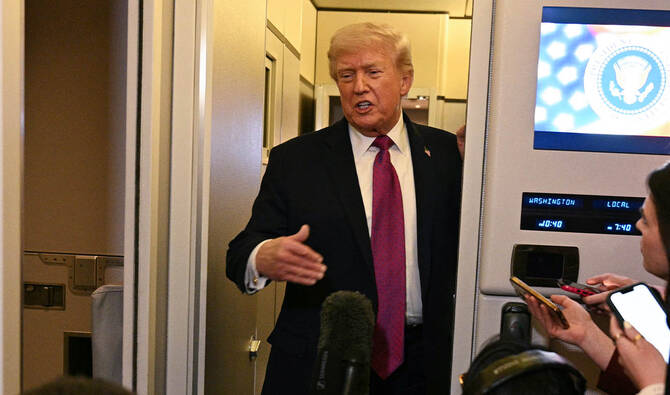
Earlier on Wednesday, Trump warned that failure to reach a deal would trigger renewed American bombing “at a much higher level and intensity than it was before.” He said that if Iran accepted the terms under discussion, “the already legendary Epic Fury will be at an end, and the highly effective Blockade will allow the Hormuz Strait to be OPEN TO ALL, including Iran.”
In an early morning social media post, Trump gave no details of any specific proposal but said the war could end if “Iran agrees to give what has been agreed to”. He later told the New York Post it was still too soon to consider face-to-face meetings to sign an agreement.
US Secretary of State Marco Rubio struck a similar note of tempered optimism in remarks on Tuesday. “We don’t have to have the actual agreement written in one day,” he said. “This is highly complex and technical. But we have to have a diplomatic solution that is very clear on the topics they are willing to negotiate on and the extent of the concessions they are willing to make at the front end in order to make it worthwhile.” Rubio also described some of Iran’s top leaders as “insane in the brain,” adding that it remained unclear whether they would ultimately accept a deal.
Fragile ceasefire tested by fresh clashes
The current ceasefire, brokered by Pakistan and announced on April 8, has held only tenuously. On Monday, Iran fired missiles and drones at US forces, while the United States struck six Iranian boats it accused of threatening commercial shipping — the sharpest escalation since the truce took effect. A French shipping vessel operated by CMA CGM was attacked in the strait the following day, leaving crew members injured.
Iran’s Revolutionary Guard Corps posted a statement on Wednesday assuring safe passage for commercial shipping, thanking captains and ship owners for complying with its regulations and declaring that “safe, stable passage through SOH will be ensured.”
Pakistan’s central mediating role draws praise — and pressure
Pakistan has played an unusually prominent part in the diplomacy. Prime Minister Shehbaz Sharif told a religious conference in Islamabad on Wednesday that his country’s efforts had opened the door to direct negotiations and expressed confidence that the dialogue would produce “sustainable peace in the region without further loss of human lives.”
Sharif credited Pakistan’s military leadership, Saudi Crown Prince Mohammed bin Salman, China, Turkey and other nations for their contributions and described Islamabad’s mediation as “historic.” Pakistani officials have told reporters that senior figures in Islamabad have maintained intensive, direct communication with both Washington and Tehran in recent days. The latest US decision to pause its escort operation followed explicit requests from Pakistan, Sharif said.
Analysts tracking the talks described the emerging memorandum as a modest but meaningful concession by Washington. Seyed Mojtaba Jalalzadeh, an international relations analyst in Tehran, called the framework “a good, viable and important first step to solve the immediate problem.” Andreas Krieg, an associate professor at King’s College London, said the United States had accepted that “the simultaneous resolution of the war, Hormuz, and the nuclear file in one final package is not currently feasible.”
Deadlines and regional stakes converge
Significant gaps persist, particularly over governance of the Strait of Hormuz. Rubio has insisted that the United States will not accept any arrangement requiring ships to coordinate with or pay Iran. Iranian proposals speak of a “new mechanism” for the waterway, language that US officials interpret as Tehran seeking precisely such leverage.
Iranian Foreign Minister Abbas Araghchi arrived in Beijing on Wednesday for talks with Chinese officials and reiterated that Tehran would accept only “a fair and comprehensive agreement.” The visit comes days before Trump’s scheduled summit with Chinese President Xi Jinping. Gulf states, meanwhile, have urged restoration of pre-war conditions in the strait.
China’s Foreign Minister Wang Yi said Beijing would play a “greater role” in ending hostilities in the Middle East during talks with his Iranian counterpart. China is a key customer for Iranian oil, defying sanctions imposed by the United States, and is directly affected by the blockage of the Strait of Hormuz, bordered by Iran. Beijing has quietly engaged in efforts to resolve the weekslong crisis and its diplomacy is credited with playing an important role in the fragile ceasefire agreed between Washington and Tehran.
China “will work harder to ease tensions and end the fighting, continue to support the launch of peace talks, and play a greater role in restoring peace and tranquillity to the Middle East”, Wang told Iran’s Abbas Araghchi in Beijing. “China considers that a complete cessation of fighting must be achieved without delay, that it is even more unacceptable to restart hostilities, and that continuing to negotiate remains essential,” Wang said, according to a statement from his ministry after the talks.
Manufacturing giant China has been comparatively sheltered from fuel shortages thanks to oil reserves and renewable energy, but costs of oil-derived materials like plastic and fabric have risen significantly. More than half of the crude imported by sea to China comes from the Middle East and mainly transits through the Hormuz Strait, according to maritime analytics firm Kpler.
During Wednesday’s talks, Wang said China hopes “the parties concerned will respond as quickly as possible to the urgent call of the international community” for a resumption of normal and safe maritime traffic through the Strait of Hormuz.
An additional pressure point looms: the approaching Hajj pilgrimage, expected to draw roughly 1.8 million Muslims to Mecca beginning around May 25. Any major escalation during that period would carry heavy political costs for all parties.
US officials have framed the current military campaign as having stripped away the conventional defences that once shielded Iran’s nuclear sites. Rubio said on Tuesday that the military phase was over and that nuclear issues “are being addressed in the negotiation.”
Reports of the possible agreement caused global oil prices to plunge, with benchmark Brent crude futures falling around 11% to around $98 a barrel. Global share prices also leapt and bond yields fell on optimism of an end to a war that has disrupted energy supplies.
Copyright © 2021 Independent Pakistan | All rights reserved