By Staff Reporter
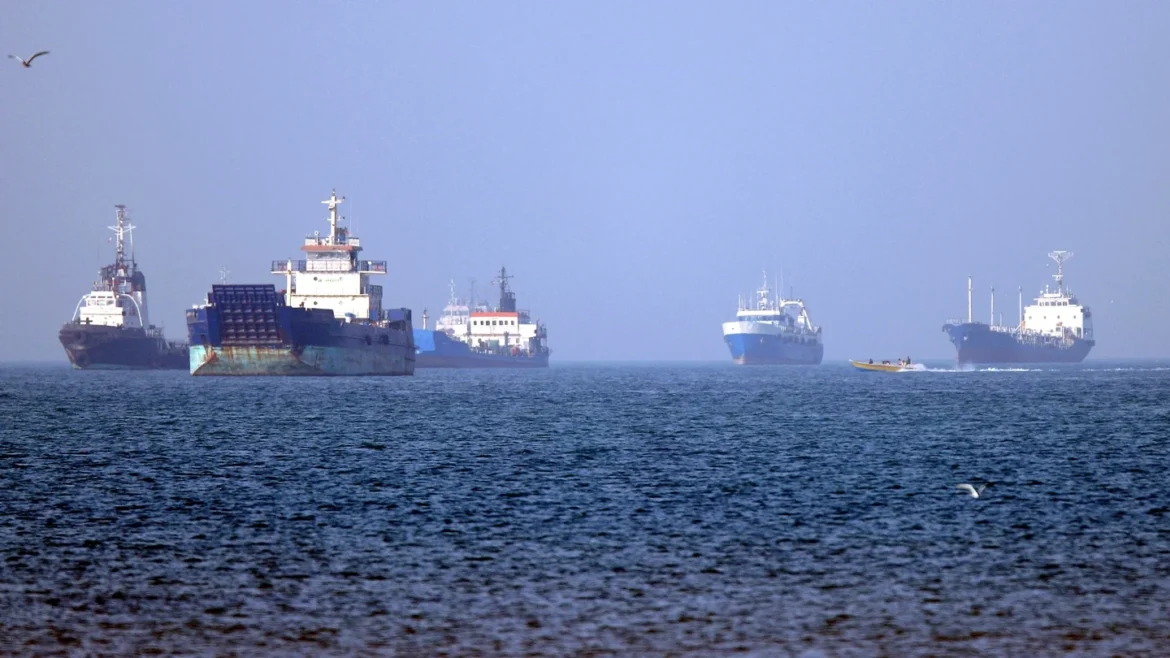
President Donald Trump’s announcement on Tuesday evening that the United States would suspend “Project Freedom” — the naval escort operation launched only days earlier to reopen the Strait of Hormuz — came wrapped in the usual language of strength. “Great progress” had been made, he said. Toward a deal, Pakistan had asked, “tremendous military success.” The blockade of Iranian ports would remain. And the decision directly contradicted the message his own senior officials had spent the day delivering: that the ceasefire held, that Iranian actions remained below the threshold for renewed fighting, and that the operation was both limited and necessary to free 20,000 stranded sailors and restore the flow of one-fifth of the world’s oil. This is not the decisive leadership the administration projected when it joined Israel in Operation Epic Fury in late February. A superpower that helped kill a supreme leader and promised generational destruction of Iran’s capabilities has now blinked after one day of real pushback in the Strait. It is the acknowledgment, however reluctant, that military pressure has run into the hard limits of geography, economics, and politics. The Strait of Hormuz still carries one-fifth of the world’s oil and liquefied natural gas. Iran’s threat to mine it, patrol it with fast boats, and harass shipping has turned that waterway into the single most effective lever Tehran possesses. The United States, for all its air power and naval presence, has been unable to break that grip without risking the very global economic disruption it set out to prevent.
The diplomacy playing out behind the scenes is the only reason the pause feels possible at all. Pakistan, the indispensable broker, has done the unglamorous, essential work of carrying messages between capitals that refuse to speak directly. One round of face-to-face talks occurred in Islamabad last month. Iran then delivered a 14-point proposal focused on lifting the mutual blockades, creating a new security arrangement for the strait, and setting the nuclear question aside until later. Washington responded through the same channel. Iranian officials say they are reviewing the counterproposal. Foreign Minister Abbas Araghchi described the process as progressing. President Masoud Pezeshkian told his nation Tuesday that Iran remains open to “logic” and “dialogue” within international law but “will never submit to force.” Parliamentary Speaker Mohammad Bagher Ghalibaf, who led the earlier talks, was blunter: the status quo is “intolerable for America, while we are just getting started.”
Those are not empty words. Iran’s economy has been ravaged by the initial campaign, but its control of the strait has given it staying power. By seeding the waterway with threats of mines, drones, and fast boats, Tehran turned global energy markets into a pressure cooker. Oil prices spiked above $108 before easing on news of the pause. Shipping giants like Hapag-Lloyd and Maersk have refused to move. Only two U.S.-flagged vessels have confirmed transit under escort; hundreds more sit idle, crews “isolated, starving, vulnerable,” as Secretary of State Marco Rubio described them. Iran denies any successful crossings. The pause may be intended to coax Iran back to the table, but it also buys time for both sides to assess whether the gaps on sanctions relief, compensation, and Hormuz governance can actually be closed.
The incidents in the United Arab Emirates add another layer of danger and ambiguity. Abu Dhabi reported a second consecutive day of Iranian missiles and drones targeting the Fujairah oil port, calling it a “dangerous escalation.” Iran’s joint military command denied any such operation outright, stating that if its forces had acted, they would have announced it “clearly and decisively.” The claim has drawn almost no independent corroboration. Tehran insists that if it had struck, it would have announced it proudly. Some analysts and voices on X have floated the possibility of a false flag — by Israel, eager to sabotage any U.S.-Iran deal that might constrain its own security calculations, or even elements within the Gulf itself. The UAE’s unusually close alignment with Israel has left it isolated inside the GCC. Iran has also released a map asserting expanded maritime control that reaches into areas long claimed by the UAE. The emirate’s unusually close security ties to Israel have left it exposed within the Gulf Cooperation Council; other Arab states have remained largely silent. Whether the strikes were carried out by Iran, provoked by Israeli or Emirati actors seeking to derail diplomacy, or something more complicated, the effect is the same: they test the ceasefire at its most fragile point and complicate Pakistan’s mediation.
The administration’s own messaging has reflected the strain. Rubio declared Operation Epic Fury “over” and its objectives achieved. Defense Secretary Pete Hegseth and Joint Chiefs Chairman Gen. Dan Caine insisted the truce remained intact. But Trump himself later dismissed the violence in the Strait as a “little skirmish” and said he believed a deal was still possible. The mixed signals are not accidental. They show an administration that has little appetite for full-scale resumption — not with gasoline prices climbing, midterm elections approaching, and voters already feeling the pinch at the pump.
The risks remain immediate. Late Tuesday, the UK Maritime Trade Operations reported a cargo vessel struck by an unknown projectile in the strait. Iranian Revolutionary Guards have warned ships to stay within designated corridors or face “decisive response.” The United States keeps more than 100 aircraft overhead. In such an environment, a single miscalculation — a warning shot misinterpreted, a fast boat too close — could collapse the ceasefire and send oil prices spiking again. The IMF has warned that even an immediate end to hostilities would take three to four months to unwind the broader economic damage.
The pause, however, also opens a narrow window. Both sides appear to understand that an indefinite stalemate serves no one. Iran’s proposal defers the hardest nuclear questions — the more than 900 pounds of highly enriched uranium that Washington insists must be surrendered — to create space for agreement on the Strait and sanctions. The United States has kept the blockade in place as leverage while signaling that a deal is preferable to escalation. Trump’s planned conversations with China and Japan, and Araghchi’s meetings in Beijing, suggest both capitals recognize that multilateral pressure may be necessary to make any agreement stick.
This moment did not have to arrive through war. The United States and Israel chose to escalate in February, citing Iran’s nuclear program and regional behavior. What they have now is a battered Iranian economy, a closed strait, and a global energy shock that is landing hardest on ordinary Americans and Europeans. The wiser course is no longer to double down but to finish what Pakistan has started: a workable arrangement that reopens the waterway, provides verifiable steps on the nuclear file, and gives both sides a face-saving way to stand down. Trump has taken the first step away from direct confrontation. Whether he can convert that tactical pause into a lasting breakthrough will depend on whether Washington and Tehran can move beyond maximalist rhetoric and recognize the shared interest in avoiding another round of fighting. The region has seen enough of those cycles. The sailors still stranded in the Gulf, the families watching fuel prices, and the broader international order cannot afford another one.
Copyright © 2021 Independent Pakistan | All rights reserved