By Staff Reporter
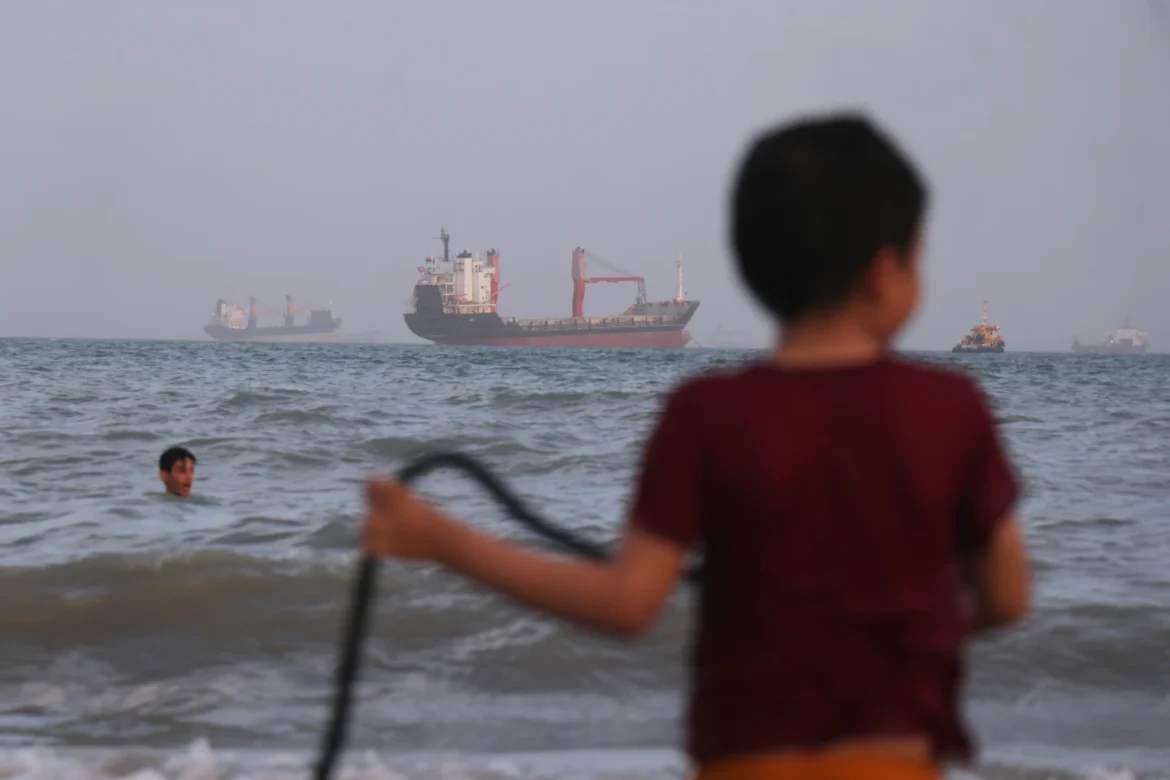
ISLAMABAD: US forces launched self-defence strikes against Iranian missile and drone launch sites, command centres, and intelligence nodes along the Iranian coast on May 7 after three Navy guided-missile destroyers came under attack while transiting the Strait of Hormuz, US Central Command said, in the most serious flare-up since a ceasefire took effect four weeks earlier.
No American ships or aircraft were hit, according to the Pentagon. Iranian officials, however, said the US action was a violation of the truce and said their forces had responded only after American strikes targeted two Iranian vessels — an oil tanker in coastal waters and another ship near the United Arab Emirates port of Fujairah — as well as coastal facilities on Qeshm Island, in the port city of Bandar Abbas and near the towns of Bandar Khamir, Sirik and Minab.
The exchange, which unfolded in one of the world’s most critical energy chokepoints, underscored the precariousness of the April 7 ceasefire even as US and Iranian diplomats, working through Pakistani mediators, continued to discuss a possible temporary memorandum aimed at stabilising shipping and preventing a wider resumption of hostilities.
In a detailed statement, US Central Command, which oversees American forces in the Middle East, said the destroyers USS Truxtun, USS Rafael Peralta and USS Mason were heading from the Persian Gulf toward the Gulf of Oman when they were targeted by multiple Iranian missiles, drones and fast boats operated by the Islamic Revolutionary Guard Corps Navy. “Iranian forces launched multiple missiles, drones and small boats as USS Truxtun (DDG 103), USS Rafael Peralta (DDG 115), and USS Mason (DDG 87) transited the international sea passage,” the command said. “No US assets were struck.”
CENTCOM said its forces “eliminated inbound threats and targeted Iranian military facilities responsible for attacking US forces, including missile and drone launch sites; command and control locations; and intelligence, surveillance, and reconnaissance nodes.” The command added that it “does not seek escalation but remains positioned and ready to protect American forces.”
President Donald Trump, in a telephone interview with ABC News, described the US response as measured. “It’s just a love tap,” he said. “The ceasefire is going. It’s in effect.”
On Truth Social, Trump offered a more expansive account, saying Iranian boats had been “destroyed” and incoming missiles and drones “shot down” or “incinerated.” He wrote that the vessels “went to the bottom of the Sea, quickly and efficiently” and likened falling drones to “a butterfly dropping to its grave.” He warned that failure to reach a deal quickly would bring far more forceful American action: “just like we knocked them out again today, we’ll knock them out a lot harder, and a lot more violently, in the future, if they don’t get their Deal signed, FAST!”
Iran offered a sharply different version. The IRGC Navy said it had acted in retaliation after the United States targeted an Iranian oil tanker near the port of Jask and a second vessel opposite Fujairah. Iranian state media and military statements reported explosions on Qeshm Island — including at the Bahman pier — and in Bandar Abbas, Minab, Bandar Khamir and Sirik. Iranian air defences were also activated over western Tehran, local reports said. The IRGC claimed its forces inflicted “significant damage” on the American ships and forced them to flee the area, assertions the Pentagon did not address.
A senior US official, speaking on condition of anonymity, said the targets included Iranian drone launching sites, coastal radars and anti-ship cruise missile batteries. Iranian state television said life in the affected southern coastal areas had returned to normal, with no casualties reported in Bandar Abbas.
The incident came against the backdrop of a sustained American naval blockade aimed at choking off Iranian oil exports. The operation, part of broader efforts to pressure Tehran, has involved intercepting vessels attempting to reach or leave Iranian ports. On May 6, a Navy F/A-18 Super Hornet from the aircraft carrier USS Abraham Lincoln fired its 20-millimeter cannon at the rudder of the Iranian-flagged tanker M/T Hasna after it tried to breach the blockade in the Gulf of Oman.
Earlier in the week, the administration had launched “Project Freedom,” an effort to escort commercial shipping through the strait under American air and naval protection. Secretary of Defence Pete Hegseth, appearing May 5 at the Pentagon alongside Joint Chiefs Chairman Gen. Dan Caine, described a robust presence: “American destroyers are on station, supported by hundreds of fighter jets, helicopters, drones, and surveillance aircraft, providing 24/7 overwatch for peaceful commercial vessels.”
The initiative faced immediate complications when Saudi Arabia and Kuwait temporarily barred the use of their bases and airspace for US aircraft, including P-8 Poseidon patrol planes, KC-135 tankers, E-3 AWACS and EA-37 electronic warfare aircraft that had been operating from Prince Sultan Air Base in Saudi Arabia. Both countries lifted the restrictions on May 7, the same day as the naval clash.
The ceasefire, announced April 7 after an earlier round of direct fighting, had already been strained. On May 5, Iran launched strikes on the UAE and its oil hub at Fujairah; US officials played down the episode at the time. Iran has repeatedly warned that it would target any vessels not following its approved routes through the strait, which normally carries about one-fifth of the world’s oil supply.
Diplomatic efforts to prevent further escalation continued in parallel with the fighting. Iran’s foreign ministry said it was still reviewing a US proposal, conveyed through Pakistani intermediaries, for a short-term memorandum rather than a comprehensive peace agreement. The draft framework, according to officials familiar with the talks, would formally end the conflict, stabilise shipping in the Strait of Hormuz and open a 30-day window for broader negotiations. It does not address several longstanding U.S. demands, including curbs on Iran’s missile program or its support for regional proxies.
A senior Pakistani official involved in the mediation told Reuters that the priority was “a permanent end to war” before tackling remaining issues. Iranian President Masoud Pezeshkian met for more than two hours with Supreme Leader Ali Khamenei to discuss the proposal, describing the conversation as one of “trust, calm, empathy, and direct dialogue.”
Trita Parsi, executive vice president of the Quincy Institute for Responsible Statecraft, told Al Jazeera that the episode highlighted differing interpretations of the ceasefire. “There’s conflicting stories as to whether the Iranians started shooting first or not,” he said. “But the idea that something like this could be done, and saying that … it is not a violation of a ceasefire, is very difficult for the Iranians to accept.” Both sides, Parsi added, appear to have an interest in preventing the situation from spiraling out of control.
U.S. strikes Iranian targets in Strait of Hormuz after destroyer attack, testing fragile ceasefireAlternative 1:
Naval clash in vital waterway prompts U.S. retaliation as Trump insists truce with Iran remains intactAlternative 2:
Pentagon says strikes were self-defense; Iran calls them ceasefire violation amid diplomatic push for temporary dealAlternative 3:
U.S.-Iran skirmish in Strait of Hormuz leaves ceasefire shaken but standing as mediators seek short-term accord
Copyright © 2021 Independent Pakistan | All rights reserved